Far from the Tree
Along with Encanto’s release last fall, Disney Animation also released Far from the Tree, which is the studio’s newest short film. Far from the Tree was made in parallel with our last short, Us Again, but the two shorts have completely different visual styles. Both shorts were rendered using Disney’s Hyperion Renderer, but visually they stand as almost polar opposites. From a computer graphics perspective, Us Again is a showcase of the studio’s cutting-edge modern physically based rendering capabilities, while Far from the Tree is a showcase of the studio’s hand-drawn1 inspired stylized rendering capabilities. The two shorts weren’t set up this way intentionally; in both cases, the visual style was chosen based entirely off of what was right for the story, but as a rendering engineer, these two shorts going into production at the same time was also a serendipitous opportunity to see how far we could push our visual filmmaking capabilities in two very different directions.
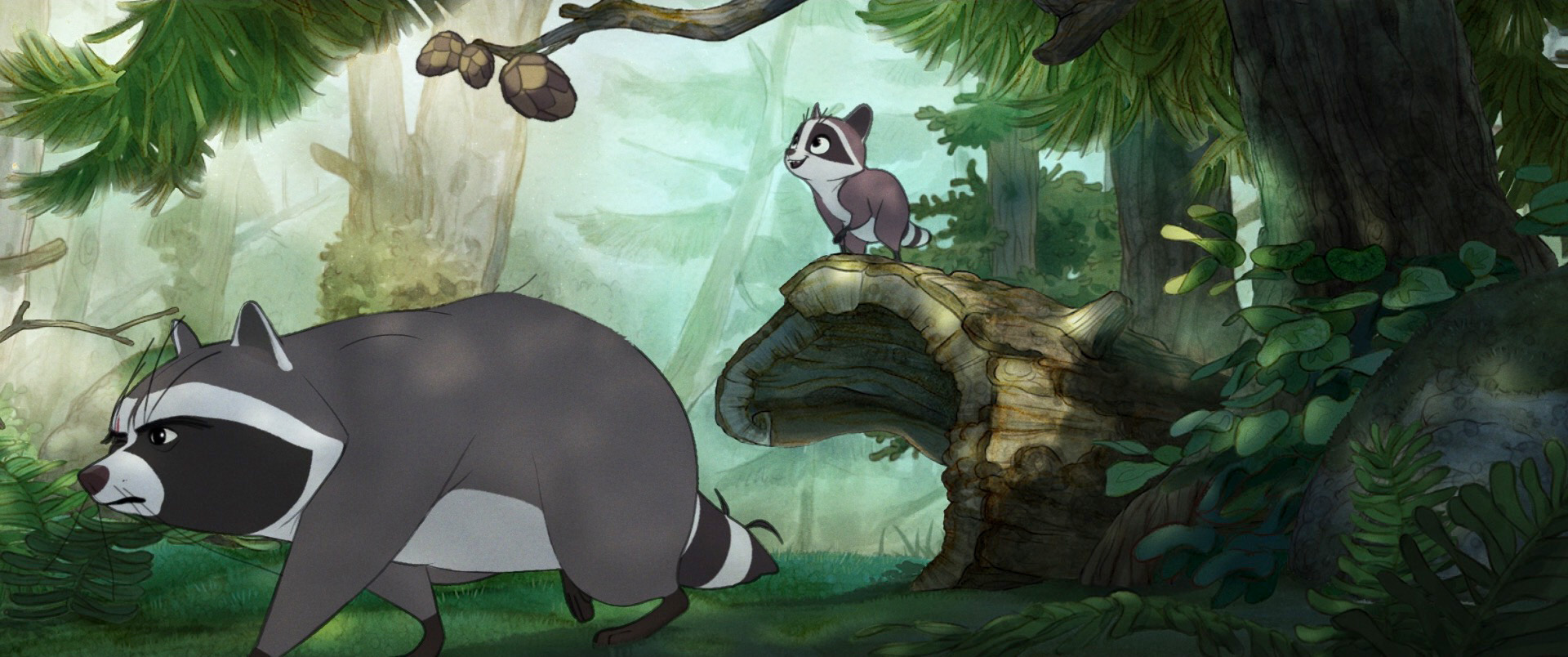
Normally in these posts, I write that the project was rendered entirely using Disney’s Hyperion Renderer, but that’s not the whole story here, and writing that would be a disservice to how this short was actually made. There is quite a lot of 3D CG in this short; all of the character animation was made using our normal 3D animation process, and all of the 3D stuff is in fact rendered entirely using Hyperion. However, the final look of the short involves extensive additional 2D work done on top of the base 3D renders. Far from the Tree’s look and production process is an extension of the hand-drawn inspired hybrid 2D-3D approach that Disney Animation previously used on Paperman , Feast, and several Short Circuit shorts. The base 3D renders are essentially unlit flat surface-color passes; in fact, if you look at just the raw beauty passes out of the renderer, they’re completely black! The real look of the film comes from extensive work done on top of the flat surface-color passes and a ton of AOVs output from the renderer. Much like on Paperman [Kahrs et al. 2012, Whited et al. 2012], Far from the Tree uses extensive linework drawn by hand using Meander on top of the rendered layers, and much like on Feast [Osborne and Staub 2014], final 2D lighting was created entirely in the composite in Nuke. The backgrounds are a combination of similar 2D-3D hybrid work to the foreground along with a lot of pure matte paintings, and much of the textural detail across the entire frame is similarly painted and projected in 2D, all of which were evolved at the studio on the Short Circuit experimental shorts program [Newfield and Staub 2020]. To further help enhance the 2D-3D hybrid look, much of the short is animated on twos and threes, to help match the motion of traditional hand-drawn animation.
On the Hyperion front, even though there’s no meaningful path tracing taking place, the renderer was still doing quite a lot on Far from the Tree! By the very nature of where they exist in production pipelines, production renderers tend to function as the final “source of truth” for what all 3D data in the production pipeline actually looks like, and this is definitely true of Hyperion. In our pipeline, Hyperion doesn’t just serve as the final frame renderer; it also acts as a powerful data visualization tool that is used in all departments upstream of lighting to generate authoritative visualizations of what our 3D data actually looks like. To help serve this function, Hyperion has incredibly extensive custom AOV capabilities. As far as I’m aware, I think Hyperion’s custom AOV capabilities are a fair bit more extensive than in even a lot of commercial renderers. Commercial renderers usually break down light transport into a bunch of individual components and expose these as AOVs (so, things like specular vs diffuse, direct vs indirect, individual BXDF lobes, etc), and also expose some basic geometric information as AOVs (things like position, normals, object IDs, cryptomattes, etc). Hyperion provides all of these as AOVs as one would expect, but beyond that, Hyperion allows essentially any signal or snippet of shader code from inside of the pattern generation part of the shading system to be routed into a custom AOV. Hyperion also goes even further and allows for custom AOVs to be driven directly using SeExpr [Disney Animation 2011]; on the first hit from the camera, user-authored SeExpr programs can be run and the result directly splatted to specified custom AOVs. For stylized rendering projects such as Far from the Tree’s hybrid 2D-3D, this capability is really powerful since it allows for artists to drive custom signals from 3D animated geometry, funnel those signals into 2D layers, and then use the result to drive any kind of effect they want in compositing. This system means that even without needing to run full light transport, on highly stylized projects such as Far from the Tree, Hyperion still plays a big role. Actually, on Far from the Tree, Hyperion is doing almost no light transport, but not exactly zero. There is one specific small detail that did make use of light transport: the full eye shader [Chiang & Burley 2018] was used to get enough input to drive the final flatter look of the stylized eyes.
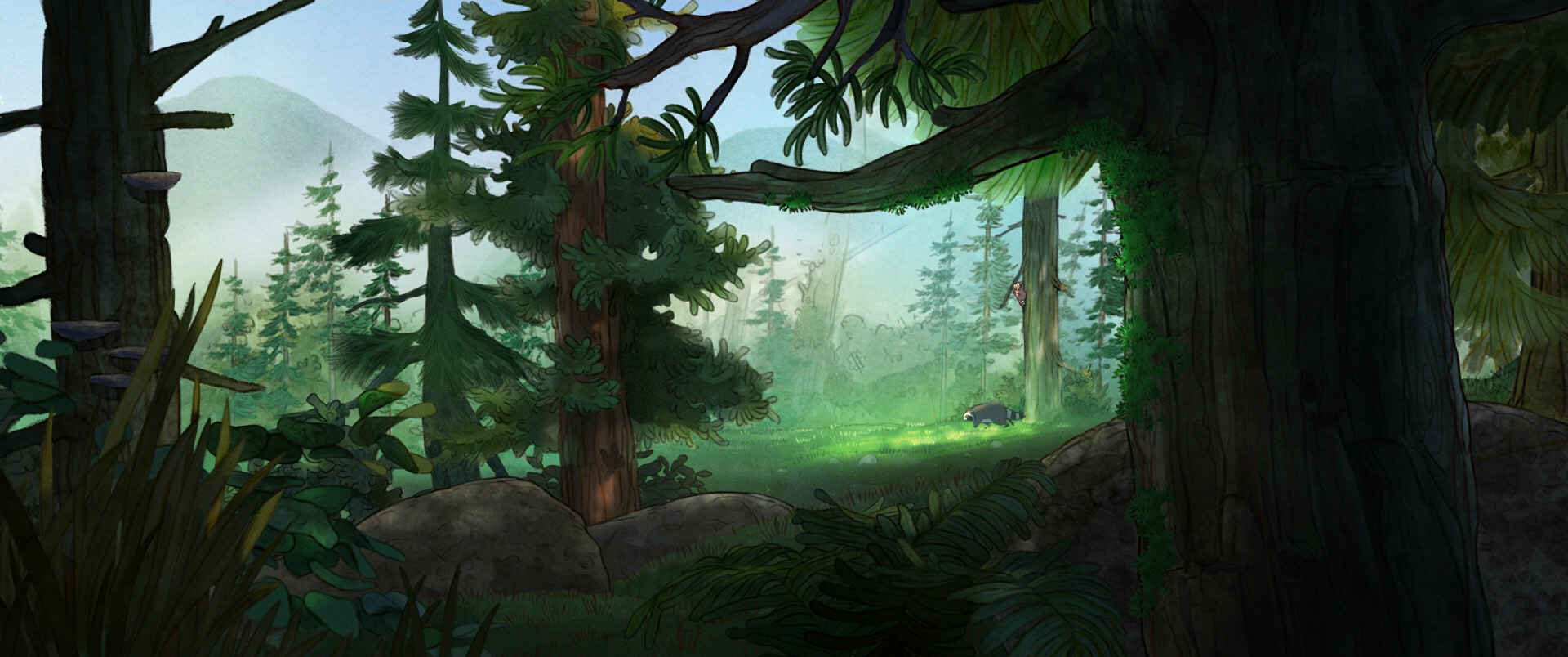
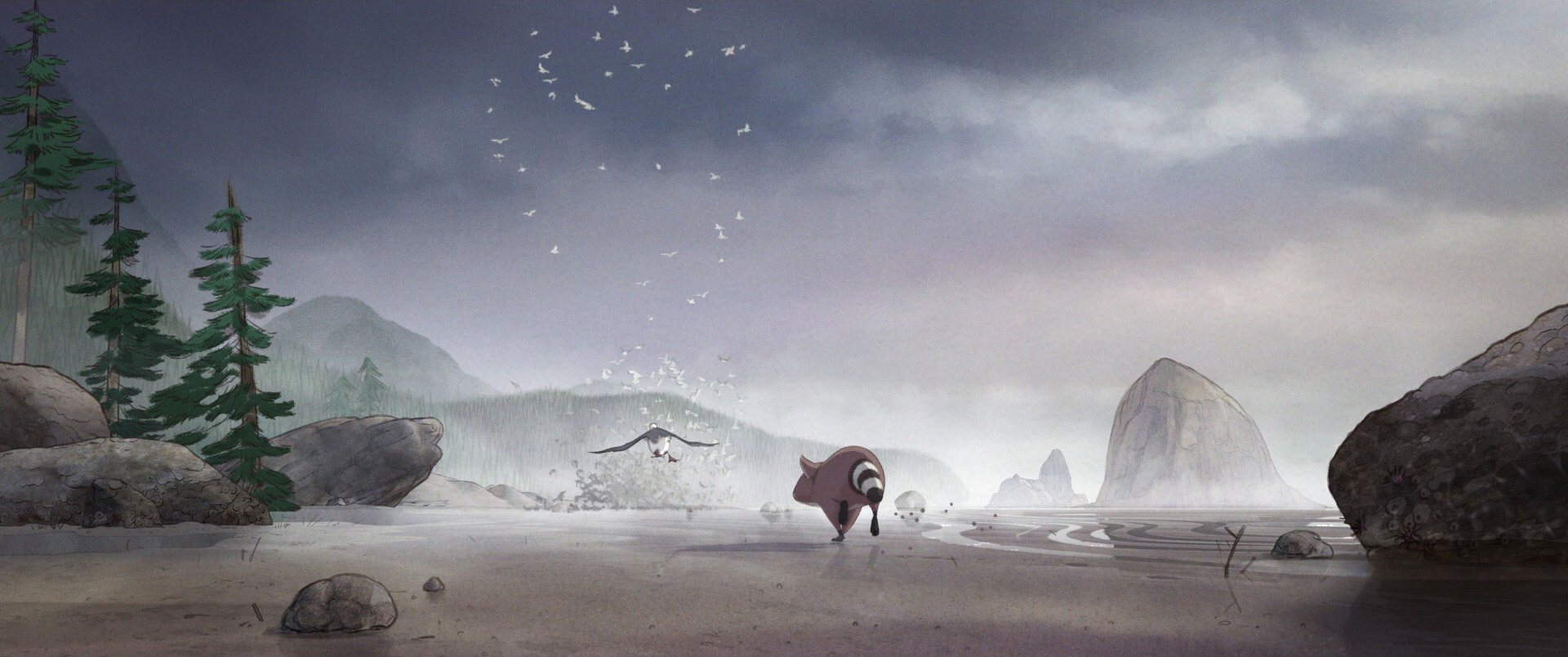
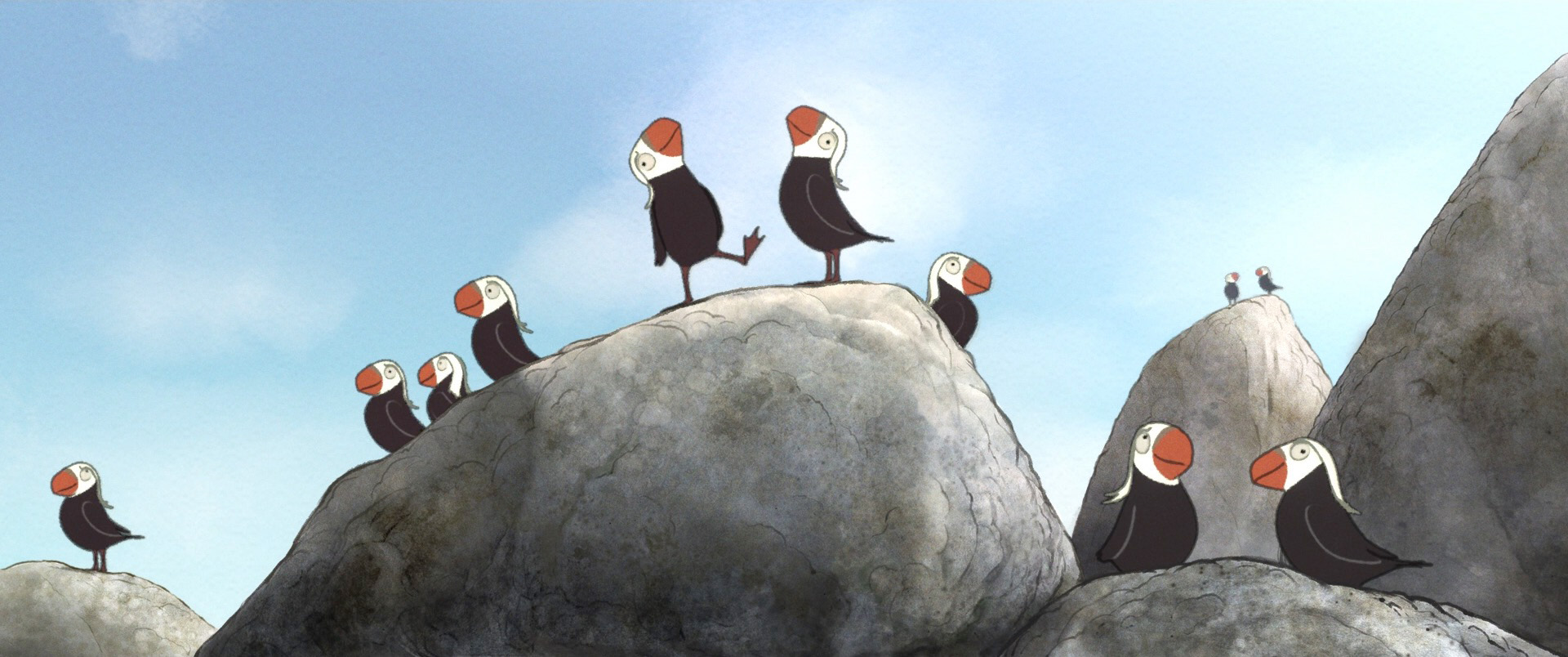
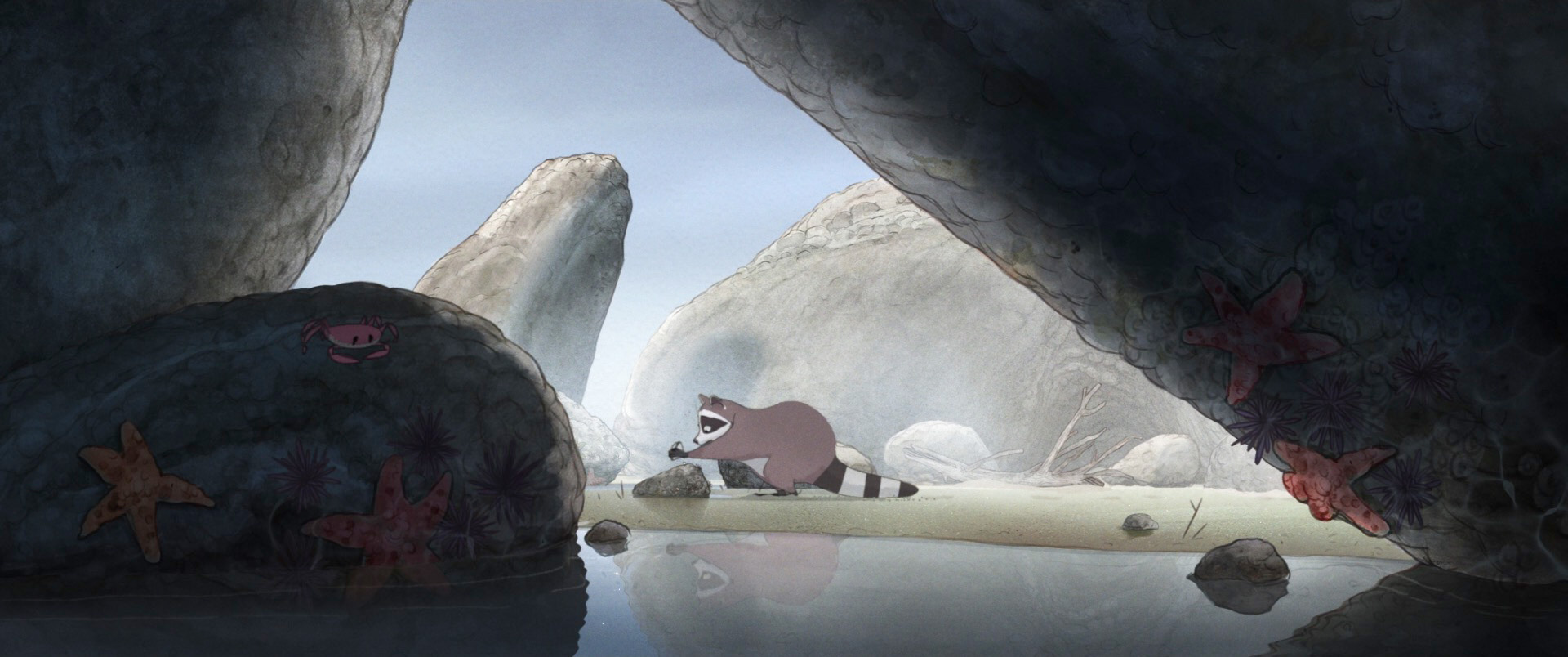
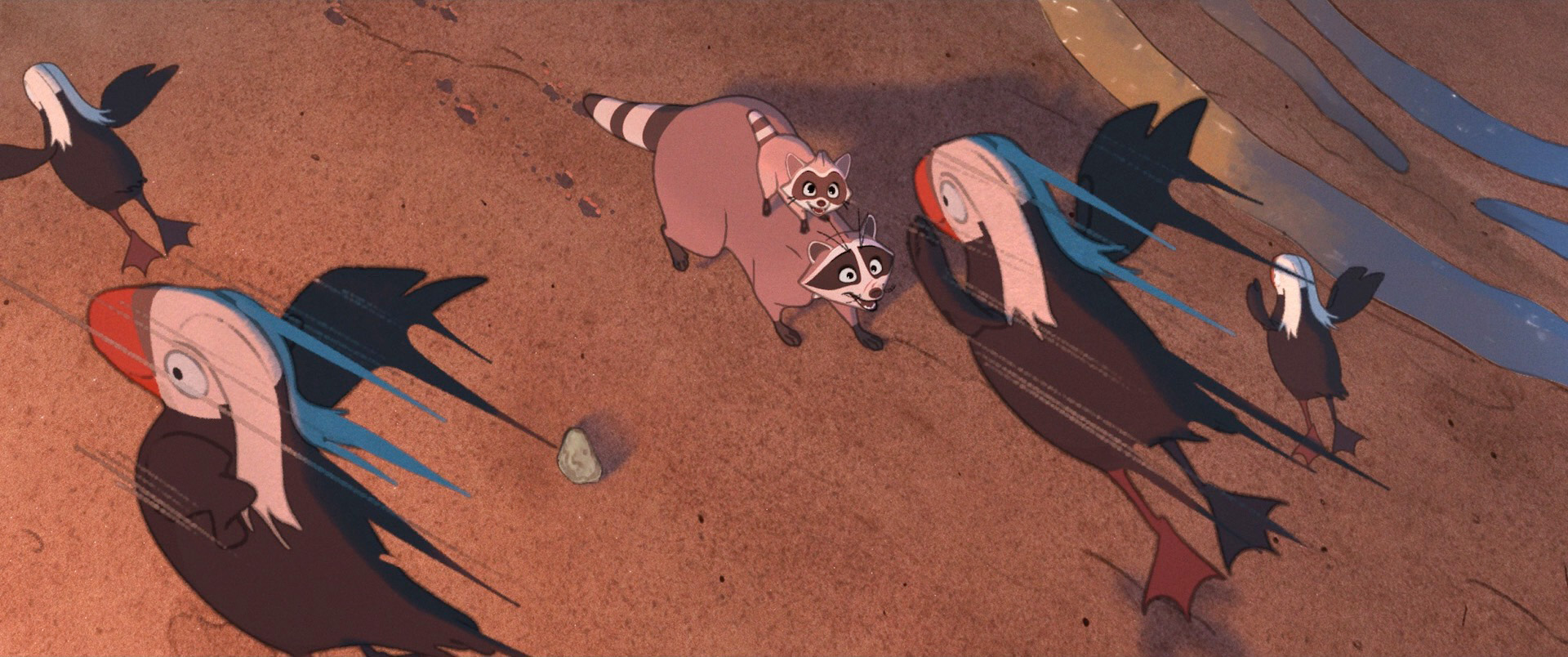
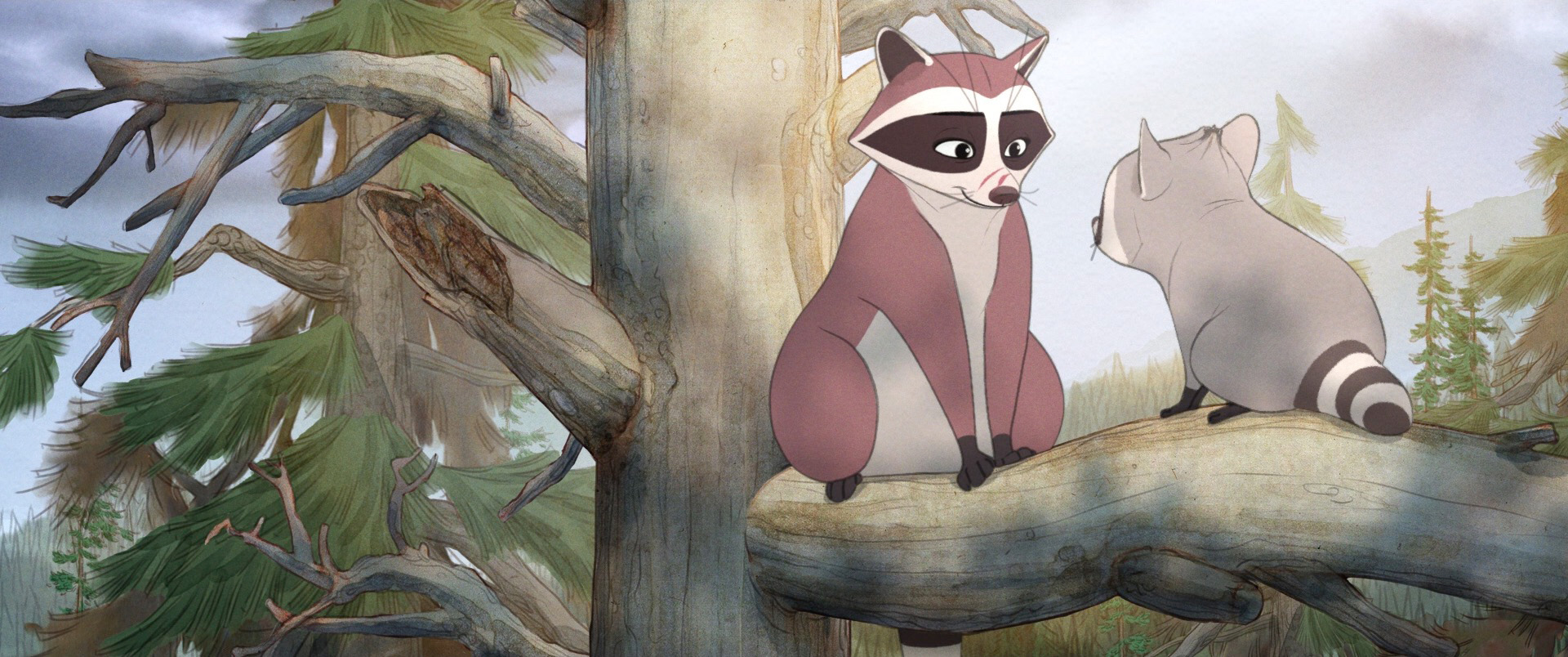
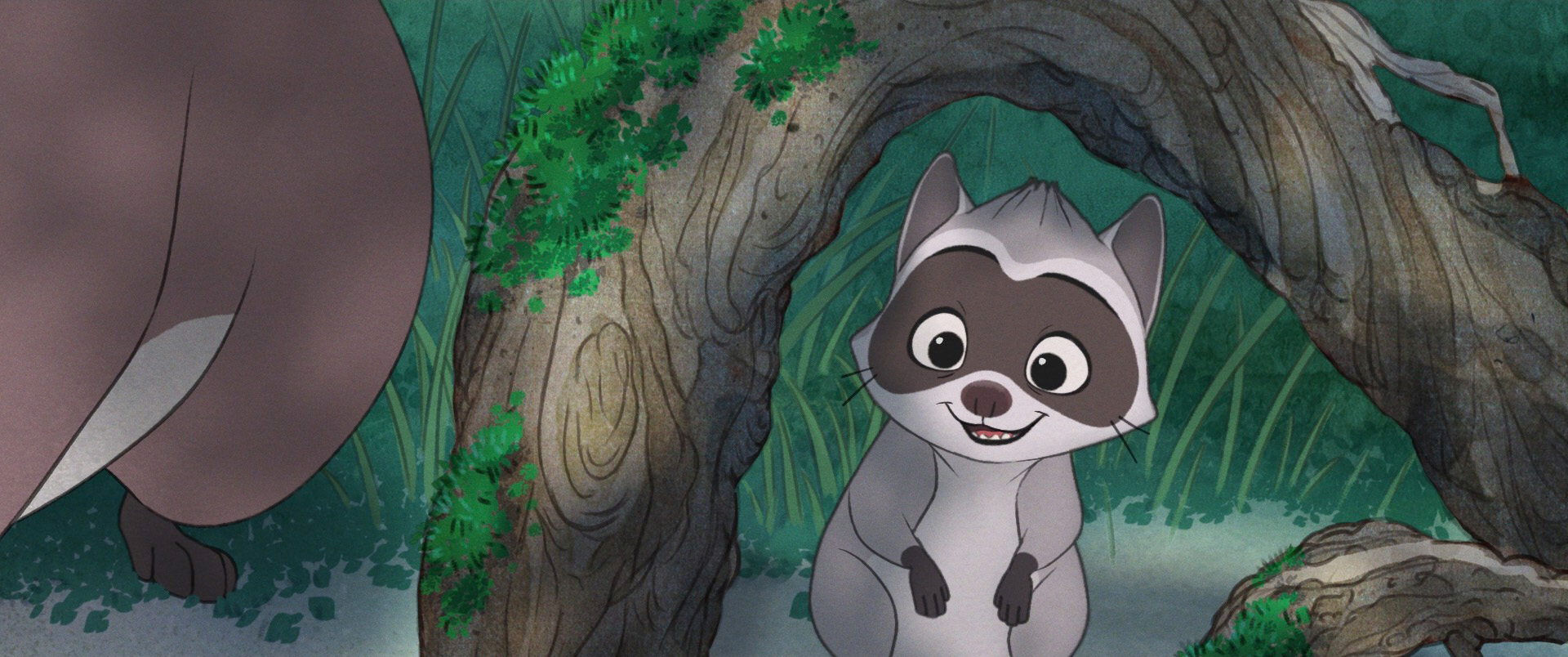
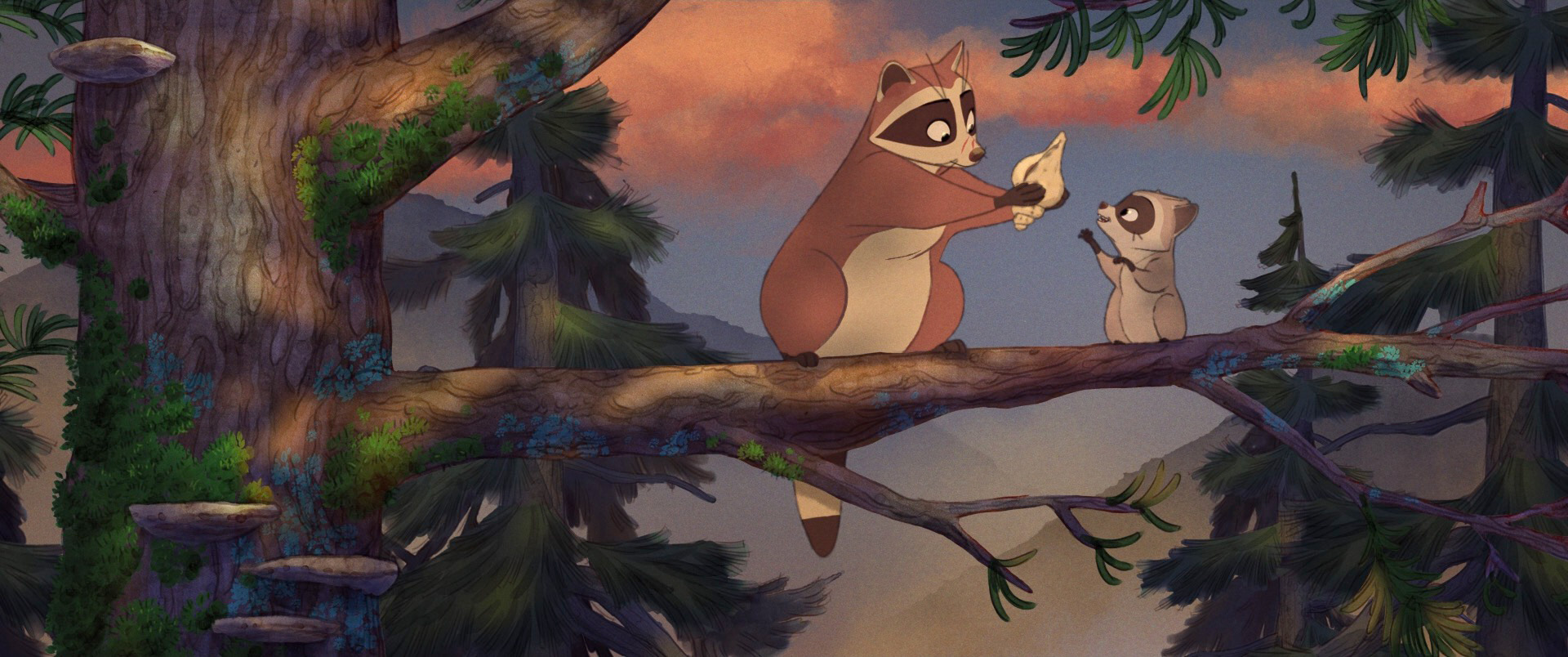
The final result in Far from the Tree is a wonderful combination of Disney Animation’s modern state-of-the-art 3D CG capabilities and rich hand-drawn 2D legacy. Any randomly chosen frame from Far from the Tree basically looks exactly like the concept art used to art-direct the short, and that is both a very cool and technically astonishing feat; it’s a really beautiful film. I also just love the character design and character animation in this short; raccoons are an endless source of interesting animation, and the derpy birds are a fantastically fun piece of cartoon design.
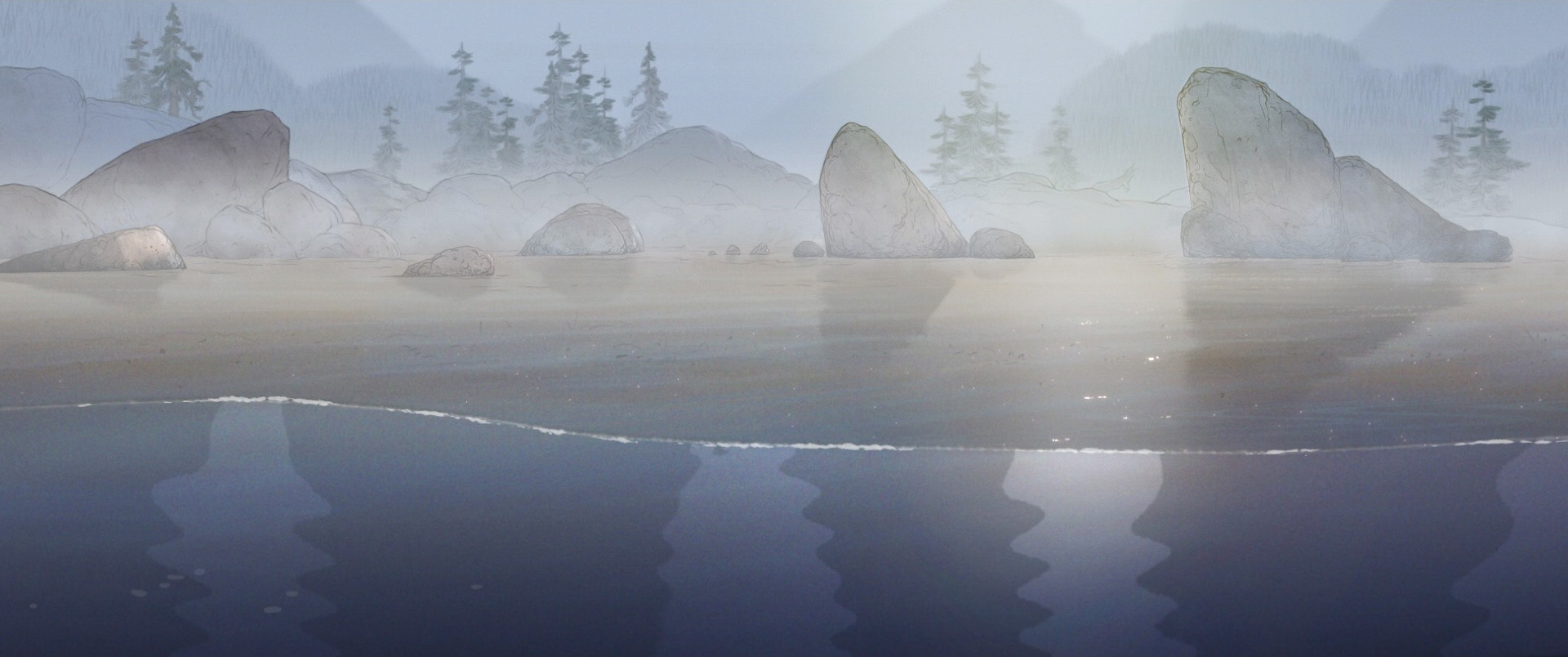
Here are some frames from Far from the Tree from the Blu-ray, presented in no particular order. You can get Far from the Tree with a copy of Encanto on Blu-ray or digital, or watch it on Disney+; as always I recommend watching it on the biggest screen you can!
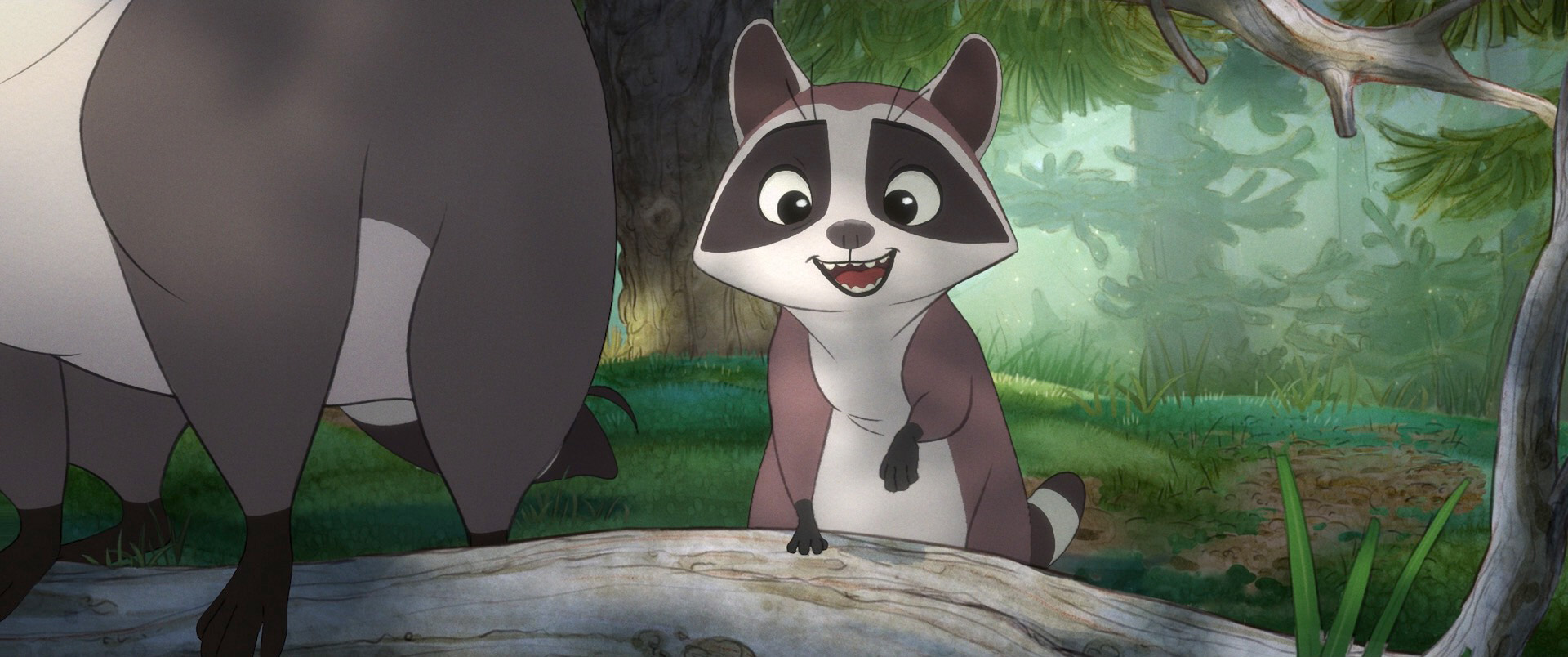
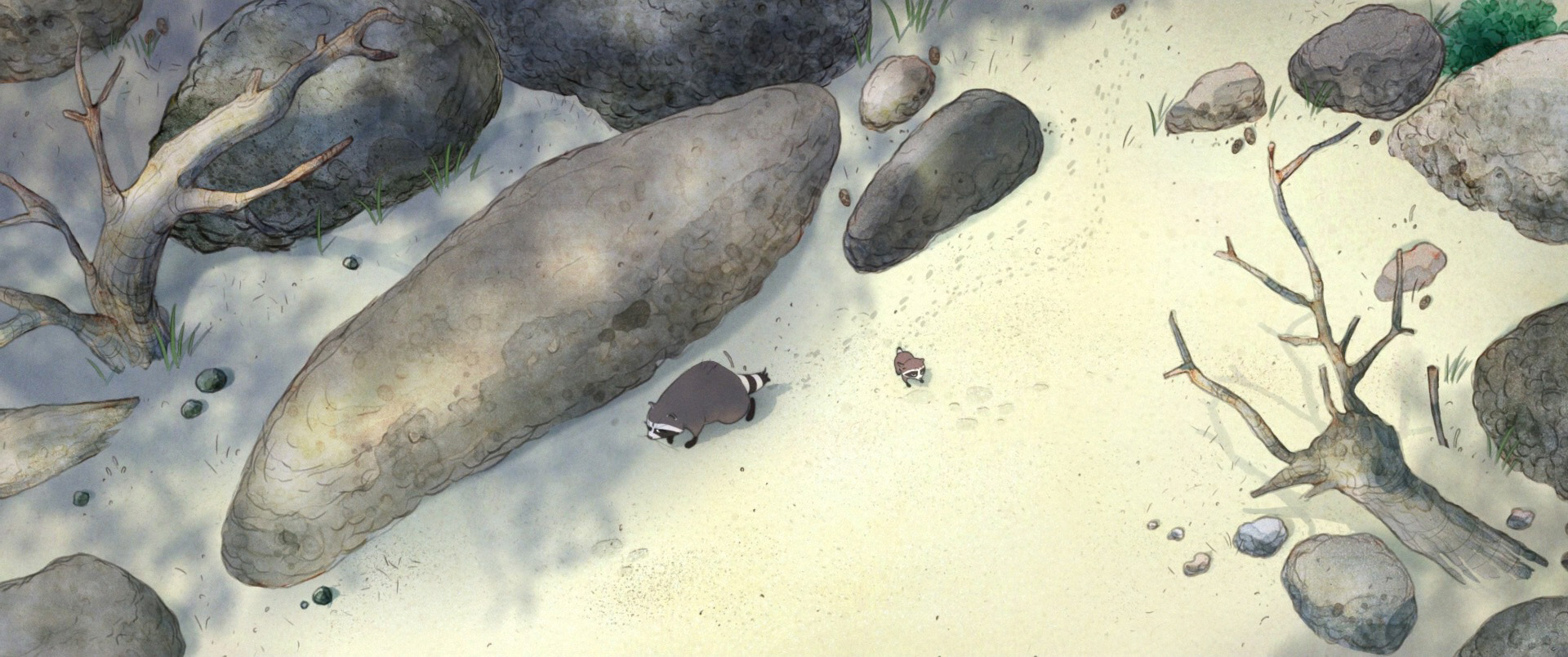
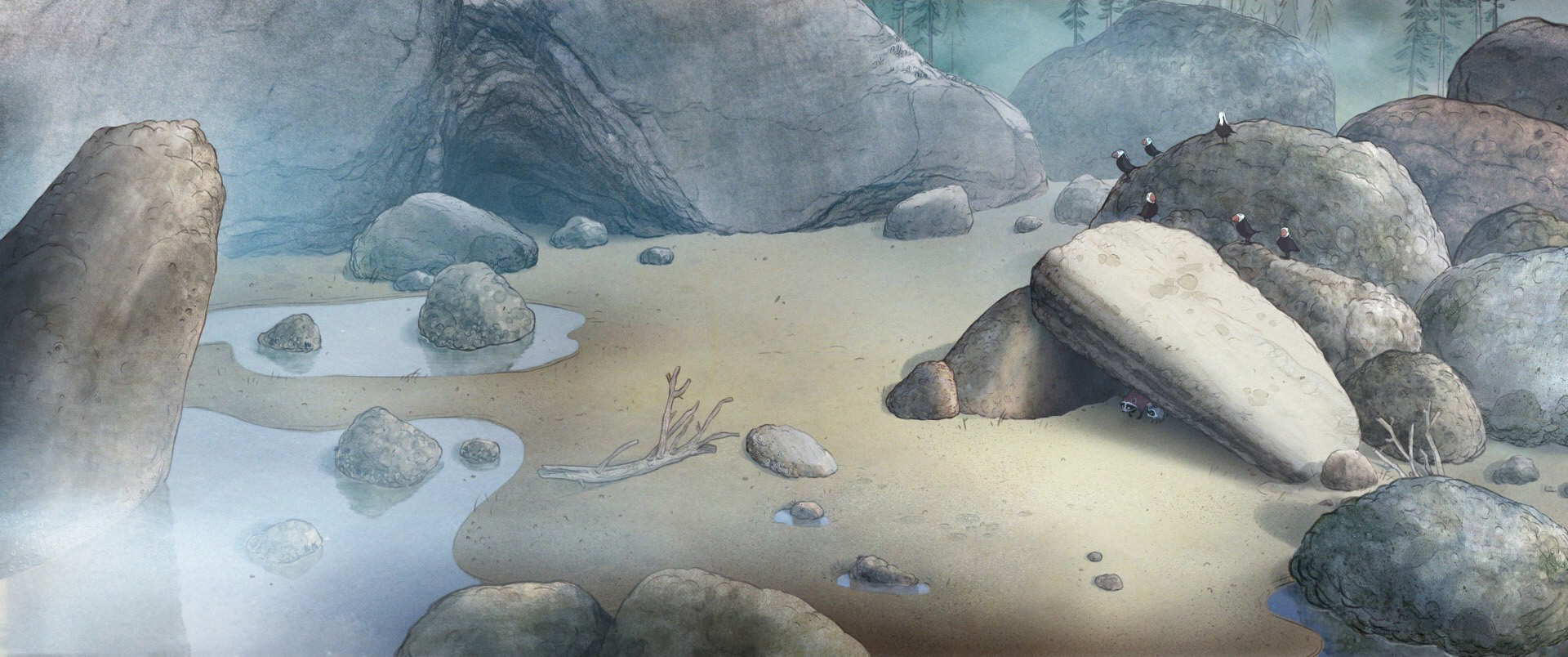
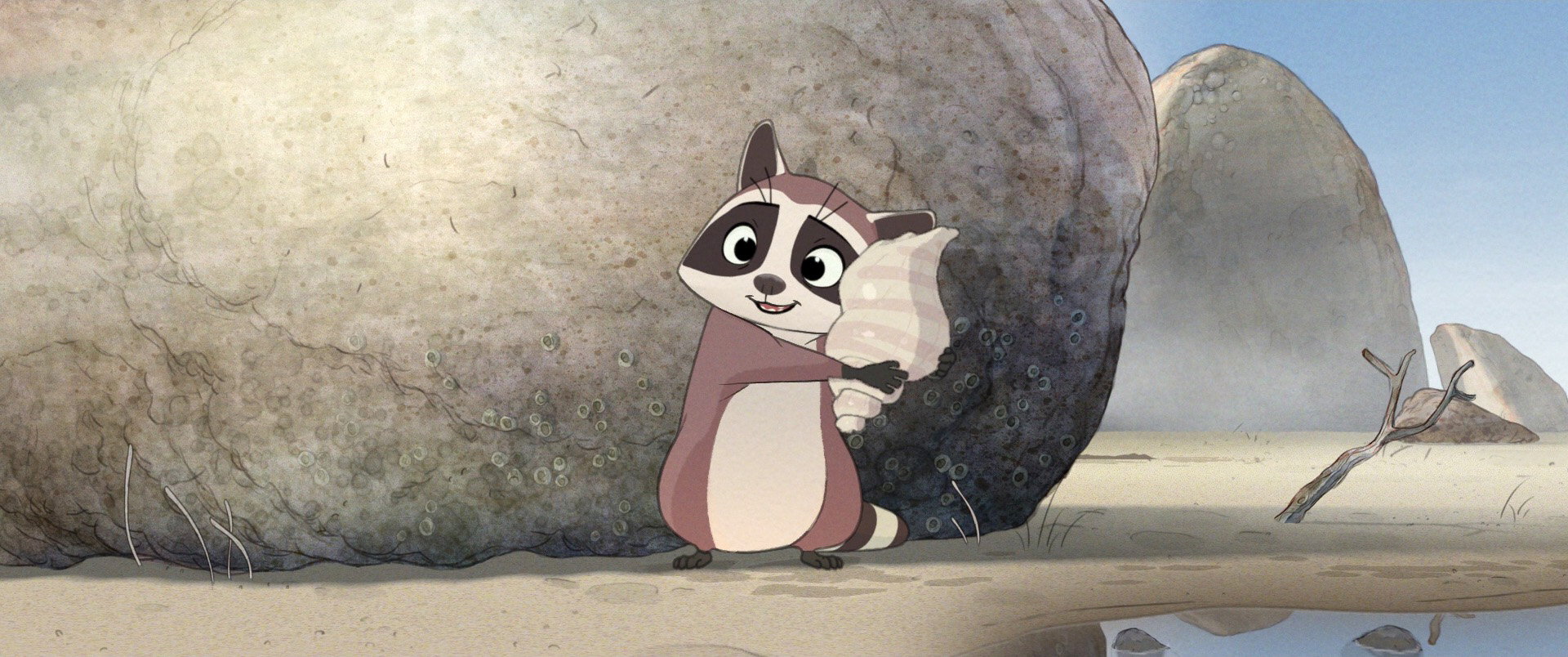
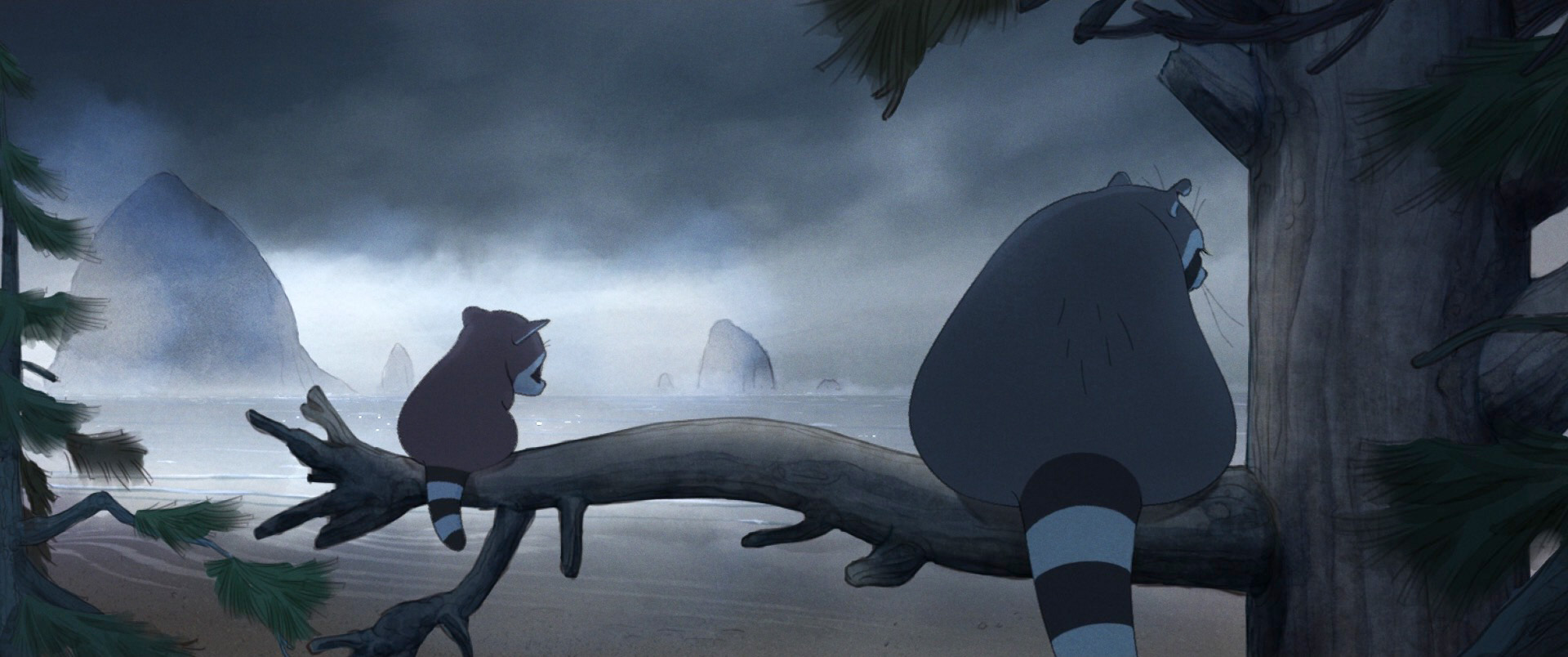
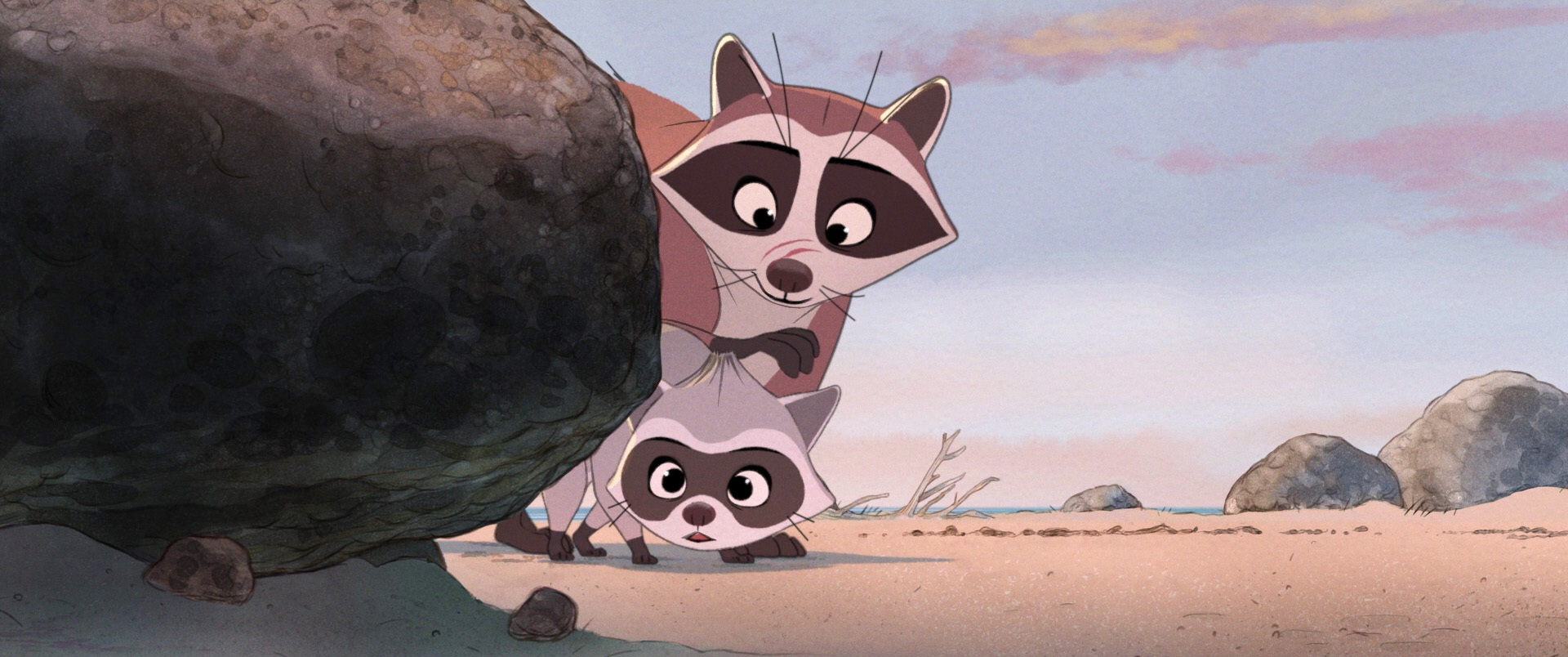
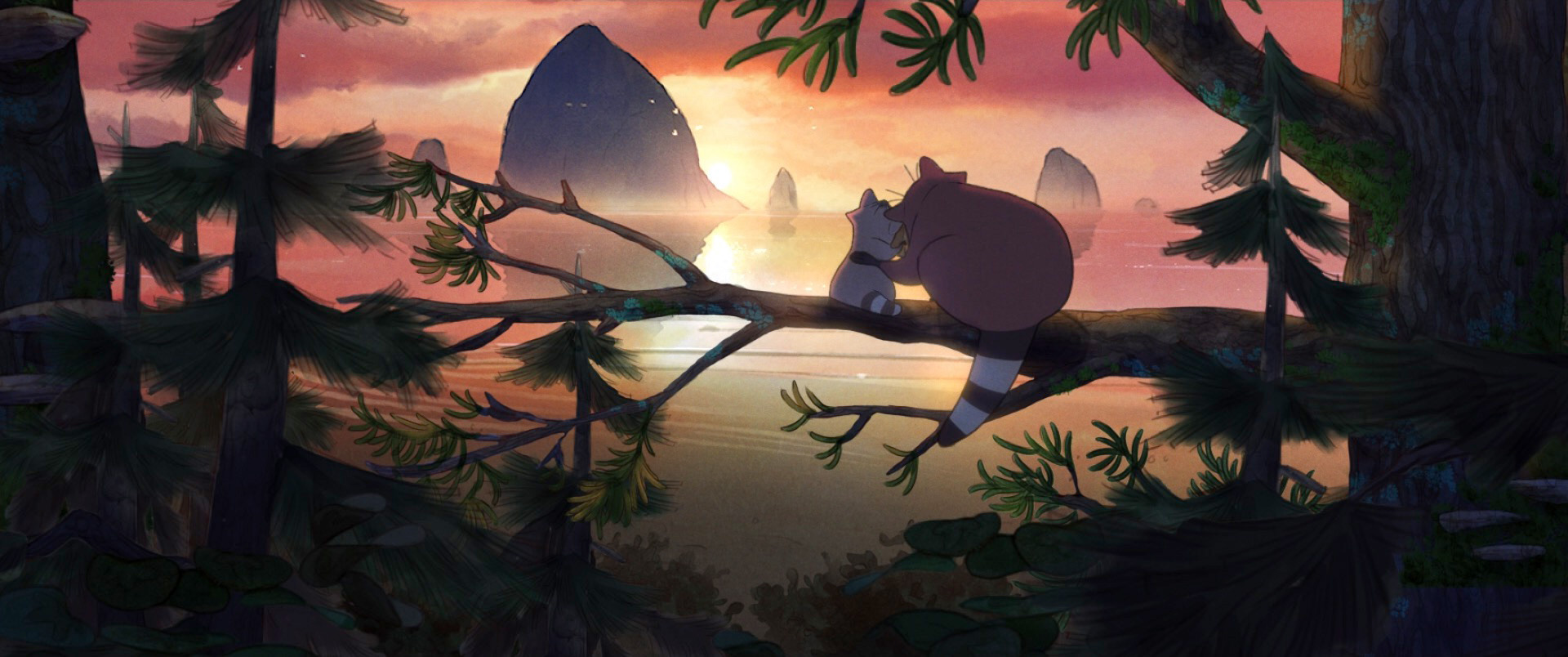
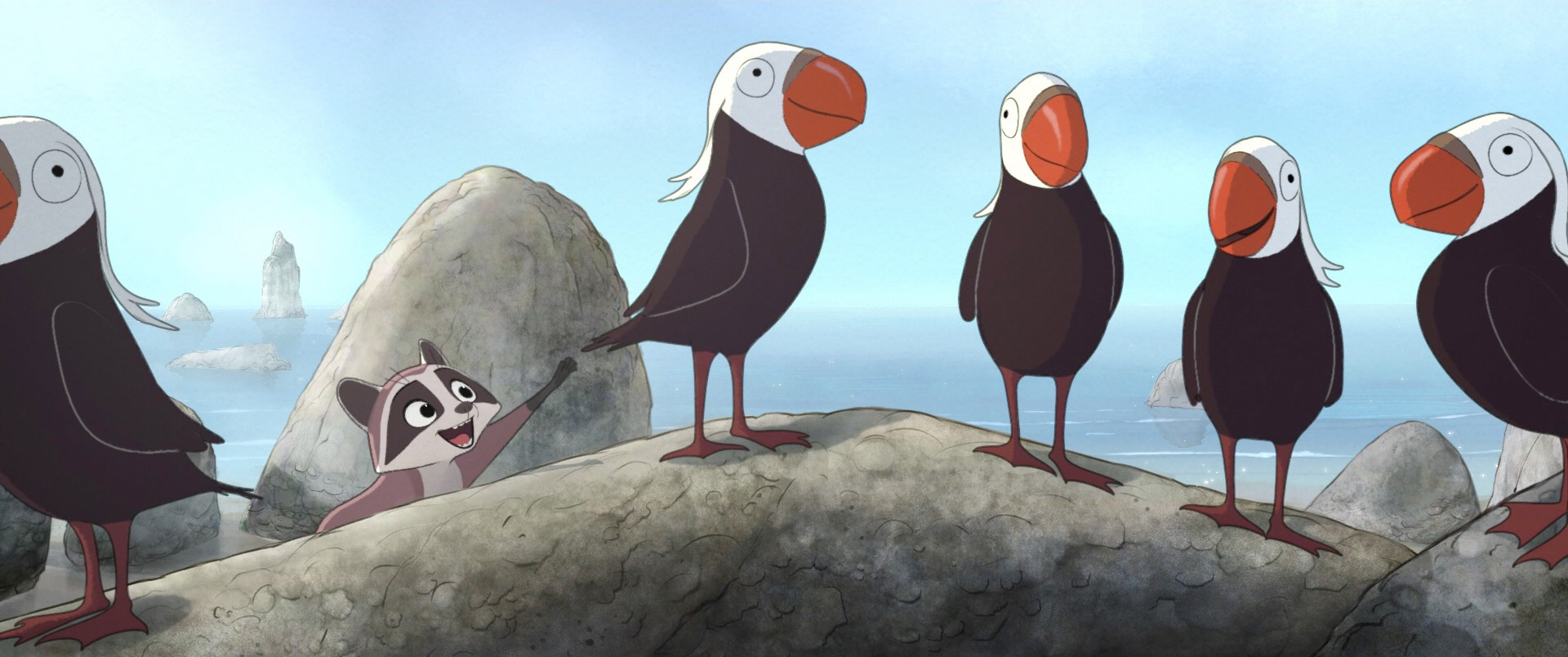
All images in this post are courtesy of and the property of Walt Disney Animation Studios.
References
Matt Jen-Yuan Chiang and Brent Burley. 2018. Plausible Iris Caustics and Limbal Arc Rendering. In ACM SIGGRAPH 2018 Talks. Article 15.
John Kahrs, Patrick Osborne, Amol Sathe, Jeff Turley, Brian Whited, and Darrin Butters. 2012. The Art and Science Behind Walt Disney Animation Studios’ “Paperman”. In ACM SIGGRAPH 2012 Production Sessions.
Jennifer Newfield and Josh Staub. 2020. How Short Circuit Experiments: Experimental Filmmaking at Walt Disney Animation Studios. In ACM SIGGRAPH 2020 Talks. Article 72.
Patrick Osborne and Josh Staub. 2014. Feast – A Look at Walt Disney Animation Studios’ Newest Short. In ACM SIGGRAPH 2014 Production Sessions.
Brian Whited, Eric Daniels, Michael Kaschalk, Patrick Osborne, and Kyle Odermatt. 2012. Computer-Assisted Animation of Line and Paint in Disney’s Paperman. In ACM SIGGRAPH 2012 Talks. Article 19.
Walt Disney Animation Studios. 2011. SeExpr.
Footnotes
1 A lot of people use “2D animation” to describe Disney Animation’s work before the CG era, but at Disney Animation we prefer the term “hand-drawn animation”. I think the distinction is really important; a lot of modern 2D animation is made entirely digitally using rigged digital models/puppets similar to what we do for 3D animation. This is totally fine! However, Disney Animation’s previous traditional animation work was distinguished not just by being visually 2D, but really by the fact that everything was drawn by hand, either using pencil on paper or using a stylus and tablet when digital. keyboard_return