Us Again
Raya and the Last Dragon’s release earlier this spring was accompanied Us Again, Disney Animation’s newest short film. Us Again is also included on the Blu-ray for Raya and the Last Dragon, and now that the Blu-ray is out, here are some brief notes about interesting rendering details from Us Again. Us Again is, of course, rendered entirely using Disney’s Hyperion Renderer. I only played a small role on Us Again, pretty much entirely just support, but I thought I’d post a bit about the short because it’s such a spectacular showcase of what Hyperion is capable of when placed in Disney Animation artists’ hands.
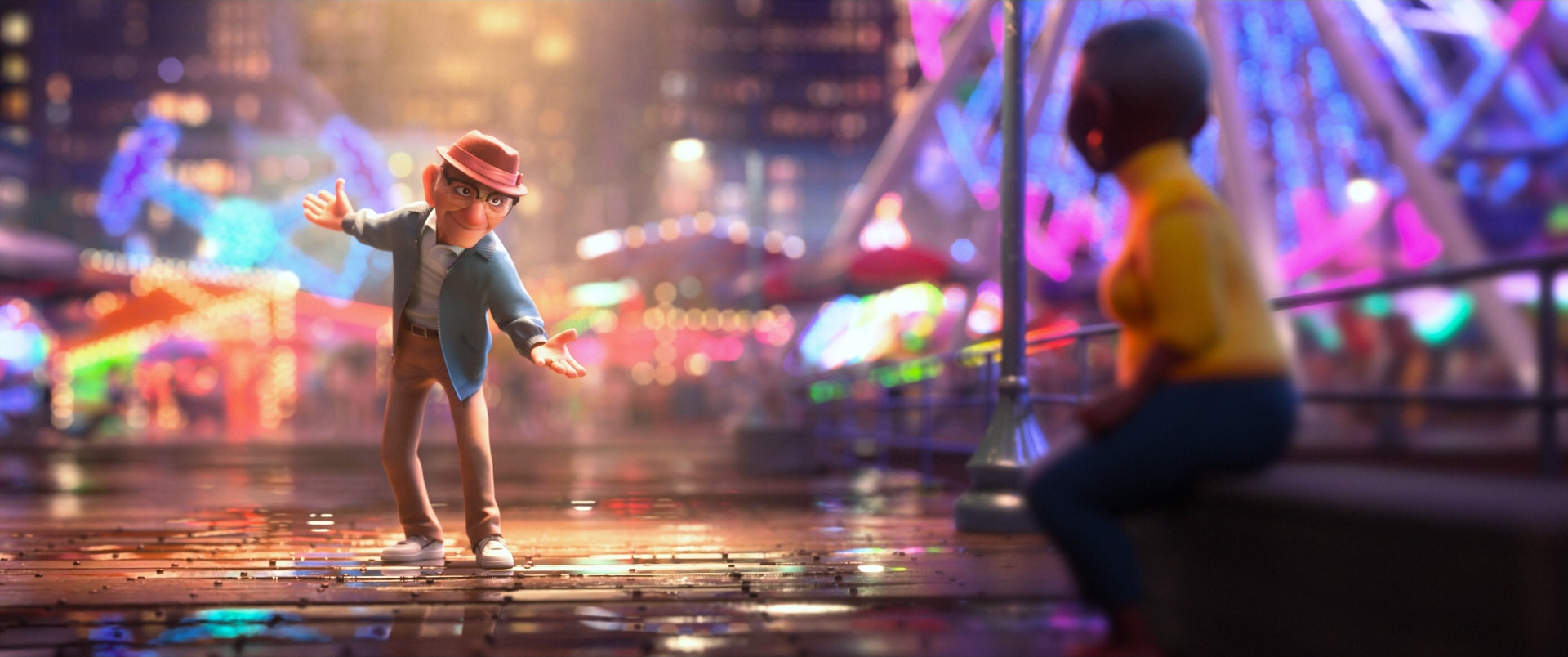
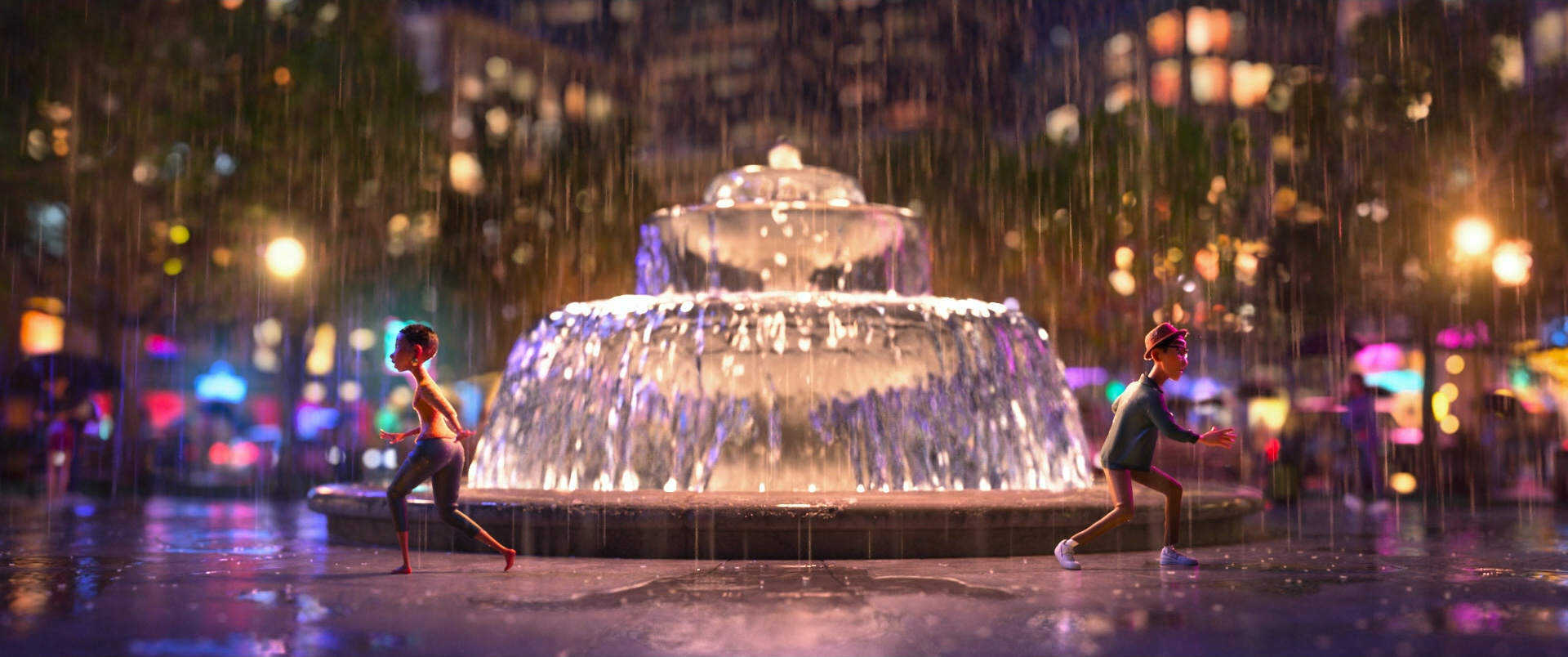
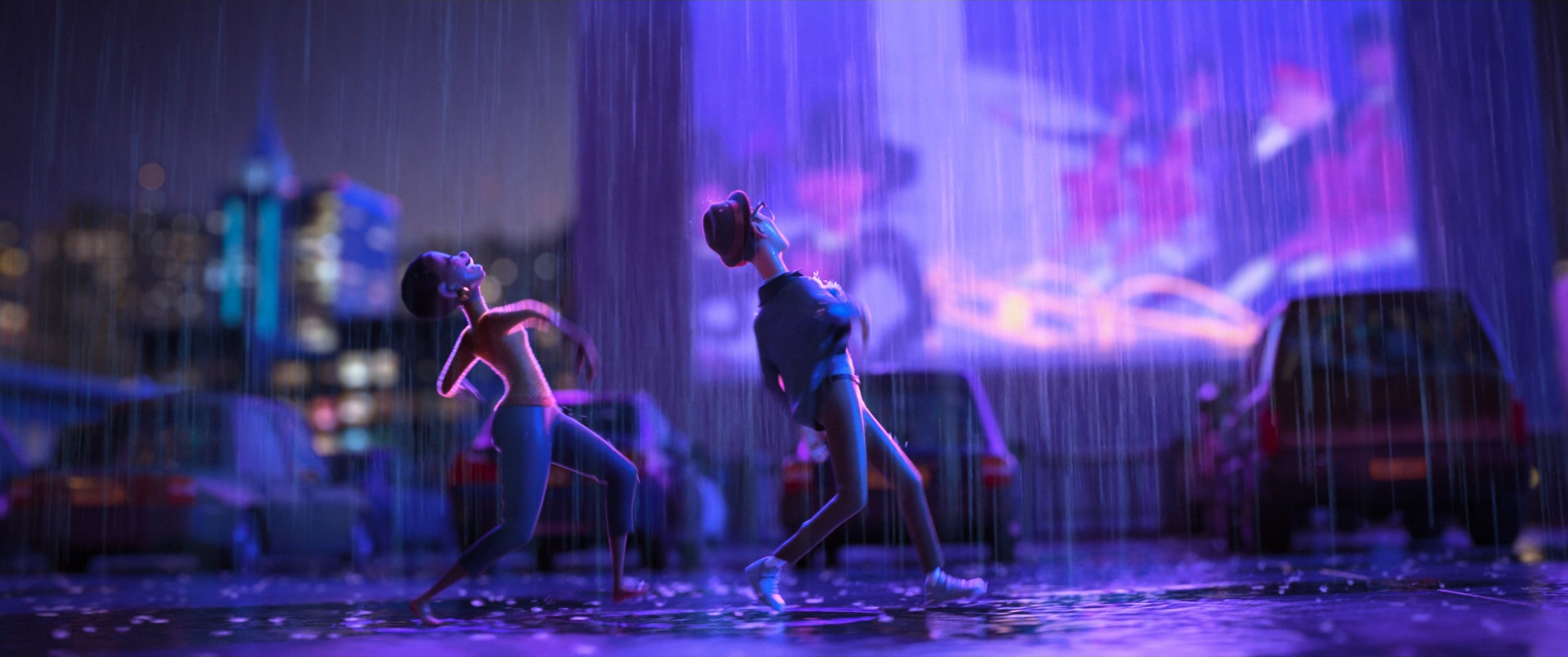
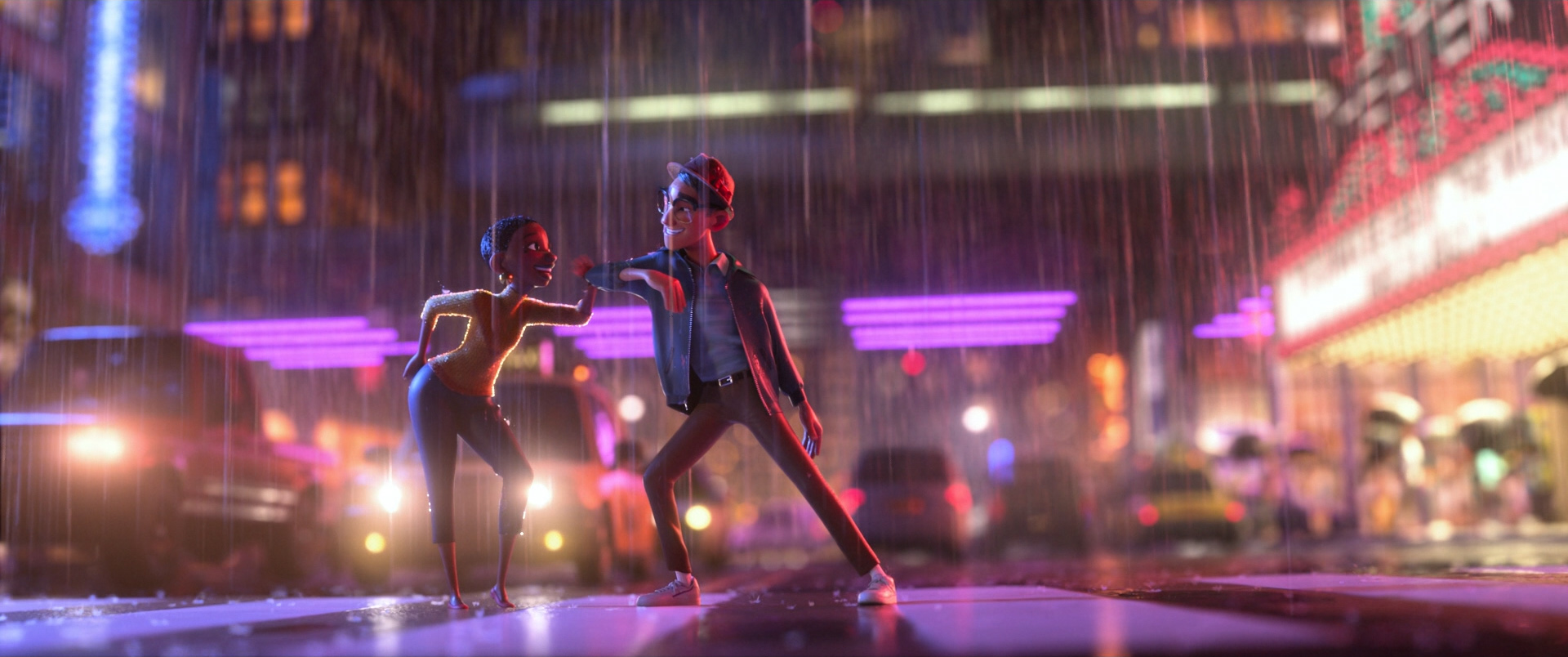
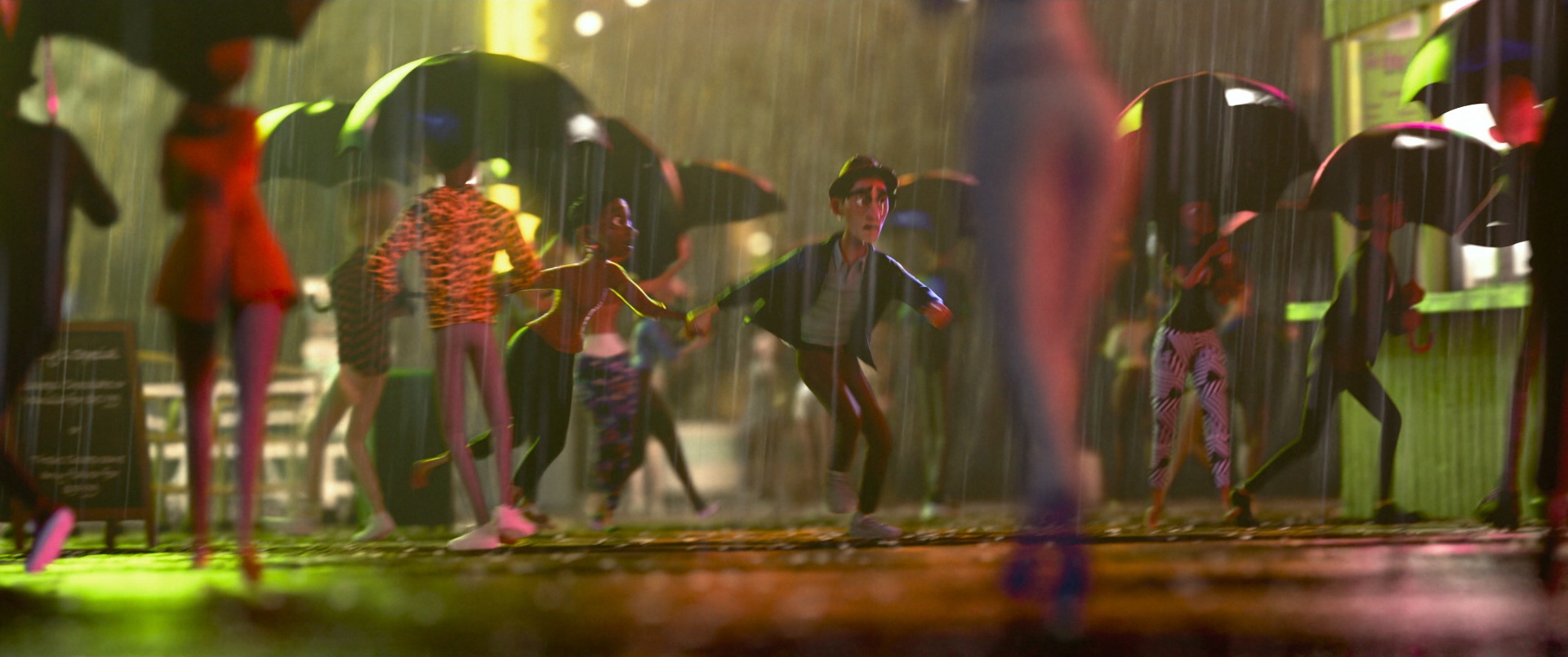
Us Again is a stunningly beautiful film; I think it’s one of the most beautiful shorts that Disney Animation has ever made. The short follows elderly couple Art and Dot re-finding the spark of youth in their relationship through dance. The short is set in a bustling city and most of the short takes place in a rain storm, with raindrops flying, wet surfaces on everything, and tons of complex crowds and neon city lighting reflecting everywhere. From a rendering perspective, this can be a preposterously difficult setting to render; there are tons of lights stressing any kind of light sampling strategy, there are tons of specular surfaces and reflections generating difficult to sample light transport, the city setting means the geometric complexity is through the roof, the face paced dance sequences and rainfall means there is high motion blur everywhere, and so on and so forth. A little under ten years ago, I was an intern at Pixar during the production of The Blue Umbrella, which also has a rainy urban setting, and I got a close up view of how that short was at the time one of the hardest things Pixar had ever rendered. Us Again has even more complex challenges on top of what was in The Blue Umbrella, so I was really worried that we would run into major difficulties rendering Us Again. I was really pleasantly surprised when… lighting and rendering Us Again went really smoothly and basically no major problems or difficulties emerged at all! Rendering technology generally has advanced enormously in the past ten years, and by fortunate coincidence Hyperion just happens to have a lot of specific capabilities that are particularly well suited to the rendering challenges in Us Again.
Us Again used essentially the same version of Hyperion that was used for Frozen 2, with one notable modification. Motion blur on Us Again took some special care to handle because of all of the rain; fast-falling raindrops with a wider shutter angle blurs out into the familiar long streaks that are usually seen in “movie rain”. Because the motion blurred streaks for rain were so long in screen space, the streaks would tend to bend whenever the camera was under high motion too, sort of like how fast-spinning propellor blades end up looking weird on rolling shutter cameras. Hyperion already allows for different objects in the same scene and same render to effectively be rendered with different shutter angles; to fix the look of the rain streaks on Us Again, all the team had to add was the ability to decouple camera motion blur from object motion blur.
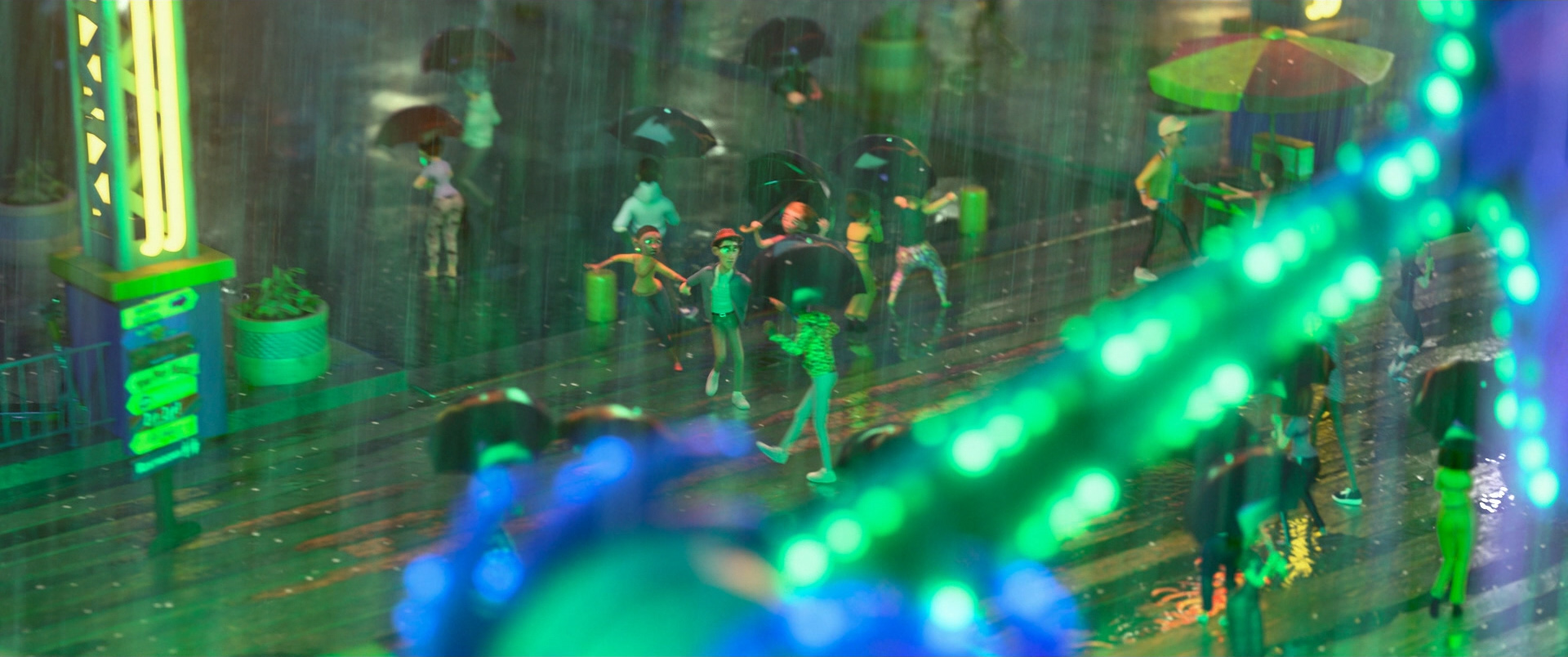
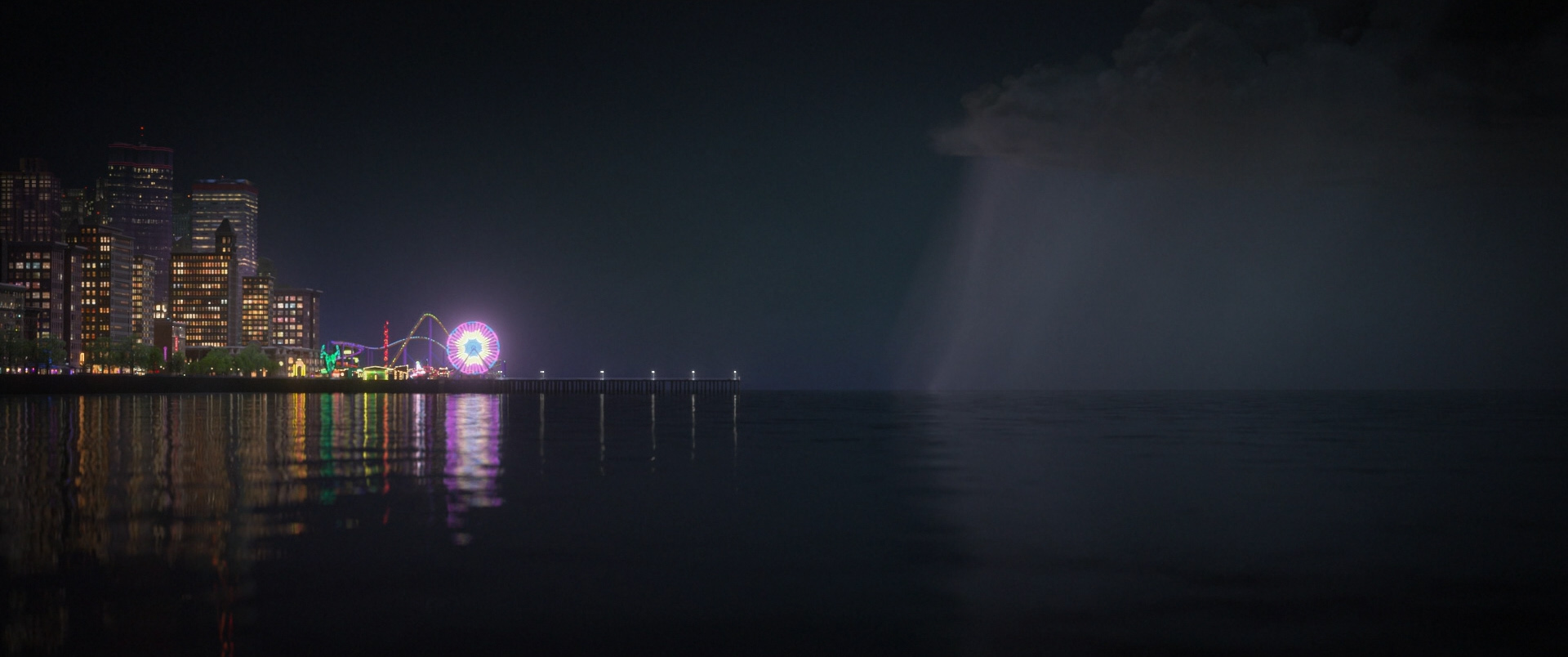
For pretty much everything else on Us Again, our existing solutions in Hyperion just worked. Us Again’s urban setting represents a worst-case complexity scenario for light selection and light sampling. Because Us Again is set in a city, every shot in the short has a gazillion lights present spread across a huge region of space, and the finale of the short takes place on a boardwalk amusement park pier1 with a ferris wheel and other rides covered in animated light bulbs. These types of lighting scenarios through the sheer number of lights present combined with the complex occlusion can sometimes be enough to overwhelm light-BVH based many-lights sampling strategies [Estevez and Kulla 2018], and without a many-lights sampling strategy that can handle these cases well, in the worse case falling back to laborious manual grouping and culling of lights may be the only option [Vavilala 2019]. However, Hyperion’s “cache points” many-lights sampling system was developed from the very beginning to handle millions of lights with complex occlusion in vast cityscapes, because this was the exact type of setting that was found throughout Big Hero 6 [Burley et al. 2018]. For Us Again, Hyperion’s cache points system handled all of the highest lighting complexity scenes (such as the ferris wheel on the pier) with millions of light sources with no problem at all; our lighters simply opened the scenes, lit like usual, hit render, and everything just worked efficiently with zero additional optimization work required [Li et al. 2024].
In a similar vein, because Us Again is set in a rain storm, every asset needed to have both wet and dry variants with custom blending between the two, which would be challenging to author if wet and dry looks had to be authored separately. However, thanks to Disney Animation’s layer stack shading model with sparse overrides [Burley 2012, Burley 2018], adding a wet look to every shader was as simple as just sticking on an additional wet layer, driven with whatever masks artists wanted.
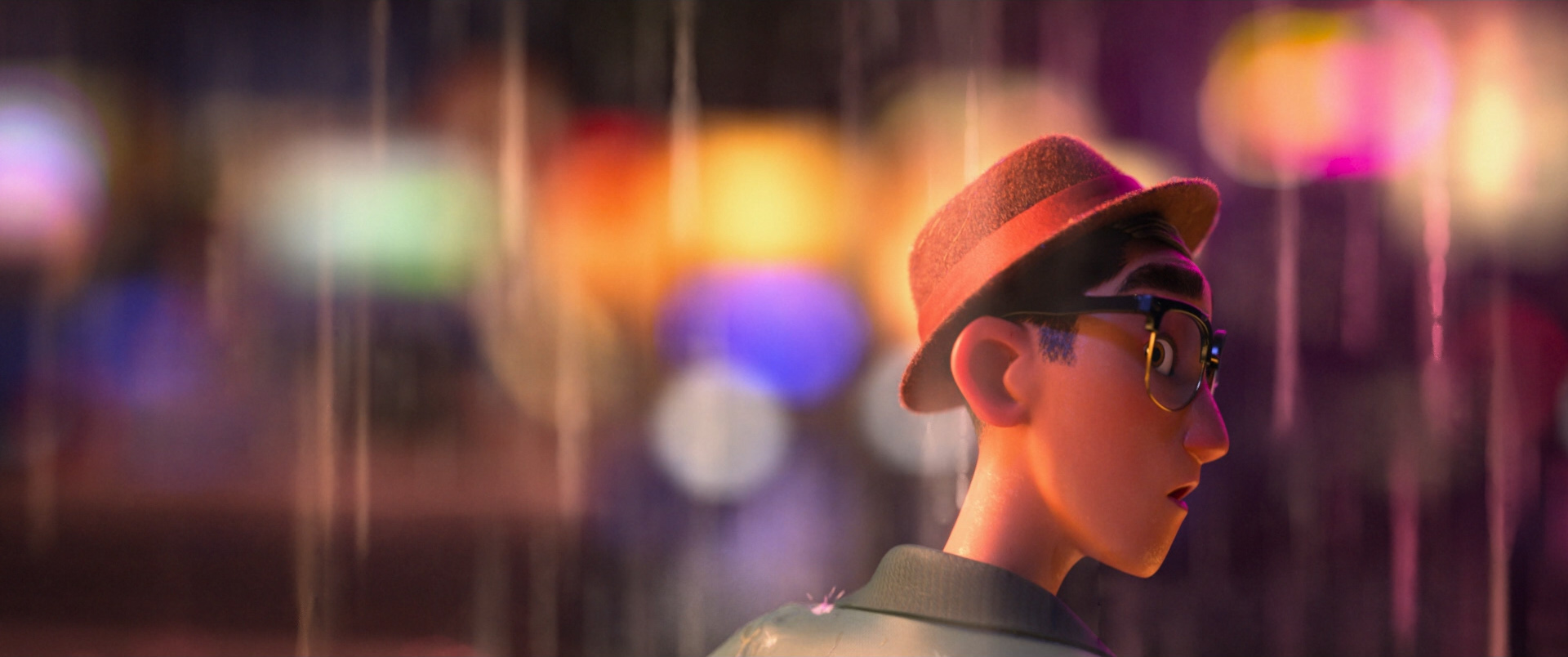
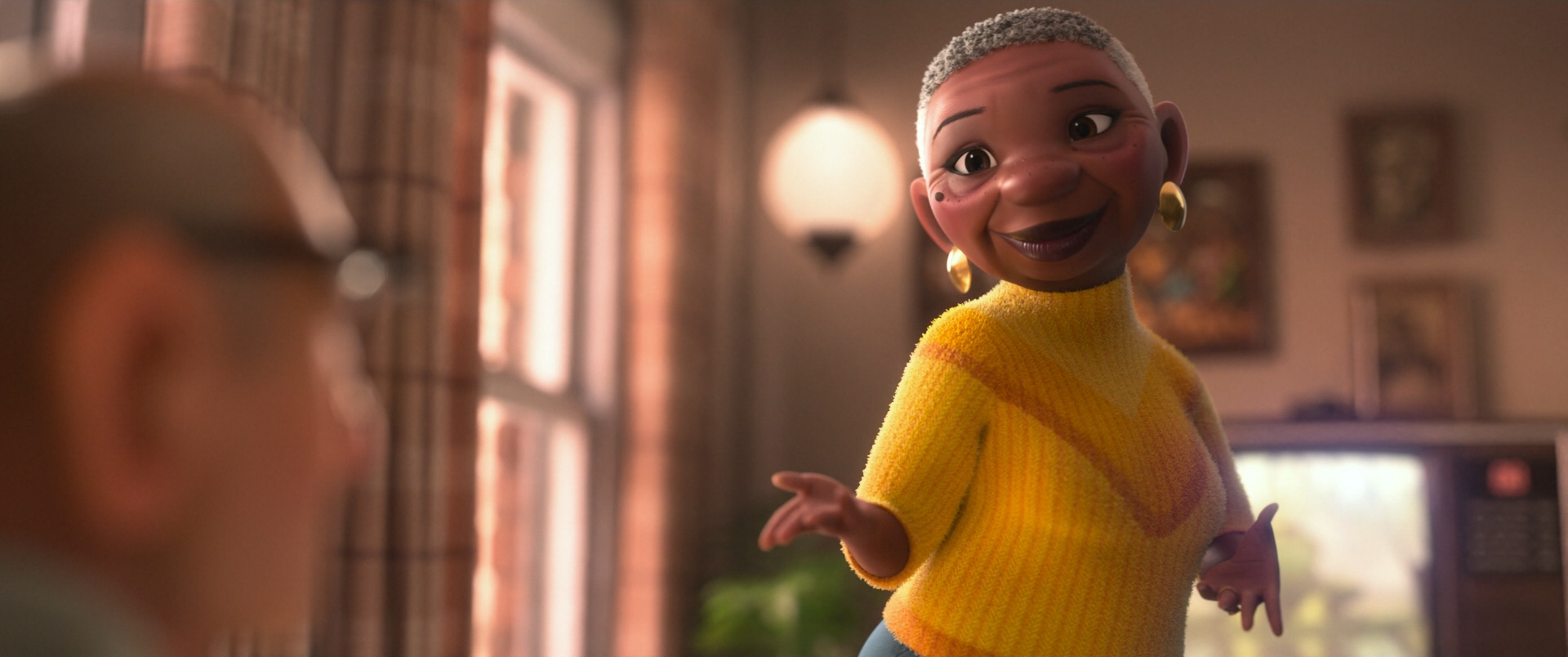
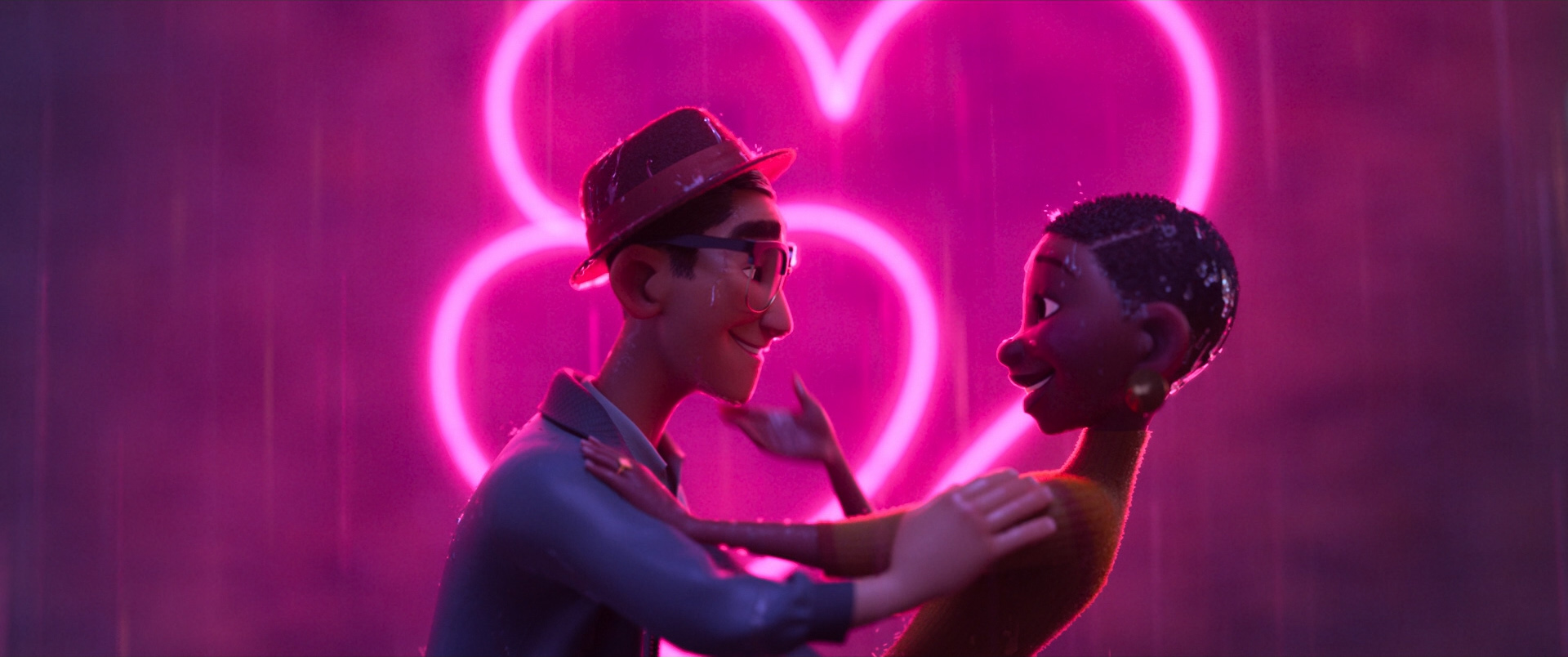
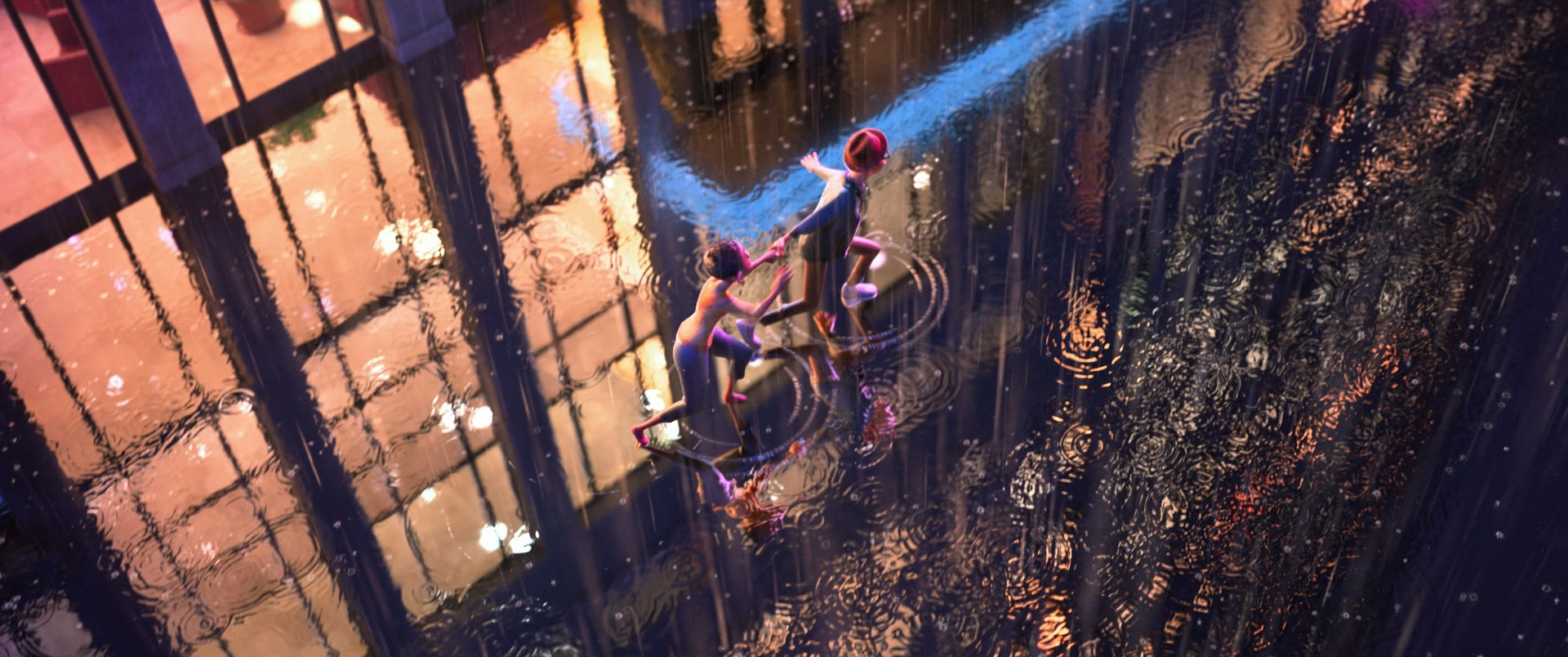
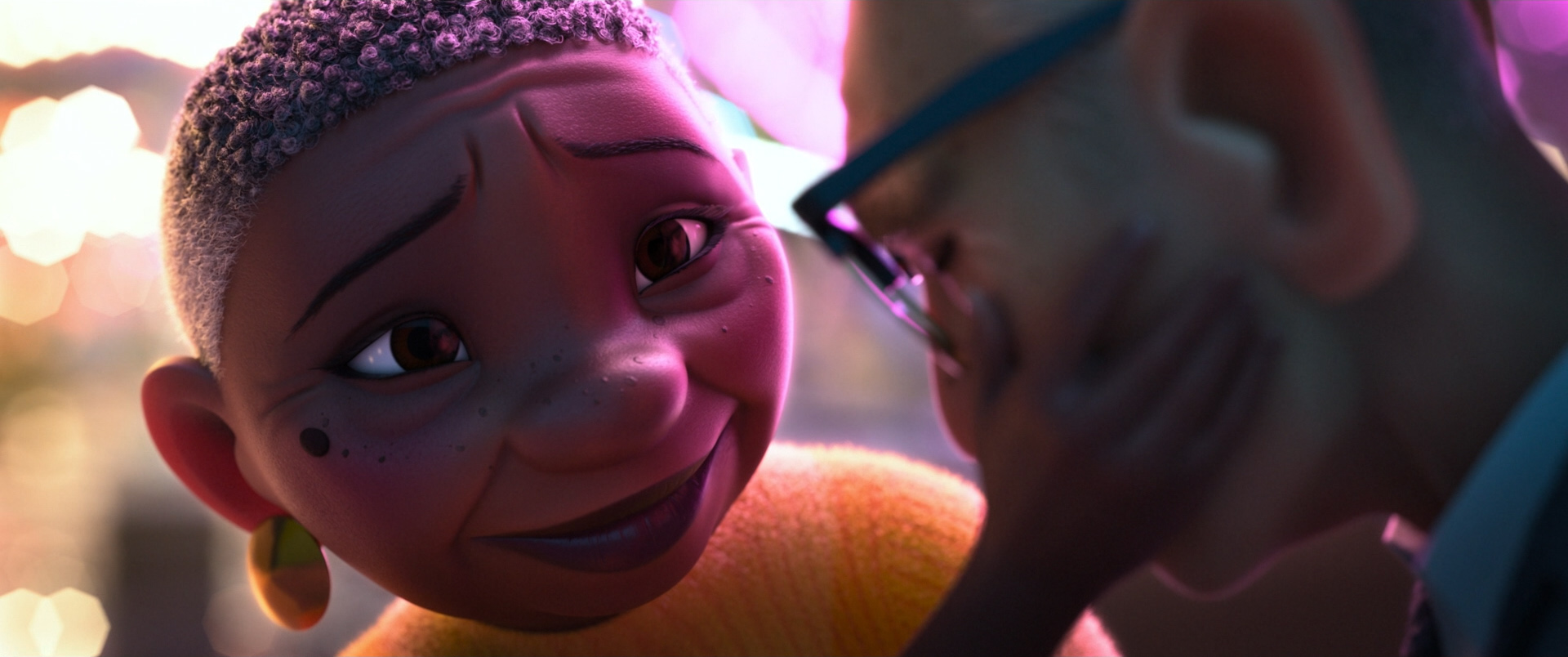
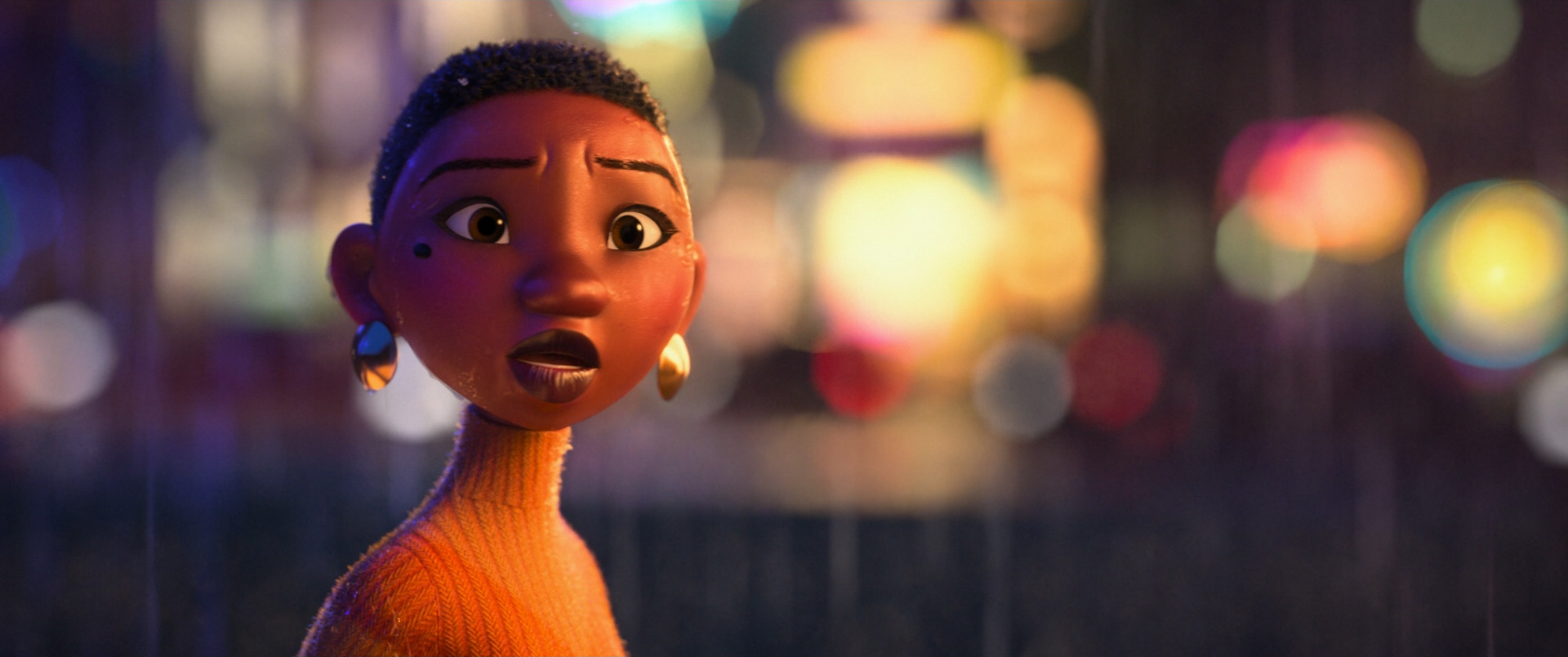
Finally, one of the things I love the most visually about Us Again is just the sheer amount of detail and richness there is in everything. When watching the short, pay attention to things like the fuzz on Dot’s sweater, or the little splashes happening everywhere as rain drops land, or the streaks of water running down Art and Dot’s faces and clothes. I think ten years ago this short would have been extraordinarily difficult (possibly borderline impossible) for the studio to make, but thanks to a decade of continuous relentless improvement in our filmmaking technology and craft, making Us Again went off without any major hitches and turned out beautifully!
Here are some frames from Us Again from the Blu-ray, presented in random order as usual. I really recommend seeing Us Again in motion though; the stills here really don’t do the amazing choreography and animation justice. Get Us Again with a copy of Raya and the Last Dragon or watch it on on Disney+; either way, go watch it on the biggest screen you can find!
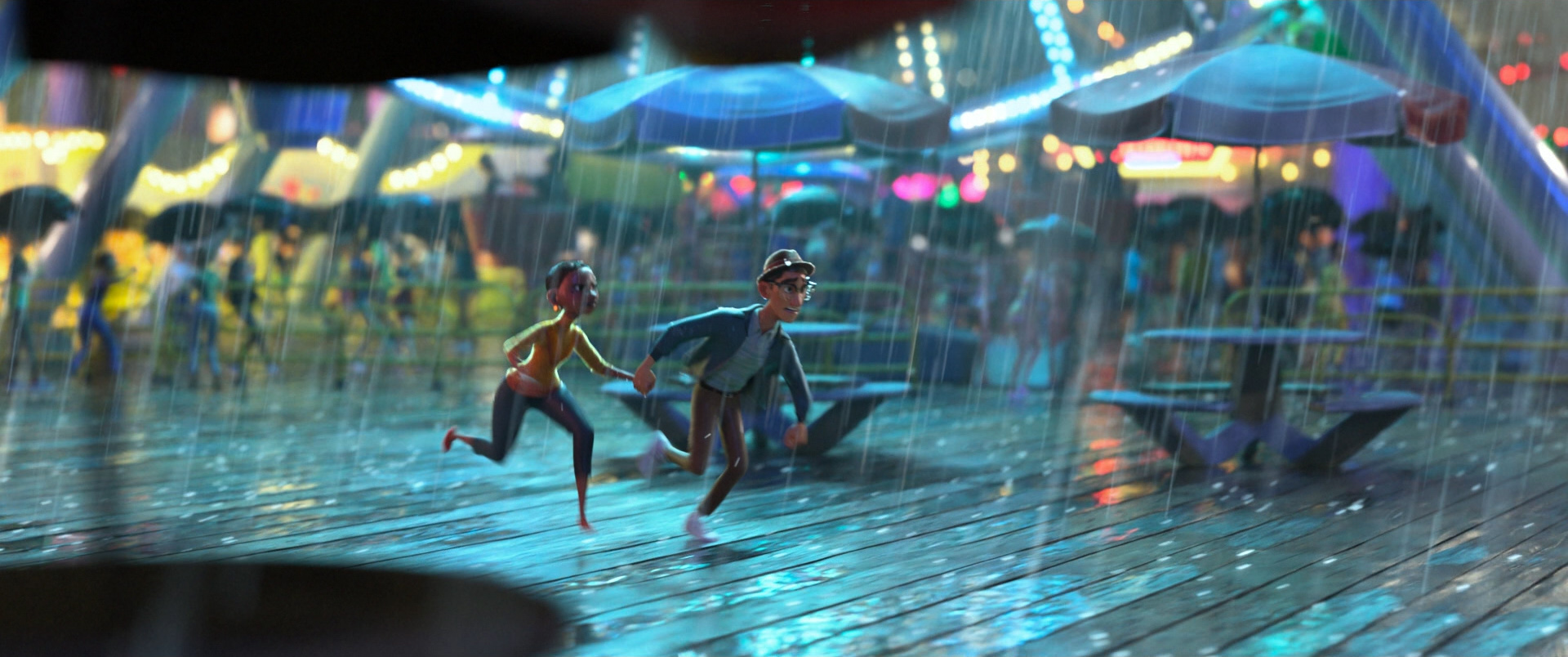
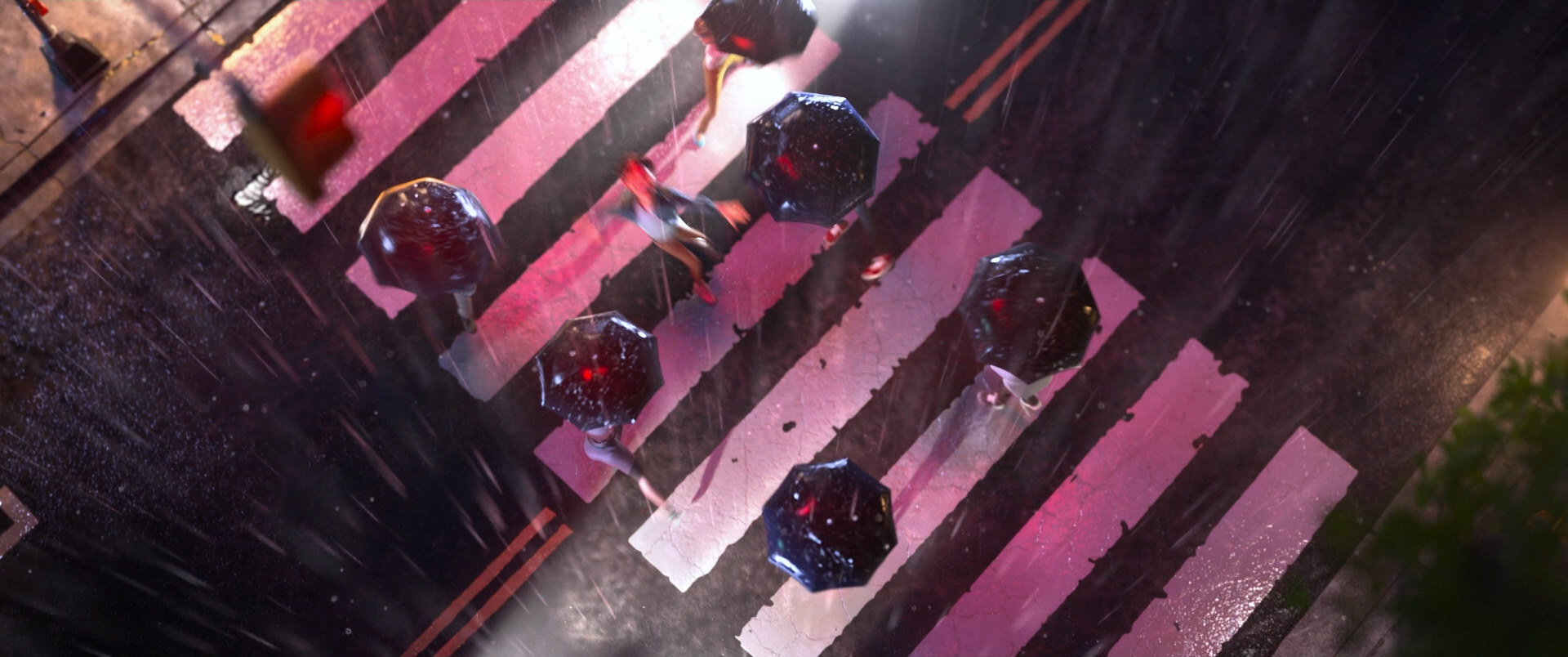
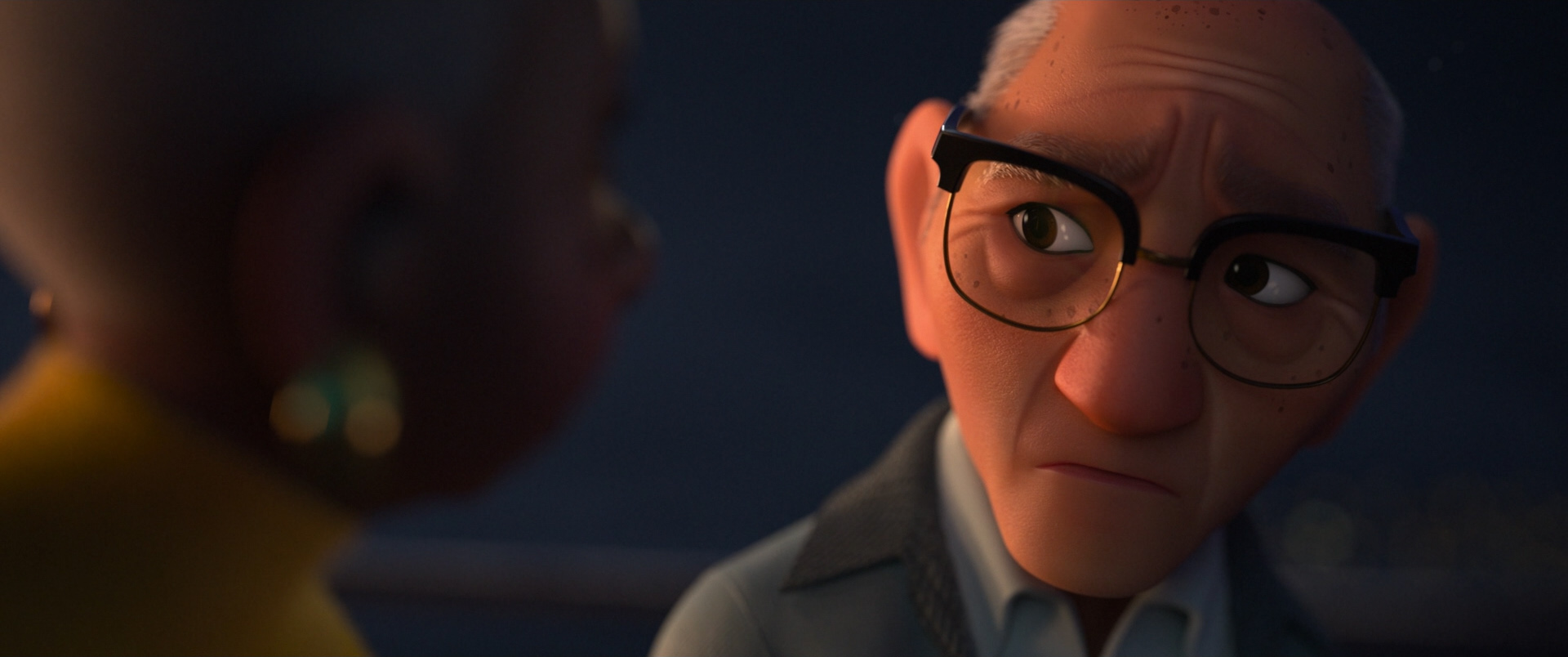
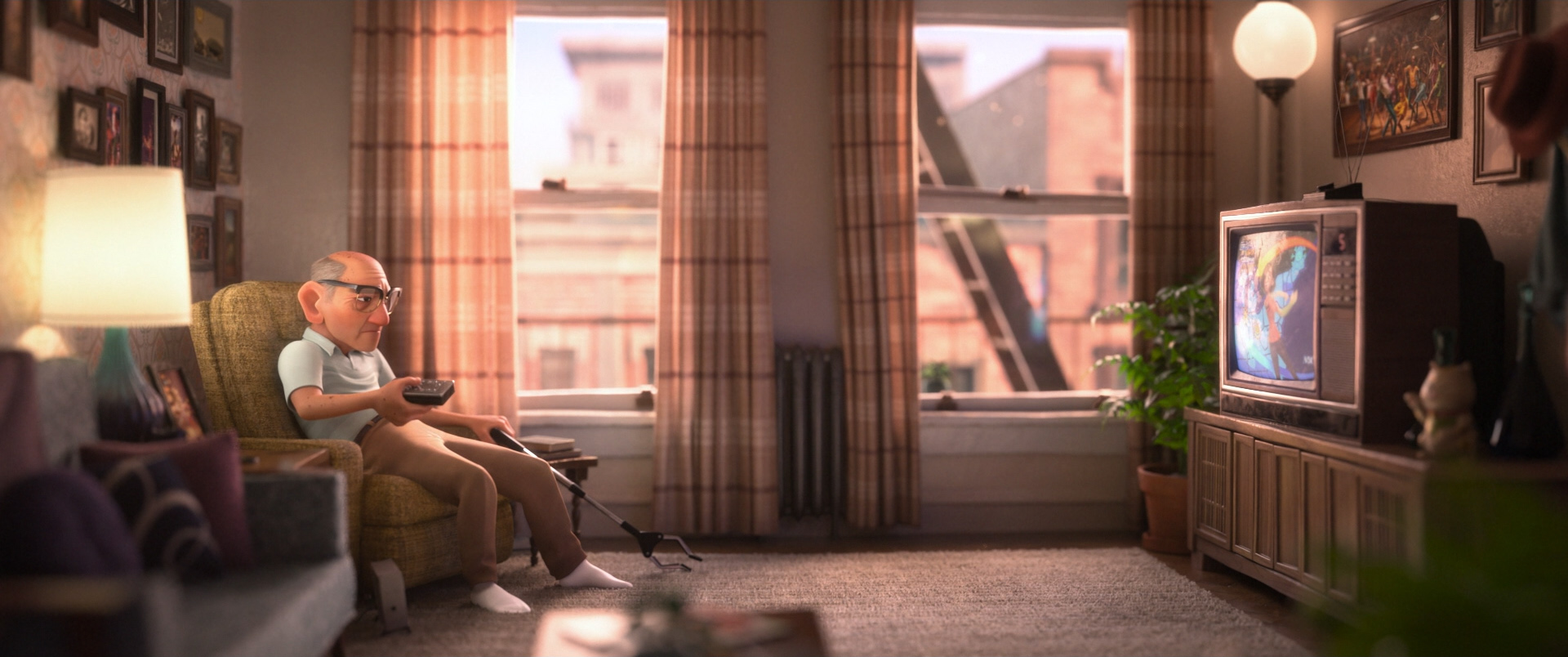
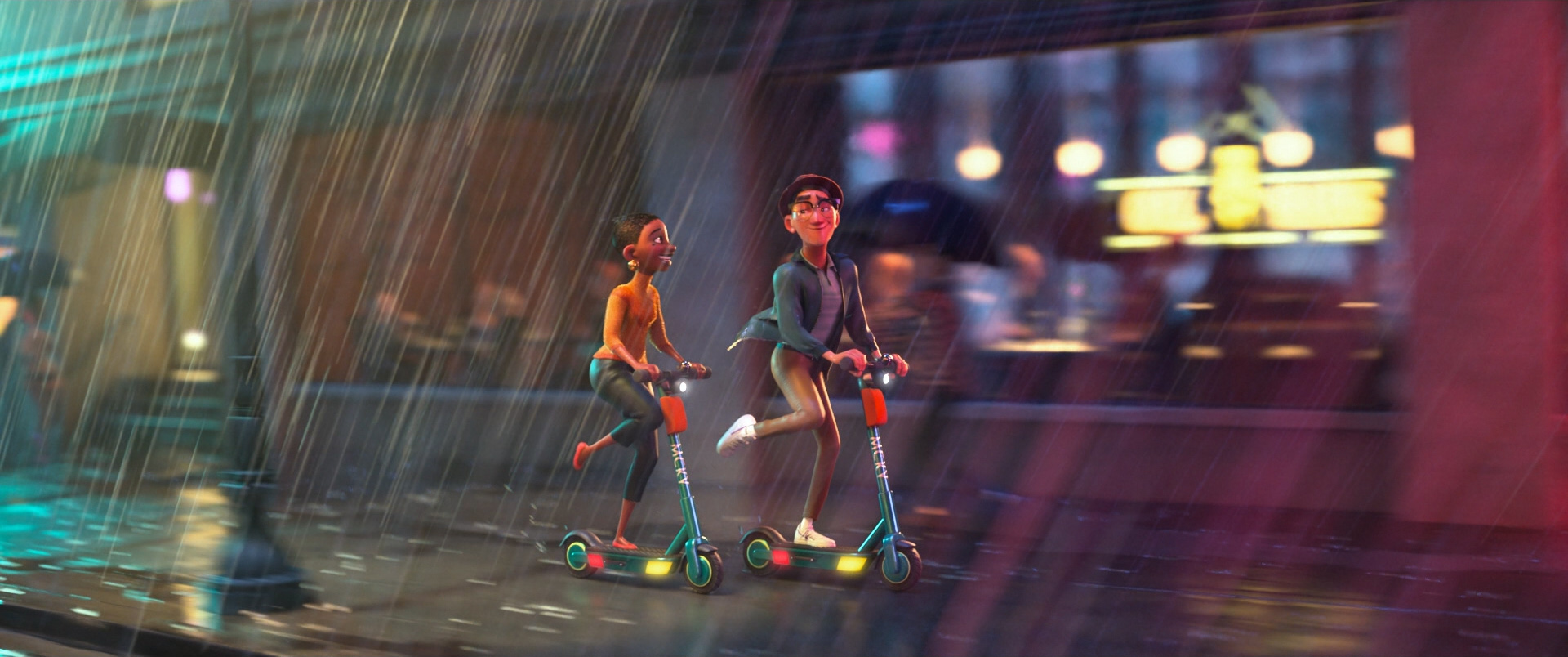
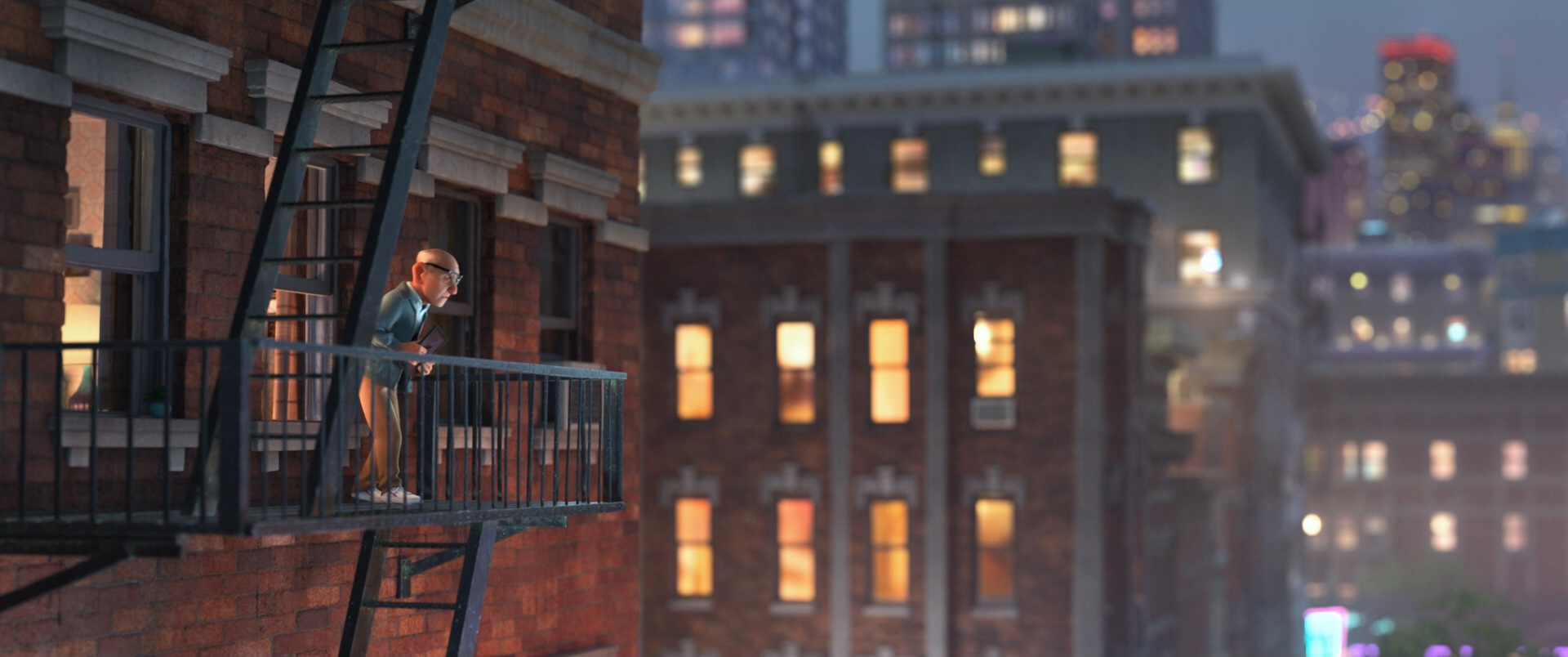
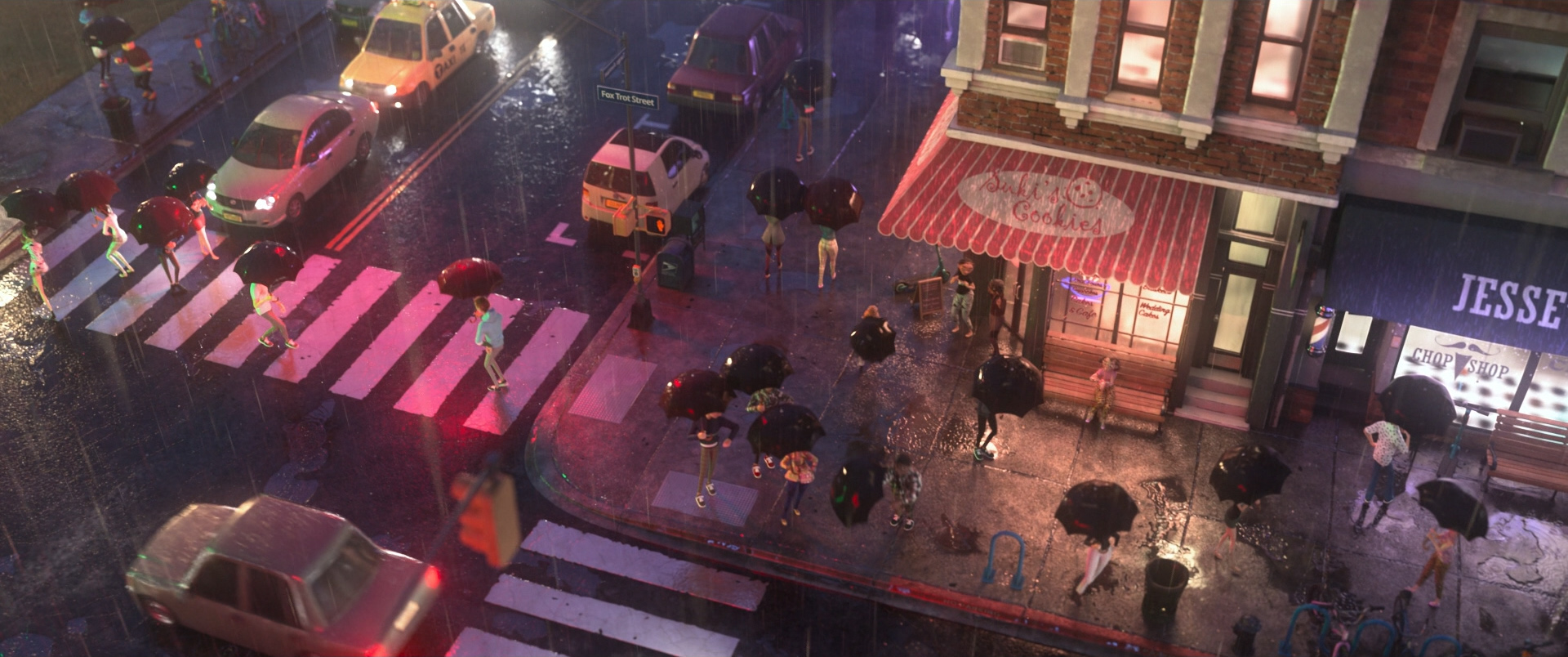
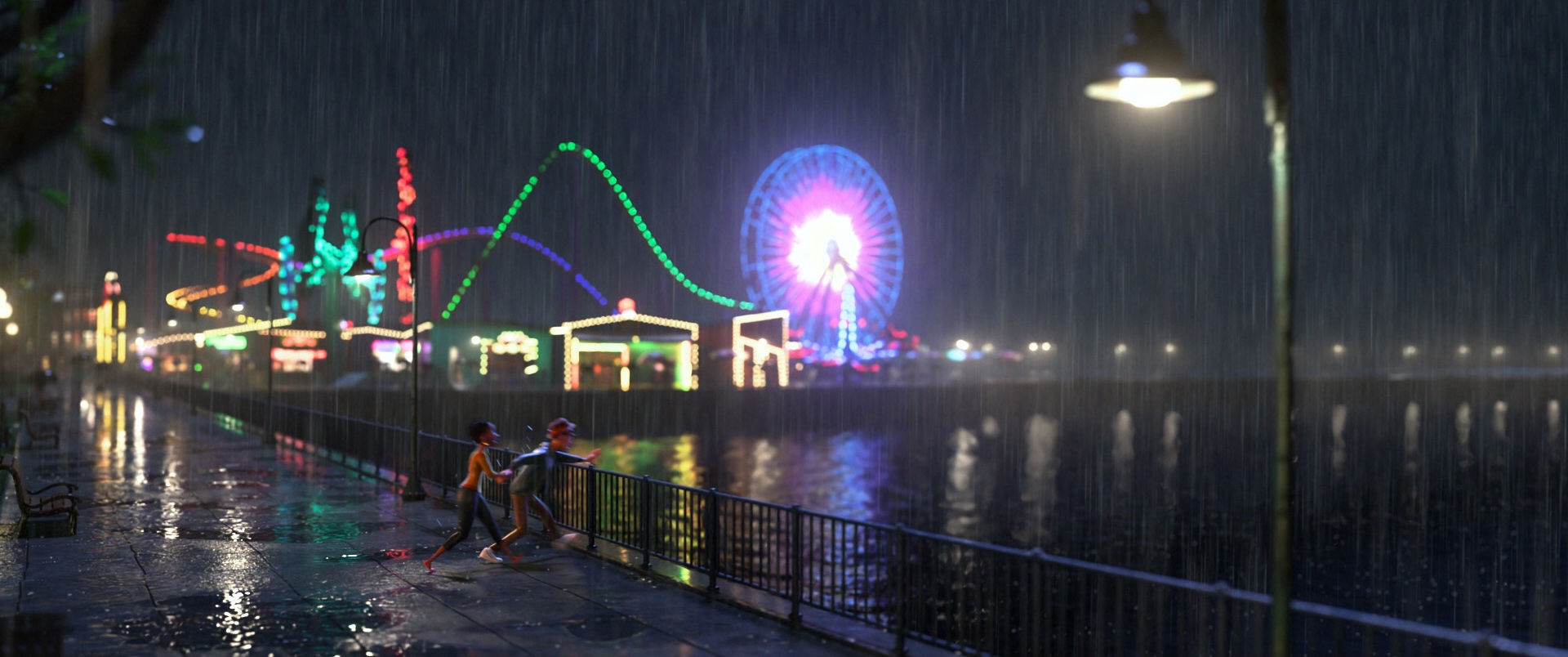
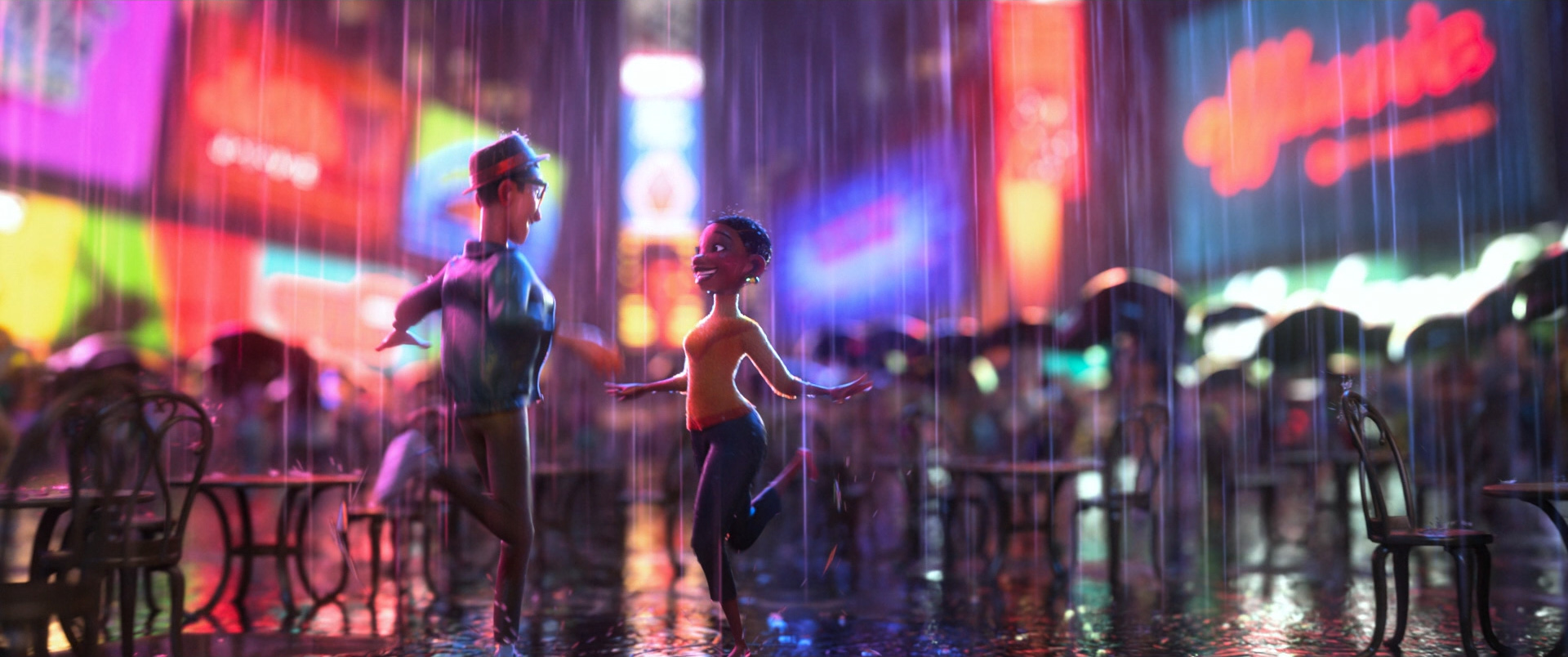
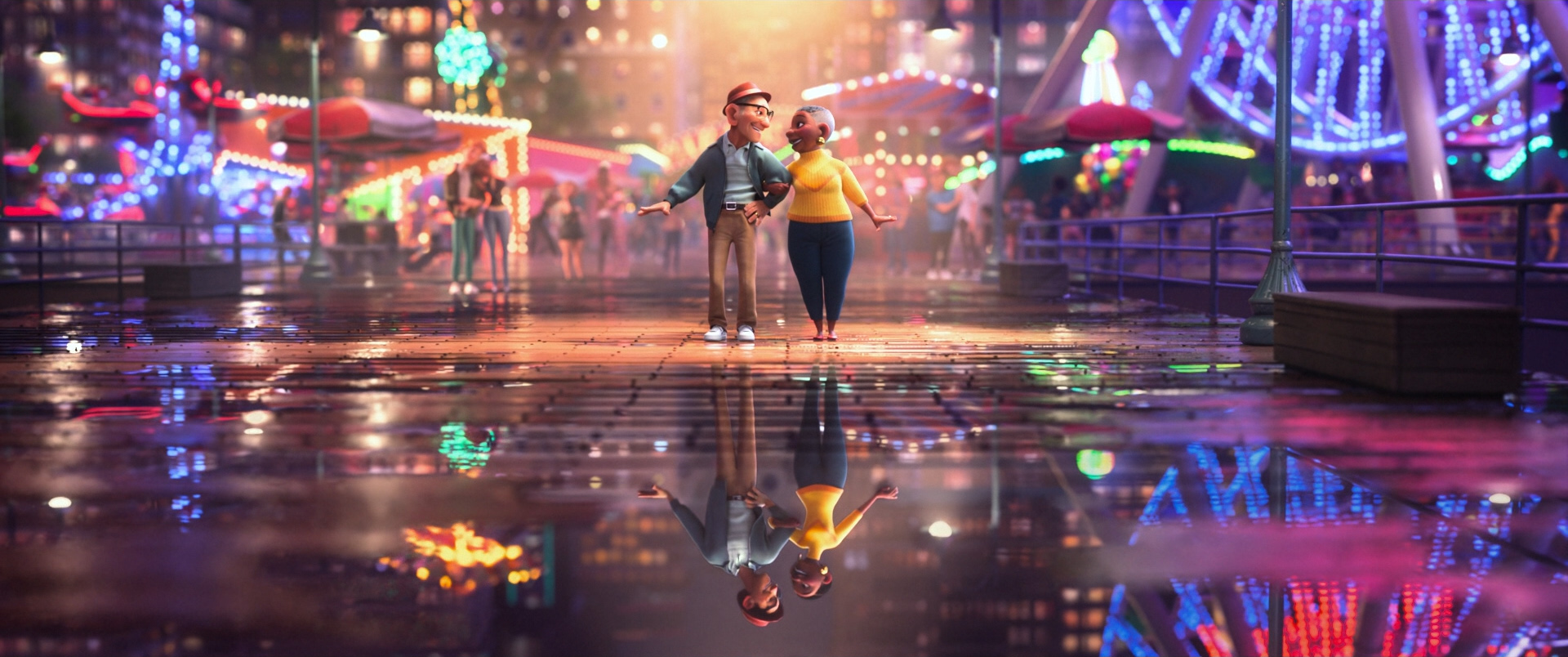
All images in this post are courtesy of and the property of Walt Disney Animation Studios.
References
Brent Burley. 2012. Physically Based Shading at Disney. In ACM SIGGRAPH 2012 Course Notes: Practical Physically-Based Shading in Film and Game Production.
Brent Burley. 2015. Extending the Disney BRDF to a BSDF with Integrated Subsurface Scattering. In ACM SIGGRAPH 2015 Course Notes: Physically Based Shading in Theory and Practice.
Brent Burley, David Adler, Matt Jen-Yuan Chiang, Hank Driskill, Ralf Habel, Patrick Kelly, Peter Kutz, Yining Karl Li, and Daniel Teece. 2018. The Design and Evolution of Disney’s Hyperion Renderer. ACM Transactions on Graphics 37, 3 (Jul. 2018), Article 33.
Brian Boyd. 2013. Lighting “The Blue Umbrella”. In ACM SIGGRAPH 2013 Talks. Article 53.
Alejandro Conty Estevez and Christopher Kulla. 2018. Importance Sampling of Many Lights with Adaptive Tree Splitting. Proc. of the ACM on Computer Graphics and Interactive Techniques (Proc. of High Performance Graphics) 1, 2 (Aug. 2018), Article 25.
Yining Karl Li, Charlotte Zhu, Gregory Nichols, Peter Kutz, Wei-Feng Wayne Huang, David Adler, Brent Burley, and Daniel Teece. 2024. Cache Points for Production-Scale Occlusion-Aware Many-Lights Sampling and Volumetric Scattering. In Proc. of Digital Production Symposium (DigiPro 2024). Article 6.
Vaibhav Vavilala. 2019. Lighting Pruning on Toy Story 4. In ACM SIGGRAPH 2019 Talks. Article 44.
Footnotes
1 If you pay close attention, you may notice that the pier amusement park in Us Again is a nod to the old Paradise Pier area at Disney’s California Adventure, complete with the same entrance sign! keyboard_return