Once Upon a Snowman
For the holiday season this year, Walt Disney Animation Studios has a small surprise release! Last month the studio announced the release of Once Upon a Snowman, which is now out on Disney+ as of last week. Once Upon a Snowman is a short film that takes place during the events of Frozen (2014) and follows Olaf between when Elsa creates him and when he runs into Anna and Kristoff. The short fills in the gap to show how Olaf initially comes to learn who he is and the hijinks he gets up to along the way.
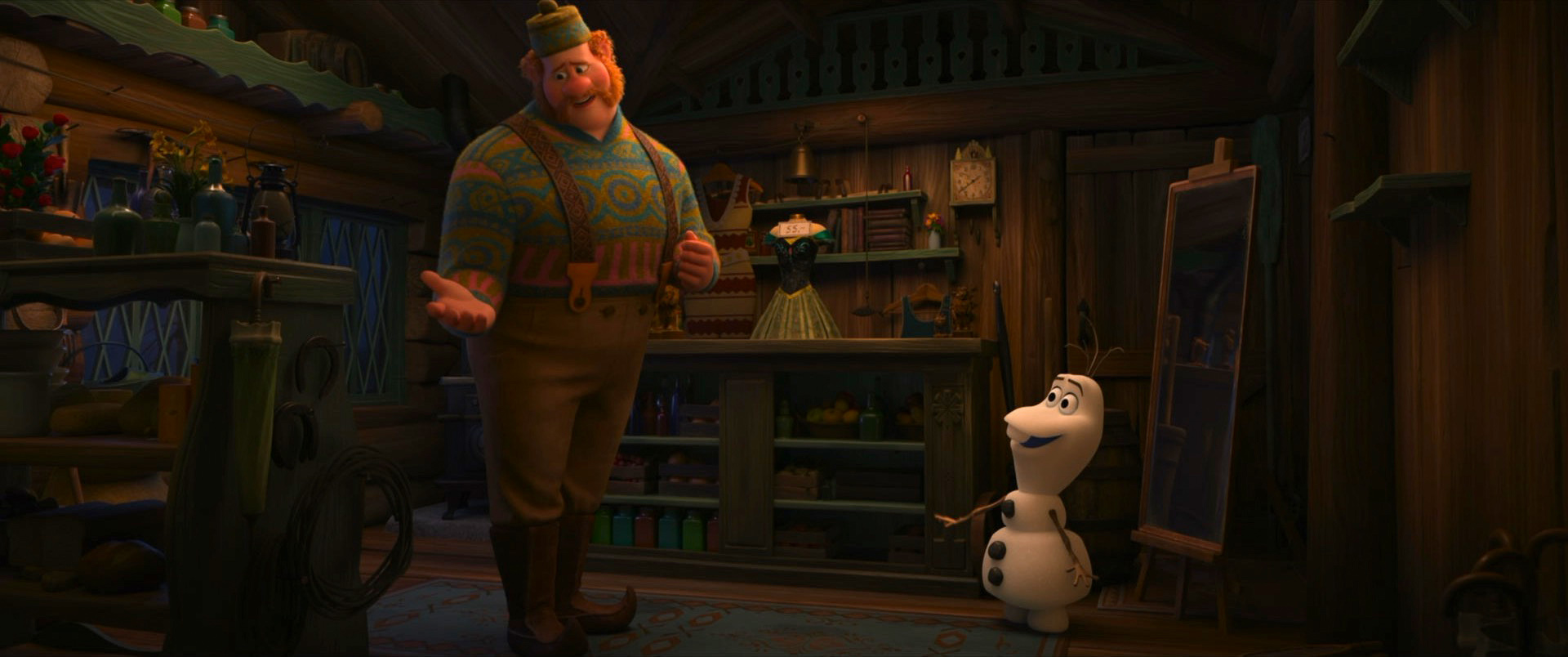
From a technical perspective, Once Upon a Snowman shares pretty much all of its tooling and tech with Frozen 2, because Once Upon a Snowman was made using the exact same pipeline and toolset version that Frozen 2 was made with. In fact, Once Upon a Snowman was made overlapping with the end of production on Frozen 2 and completed a few months after Frozen 2 and has simply been waiting for release since then. The thinking was that rather than spin down the Frozen 2 pipeline upon completion of the movie, why not keep it going for a bit longer to make a short?
However, one enormous difference between Once Upon a Snowman and Frozen 2 is the time period the story is set in, and therefore the versions of characters and sets that had to be built. Since Once Upon a Snowman is set during the events of Frozen, the versions of Anna, Elsa, and Kristoff have to be the younger versions of themselves in their outfits from the first film. In my Frozen 2 post, I wrote about all of the ways that Frozen 2 is an interesting benchmark for what we are capable of making today using Disney’s Hyperion Renderer [Burley et al. 2018] versus what the studio was capable of back on the original Frozen using RenderMan 17. Once Upon a Snowman is an even more direct comparison between Disney Animation’s modern tech and its 2014-era tech since all of the characters and sets are directly one-for-one matched to the original Frozen.
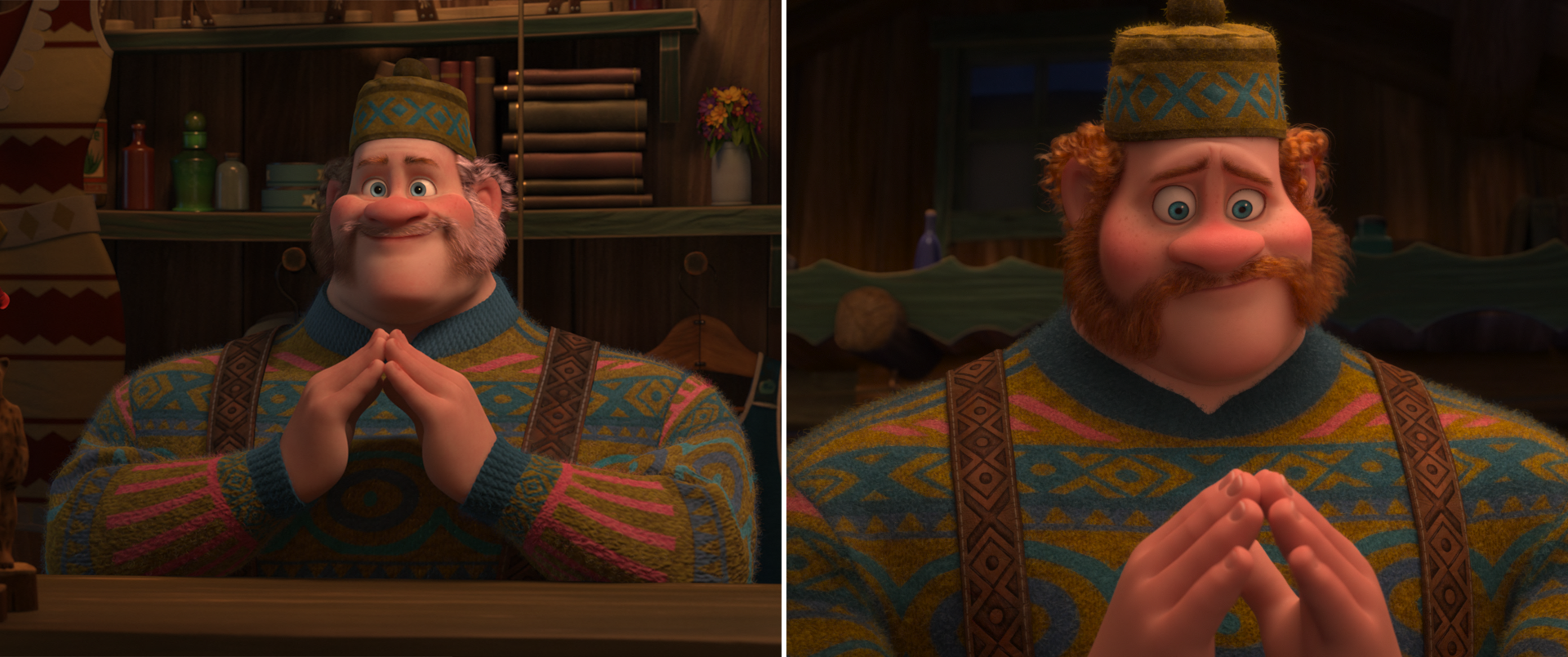
Because Hyperion uses an evolved version [Burley 2015] of the same Disney BSDF that Frozen used an earlier version of [Burley 2012], porting assets forward from Frozen to the modern pipeline doesn’t require a full rebuild from scratch. The port isn’t just a direct copy either; a considerable amount of remastering and improvement has to be carried out to bring Frozen-era assets up to our modern standard, but the work required is also still much less than starting over completely. Oaken is a great example; the Once Upon a Snowman version of Oaken is recognizably the same Oaken from Frozen, but looking closely reveals a number of upgrades. The Once Upon a Snowman version has vastly more convincing subsurface scattering [Chiang et al. 2016a], various subtle global illumination effects, vastly better hair shading, and even some improved geometric details such as far more detailed fuzz on his sweater:
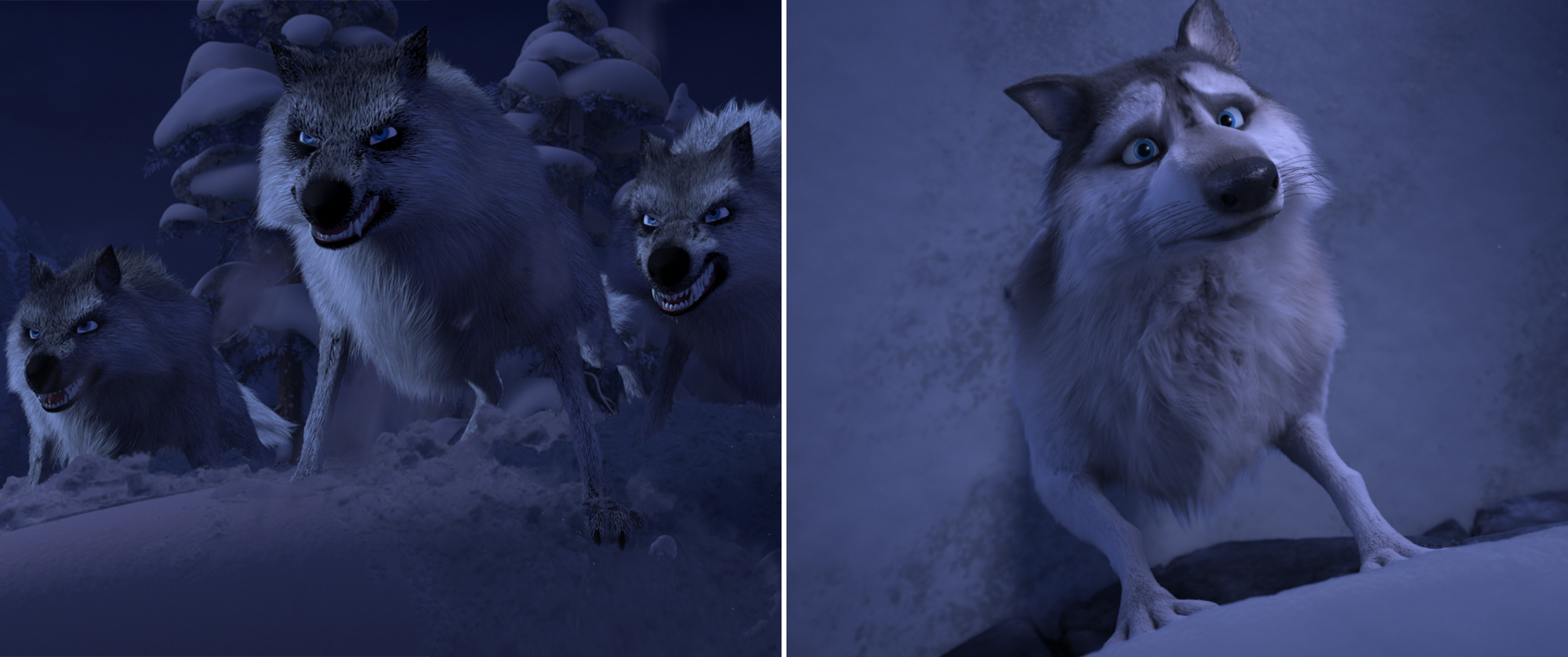
The impact of the modern-day Zootopia-era fur/hair shader is really apparent on the wolves that are seen in both Frozen and Once Upon a Snowman. In Frozen, these wolves are seen chasing Anna and Kristoff’s sled, and in Once Upon a Snowman we see them shortly after the events of Frozen, this time interacting with Olaf. During Zootopia we learned an enormous amount about making white fur look convincingly fluffy and soft [Burkard et al 2016]; the look comes entirely from high-order multiple scattering. Frozen used a version of our Tangled-era hair shader [Sadeghi et al. 2010] and point-based hair lighting [Montoya-Vozmediano 2010], for which high-order multiple scattering effects were simply impossible to practically achieve, but today using Hyperion and our modern Zootopia-era fur/hair model [Chiang et al. 2016b], this is now easy for us to achieve. The version of the wolves in Once Upon a Snowman also sports a considerably higher curve count and far more advanced groom:
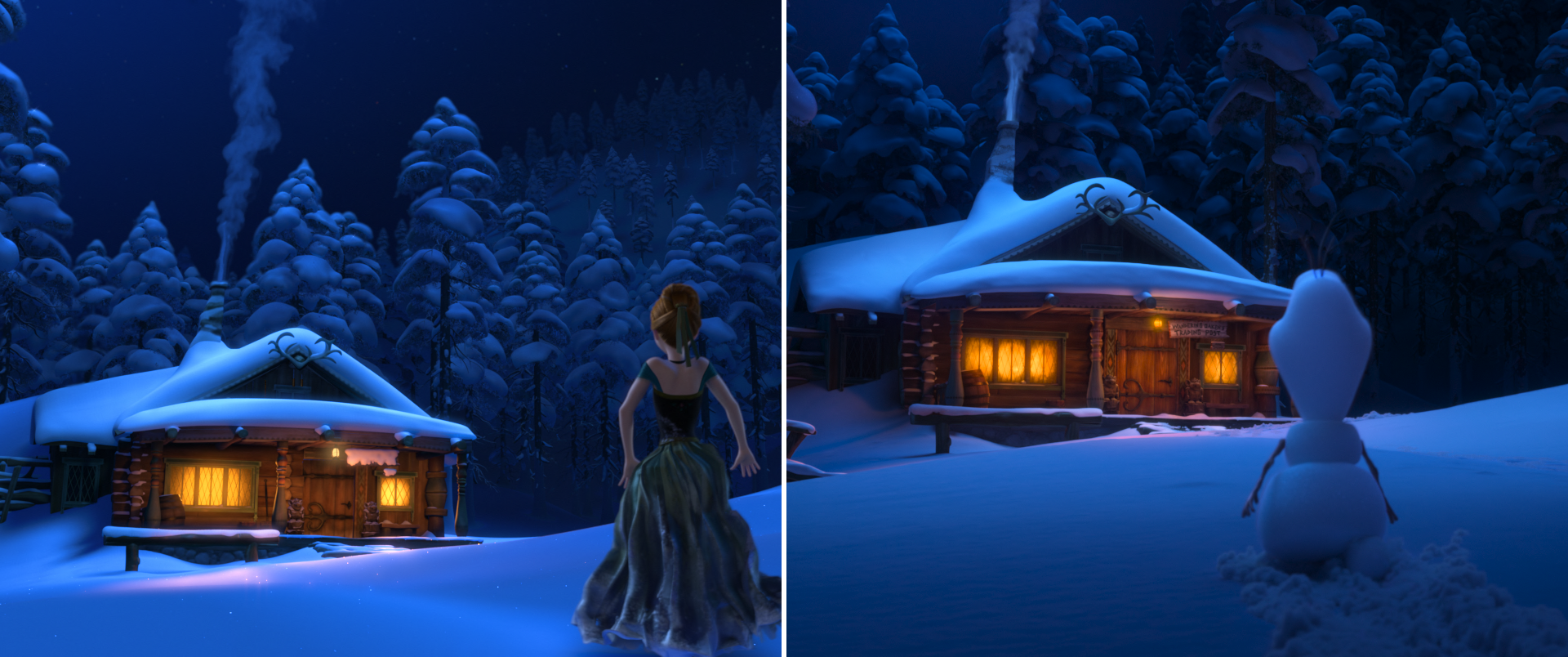
The interesting artistic challenge of porting assets from older shows to the modern pipeline is that they simultaneously need to be upgraded but still look recognizable when compared with the original. They don’t need to look identical, but should look similar enough that they feel the same in the viewer’s memory. One way I’ve heard artists describe it that I really like is: things always look better in our memories than they actually did at the time, and the match we have to aim for is as good as our memories’ retroactively improved version. A great example of this is the establishing shot of Wandering Oaken’s Trading Post; this is one of the closest matching shots between Frozen and Once Upon a Snowman. Looking closely there are a bunch of apparent visual improvements in the Once Upon a Snowman version: the Frozen version is very clearly lacking multi-bounce global illumination between the snow and the structure and a lot of the colors on the structure look simultaneously more muted and higher contrast than one would expect, whereas the Once Upon a Snowman version has richer colors from multi-bounce global illumination, softer light scattering through the snow on the trees, more detailed and richer shadowing, and so on and so forth. However, if you just glance between the two versions, they are definitely recognizably the same place at nearly the same moment in time:
In general, an interesting thing about the shift to fully physically based shading and path-traced rendering is that many effects that previously were extraordinarily difficult to achieve in the old ad-hoc rasterized world are now really easy to achieve [Burley et al. 2017]. Another great example in addition to everything above is Elsa’s ice palace; for the original Frozen, rendering the ice palace’s complex layers of refractive ice was an enormous challenge that took a wide combination of specialized rendering and compositing tricks to achieve [Siegel 2014], but with our modern renderer, all we have to do is assign a standard Disney BSDF material, make it refractive, and hit render, and it all just works. The ice palace is only seen in one shot in Once Upon a Snowman, but even that single shot in the pre-Hyperion world would have taken considerable effort to put together, whereas in the modern workflow it didn’t merit any special consideration at all to achieve.
Normally I’d write that the entire short was rendered using Disney’s Hyperion Renderer, but there’s actually a special quirk about Once Upon a Snowman: the first seven shots are directly edited in from the original Frozen’s final footage, so they predate Hyperion. However, one shot is actually extended from the original Frozen; the third shot in Once Upon a Snowman is much longer than in the original Frozen. For Once Upon a Snowman, this shot was extended to stay on Olaf much longer to shift the story focus from Elsa to Olaf, but had to maintain a consistent look with the surrounding shots pulled directly from Frozen. Just re-rendering this single shot by itself using Hyperion would have made for a bit of a jarring jump between older-style RenderMan 17 visuals, a richer looking shot with modern global illumination using Hyperion, and then back to older-style visuals for a few more shots. However, re-rendering all of the Frozen footage using Hyperion was also not a great solution, since it would have entailed a lot of extraneous extra work just to reproduce footage that we already had. Instead, the right solution was to extend, re-animate, and then re-render the shot in the original Frozen pipeline, which is a much harder thing to do than one might think!
In the six years since the original Frozen’s release, the studio’s hardware standard and software stack has evolved considerably, and RenderMan hasn’t been run in-house for many, many years. Instead of trying to get the original Frozen’s pipeline up and running on the latest hardware and operating system version, the easier approach was just to resurrect a handful of mothballed workstations from the Frozen-era and do everything using the Frozen-era pipeline running on the same operating system version used during Frozen. Essentially we built a little time capsule just to create the extended version of that shot. I wasn’t involved with this effort, but it was great fun to watch it unfold a few offices down the hall from the Hyperion team’s office. Starting with the shot of Elsa’s cloak knocking Olaf down the hill, all shots in the rest of the short are rendered using Hyperion, and if you compare the shot immediately before the first Hyperion shot with the first Hyperion shot, you can see a clear jump in visual quality.
I think it’s pretty interesting and cool how Anna, Elsa, Olaf, Sven, Kristoff, and the rest of the Frozen cast and world have become a sort of de facto benchmark for Hyperion and Disney Animation’s continued animation and graphics tech capabilities over time. The original Frozen marked the studio’s last RenderMan show and therefore represents the farthest the studio was able to push visual quality before path tracing, and since then, Frozen Fever, Olaf’s Frozen Adventure, Frozen 2, and Once Upon a Snowman were all made using successively more capable versions of Hyperion, with all of the characters and sets being ported forward to use the latest tech each time. The history of Frozen’s core characters is also a series of snapshots in the history of modern Disney Animation’s continuously advancing technology and CG production capabilities.
Here are some frames from Once Upon a Snowman from Disney+, presented in no particular order. You can stream Once Upon a Snowman on Disney+; as always I suggest seeing it on the biggest screen you can!
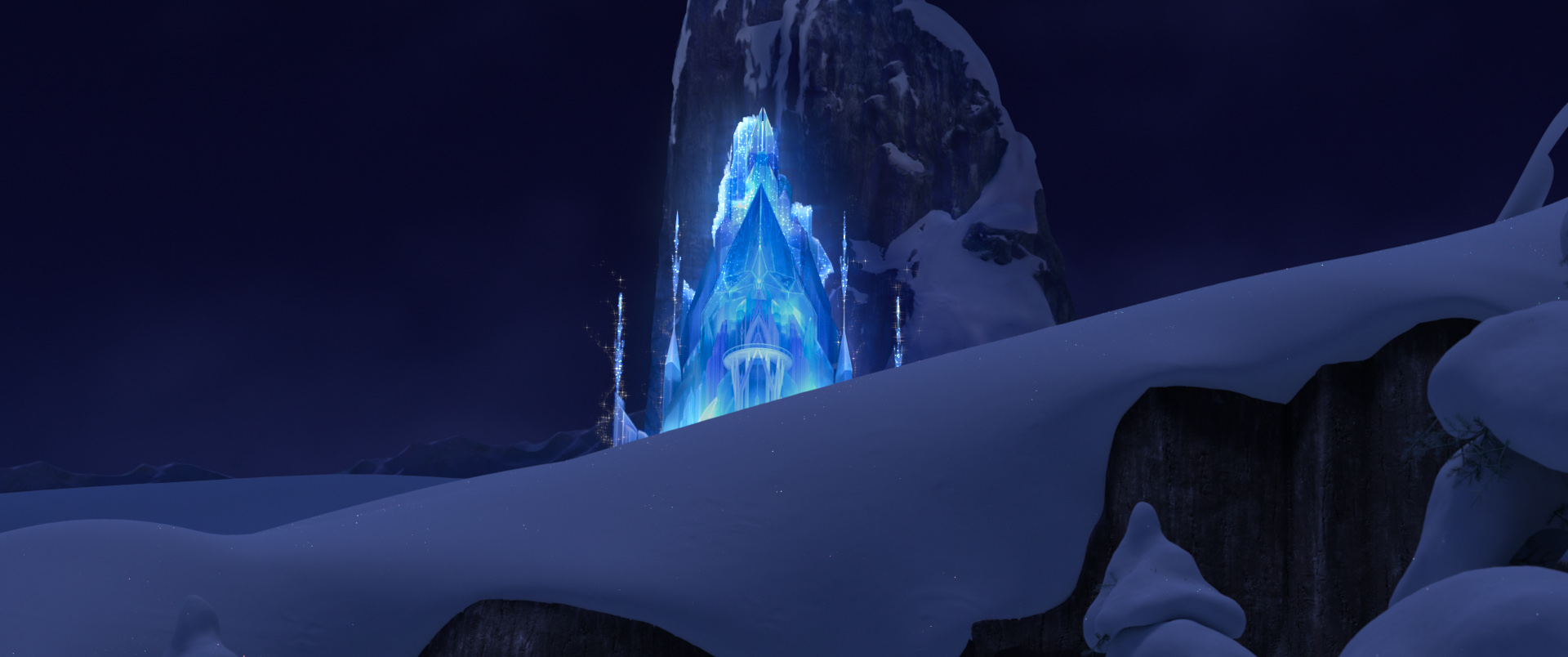
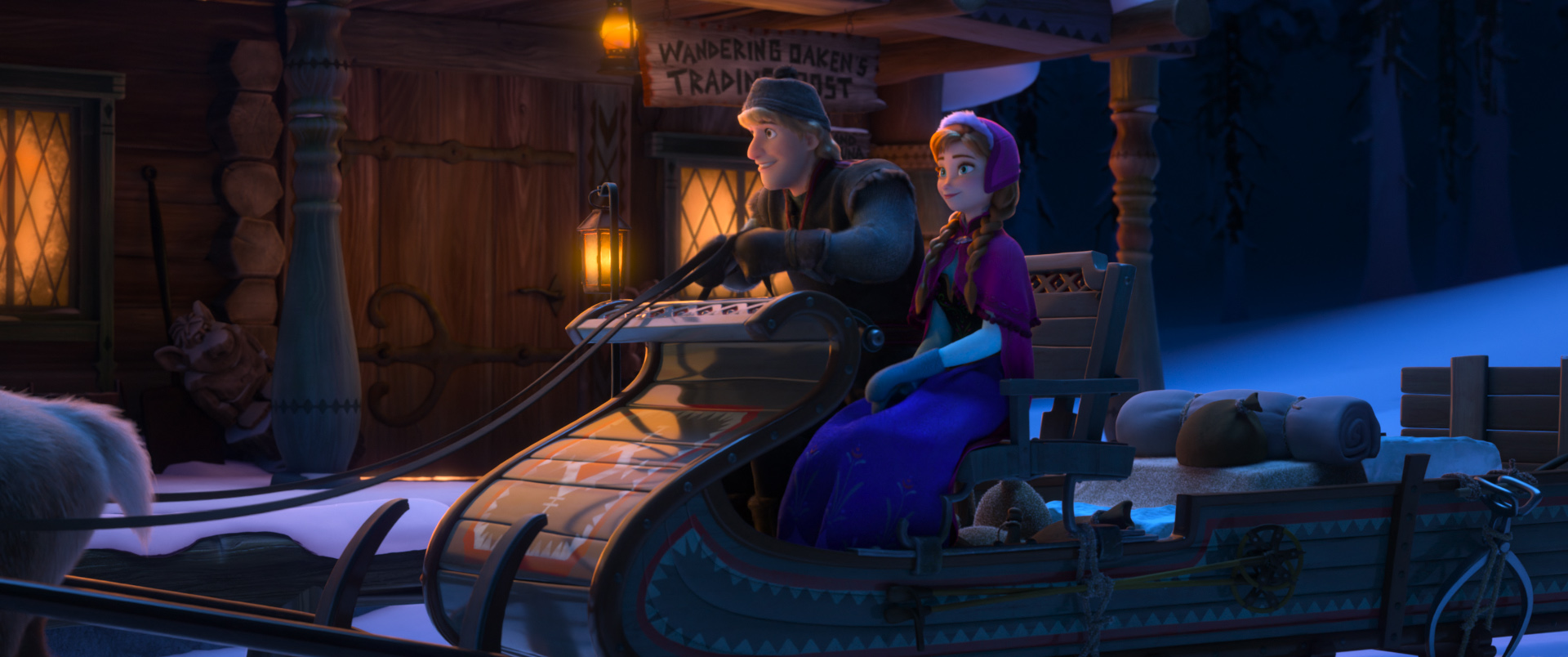
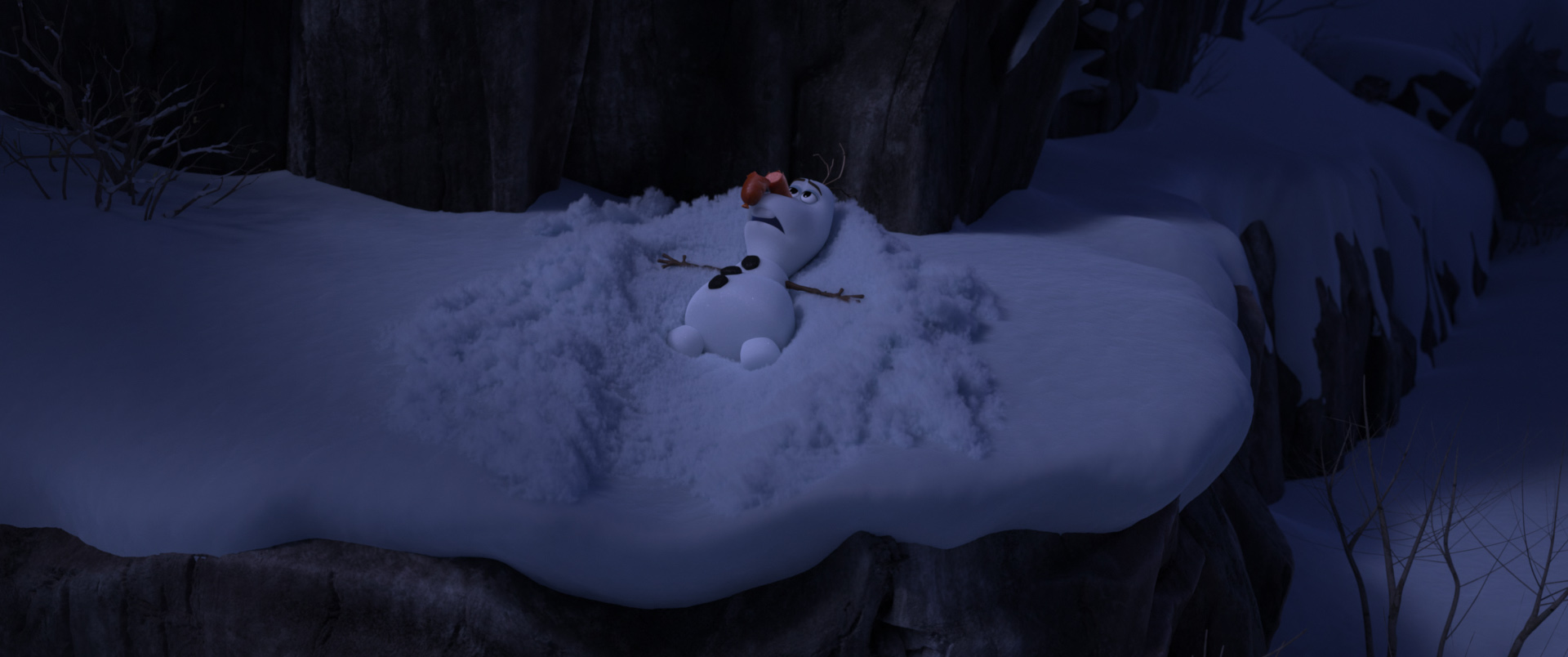
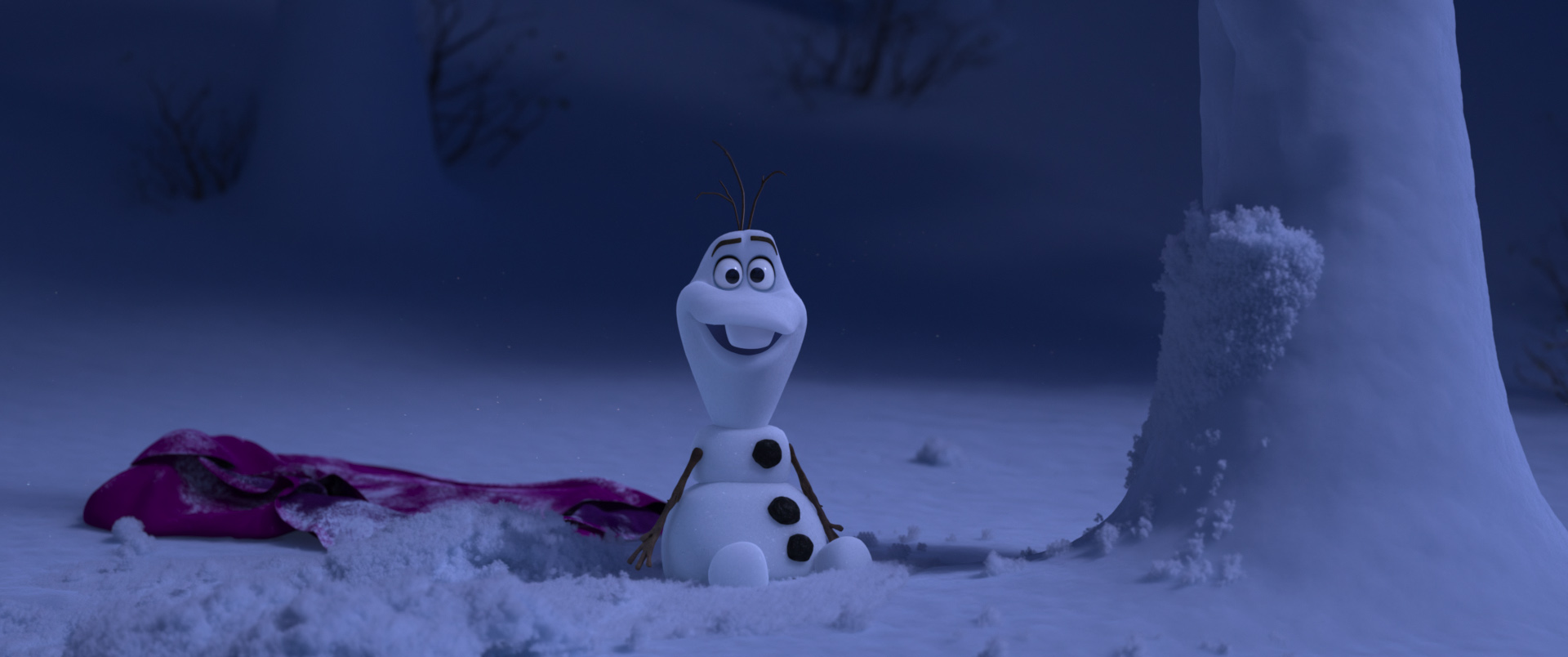
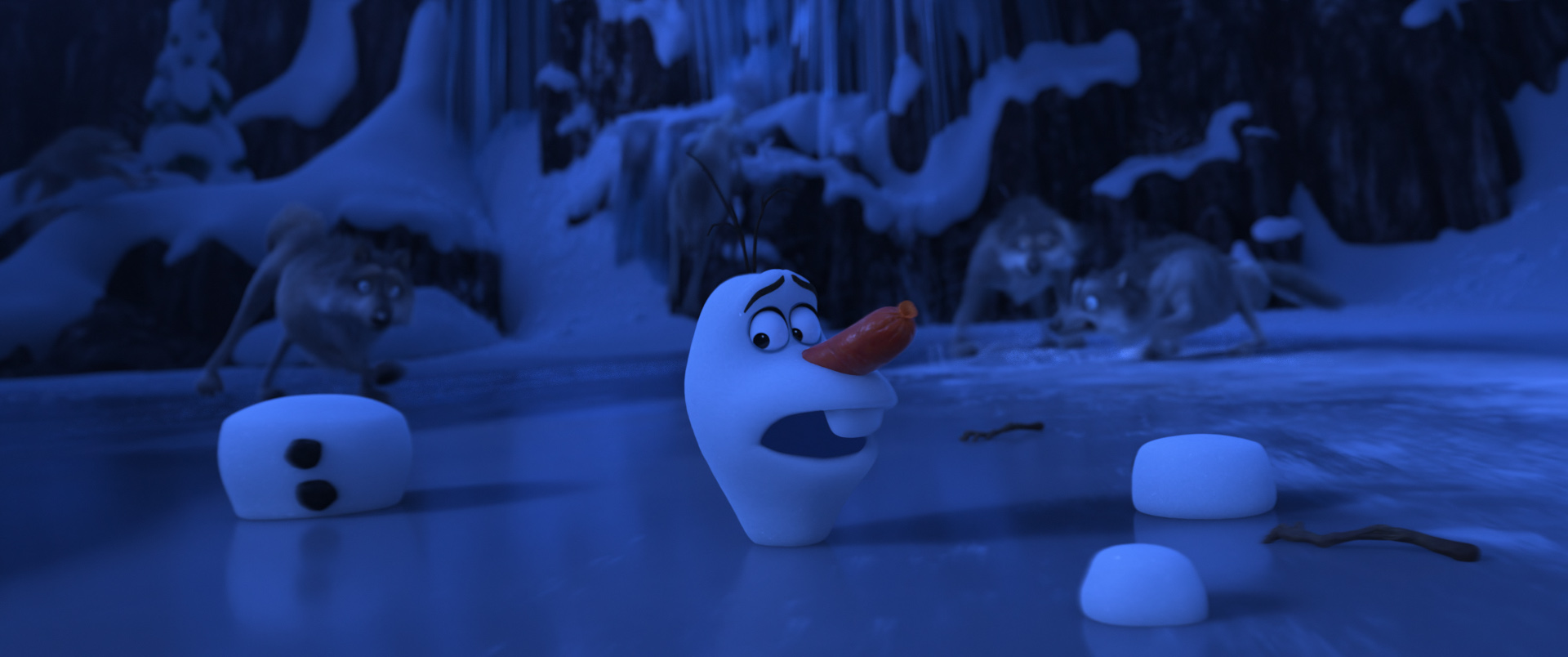
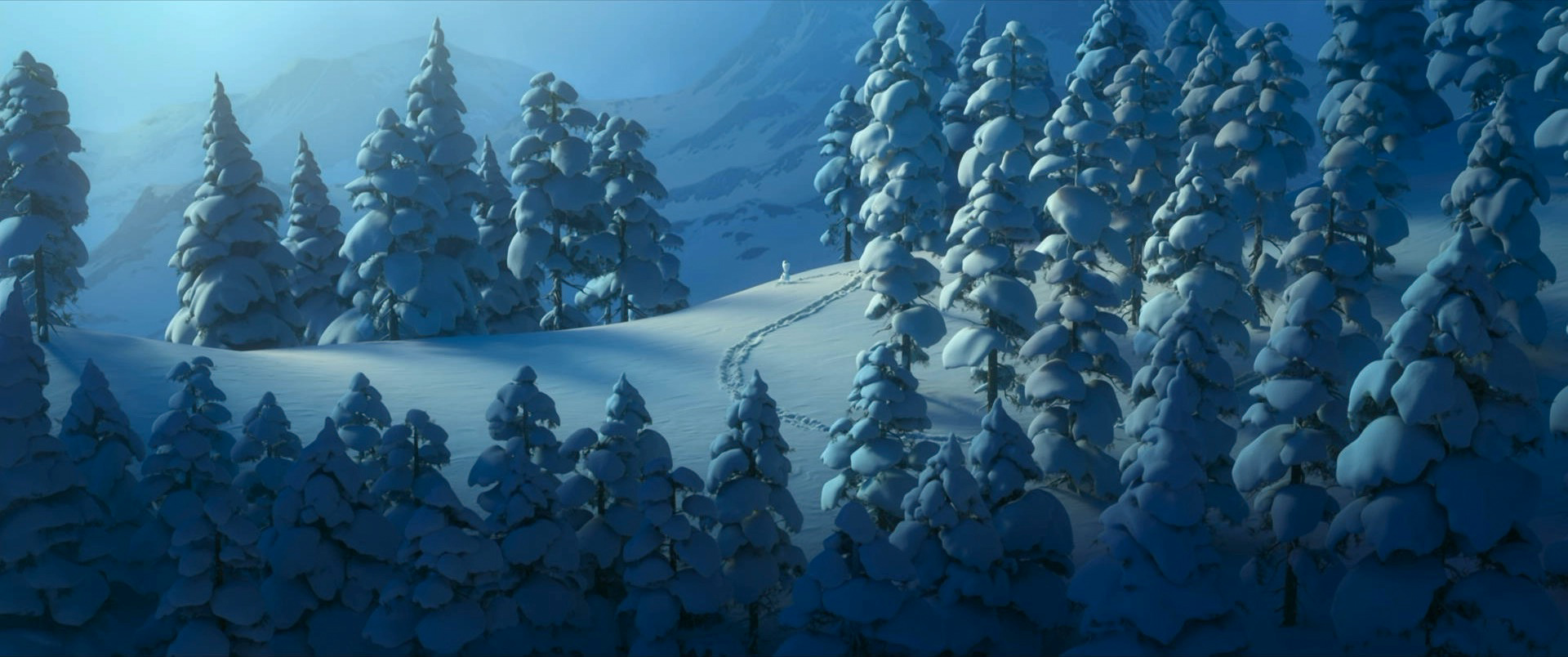
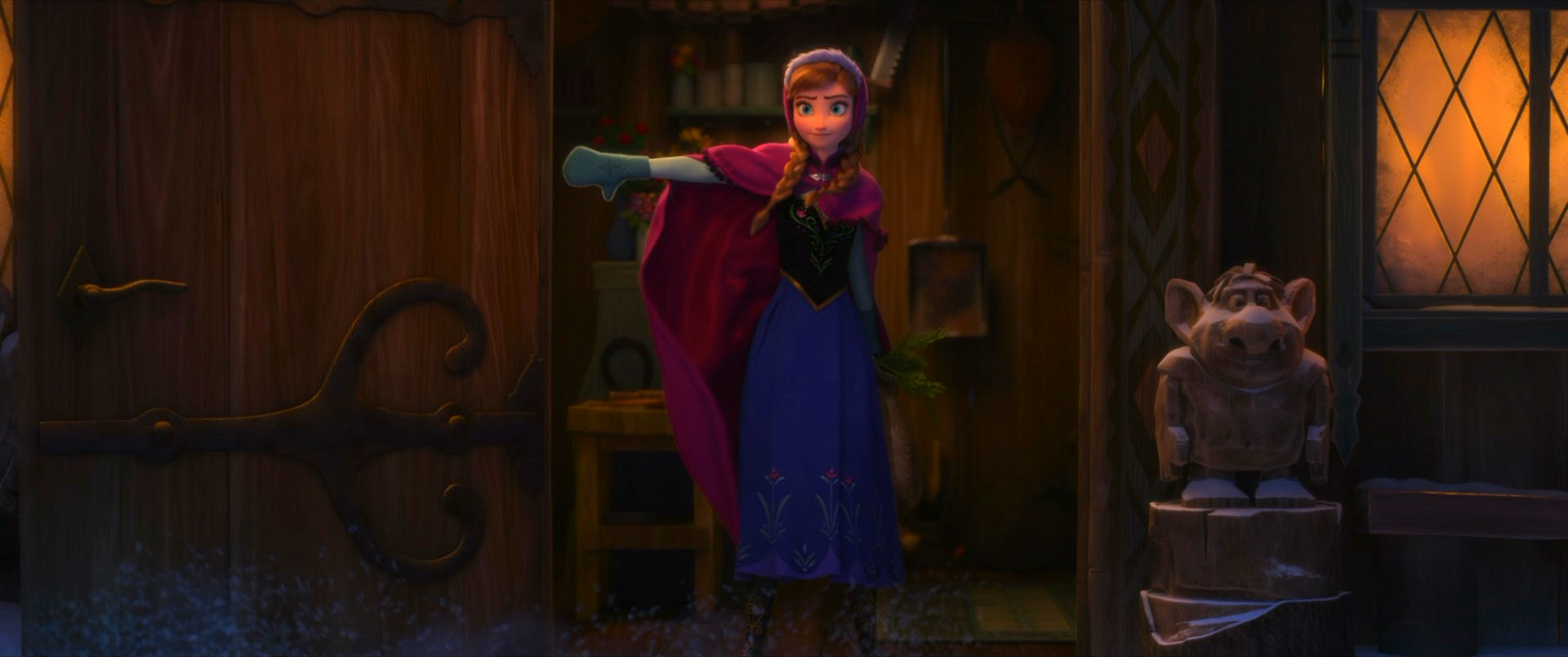
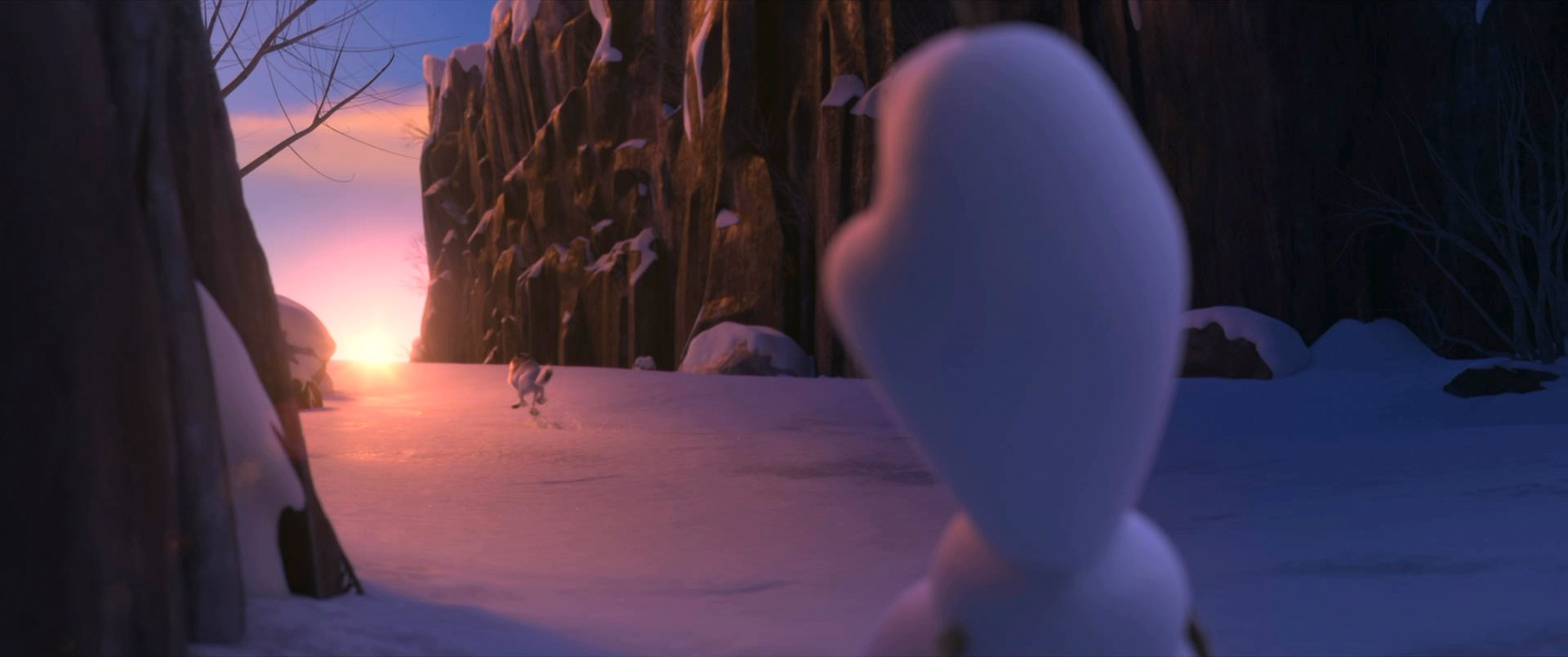
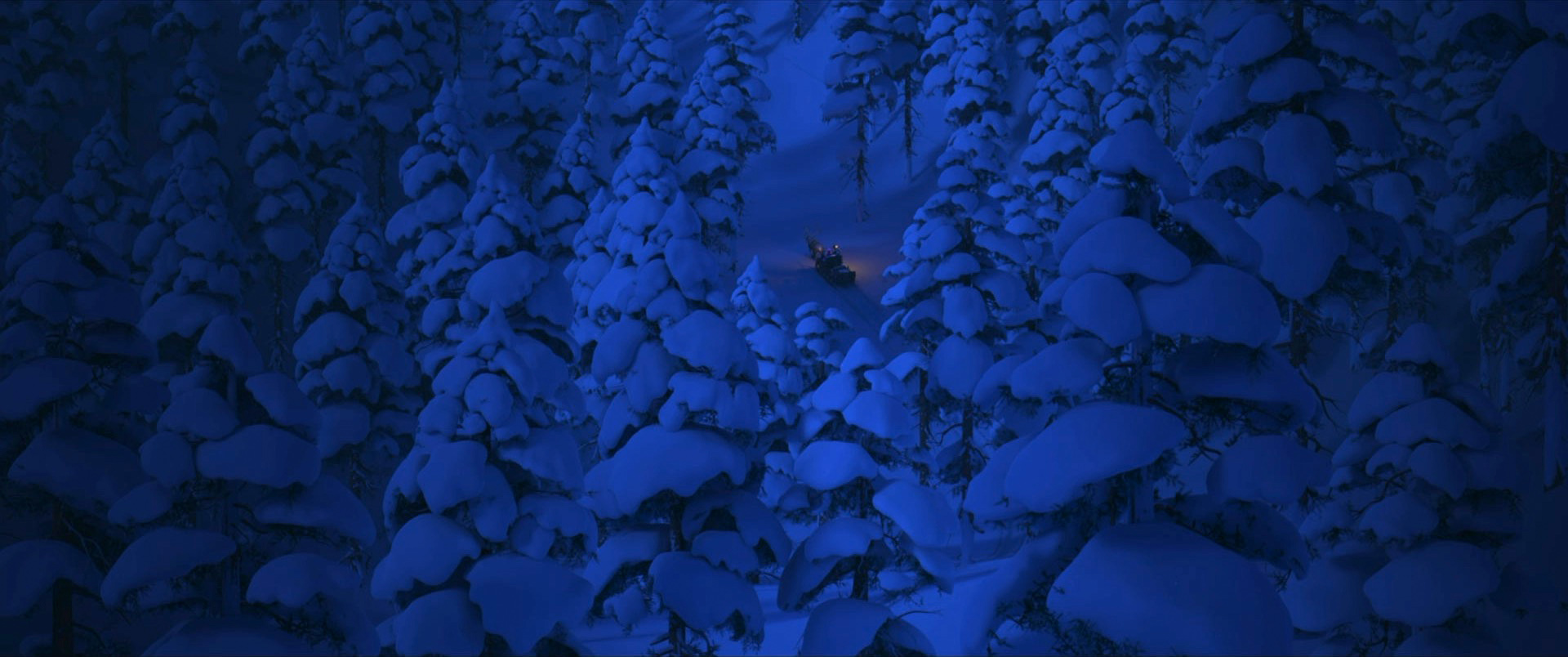
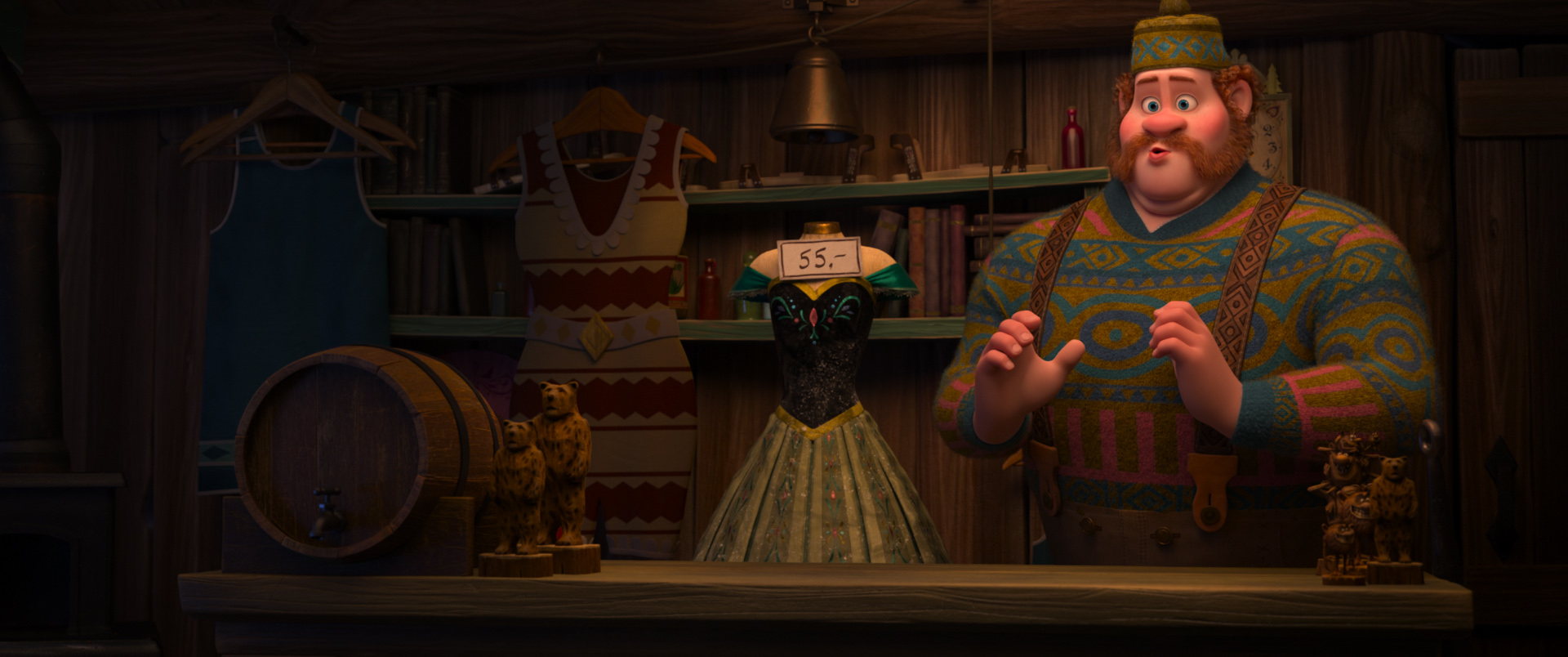

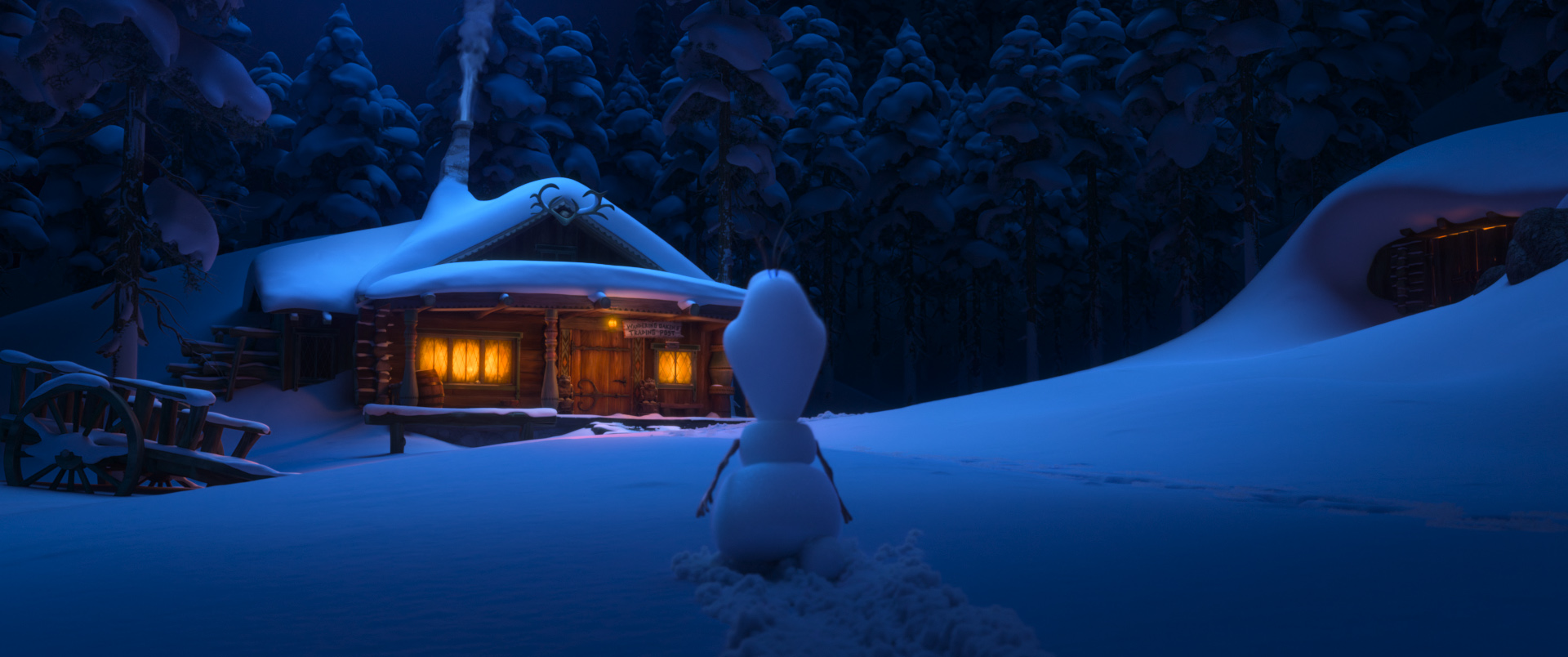
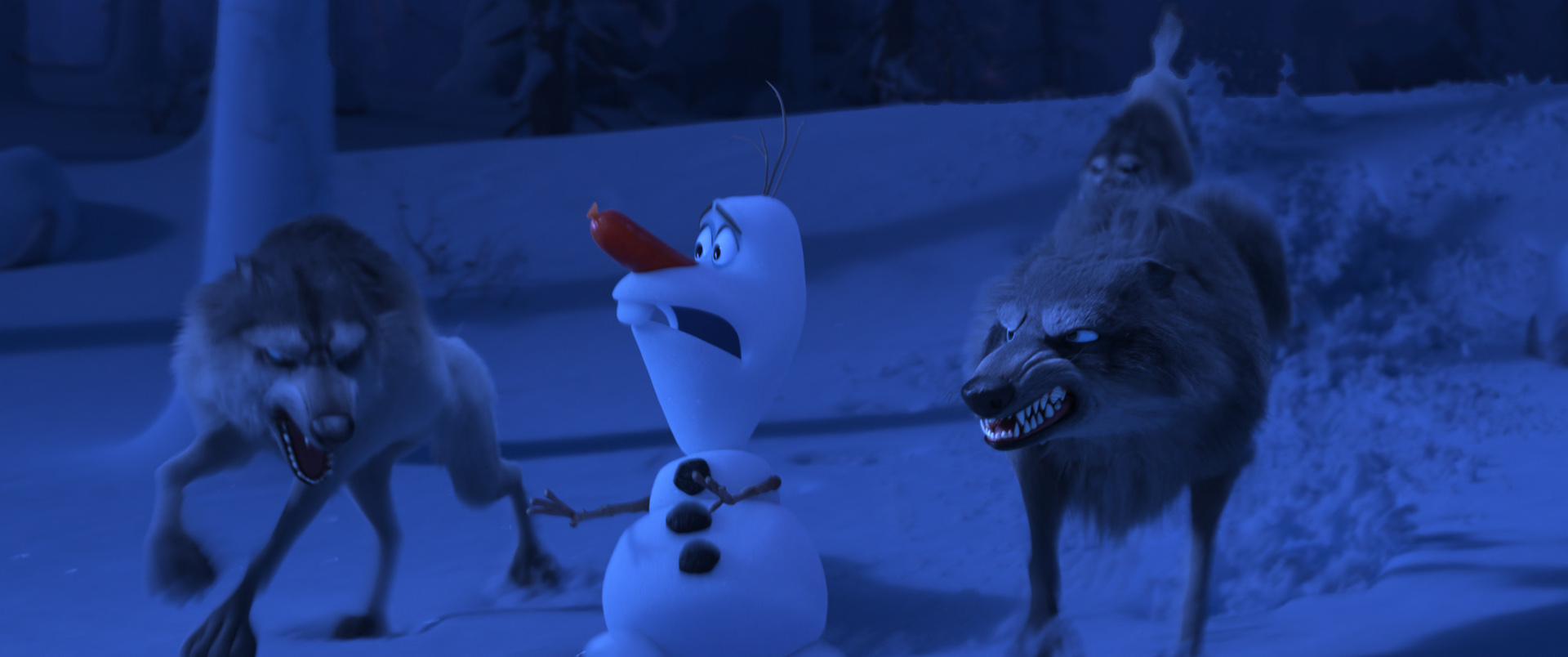
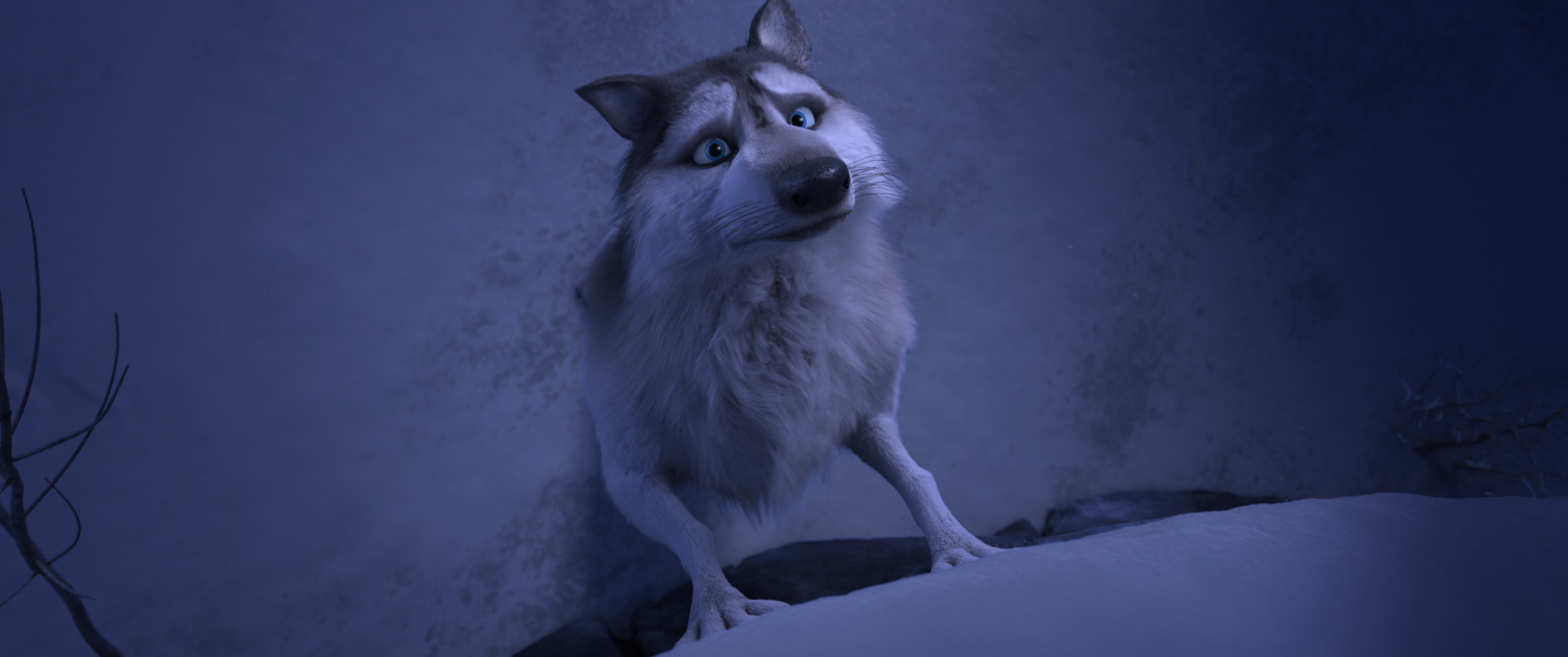
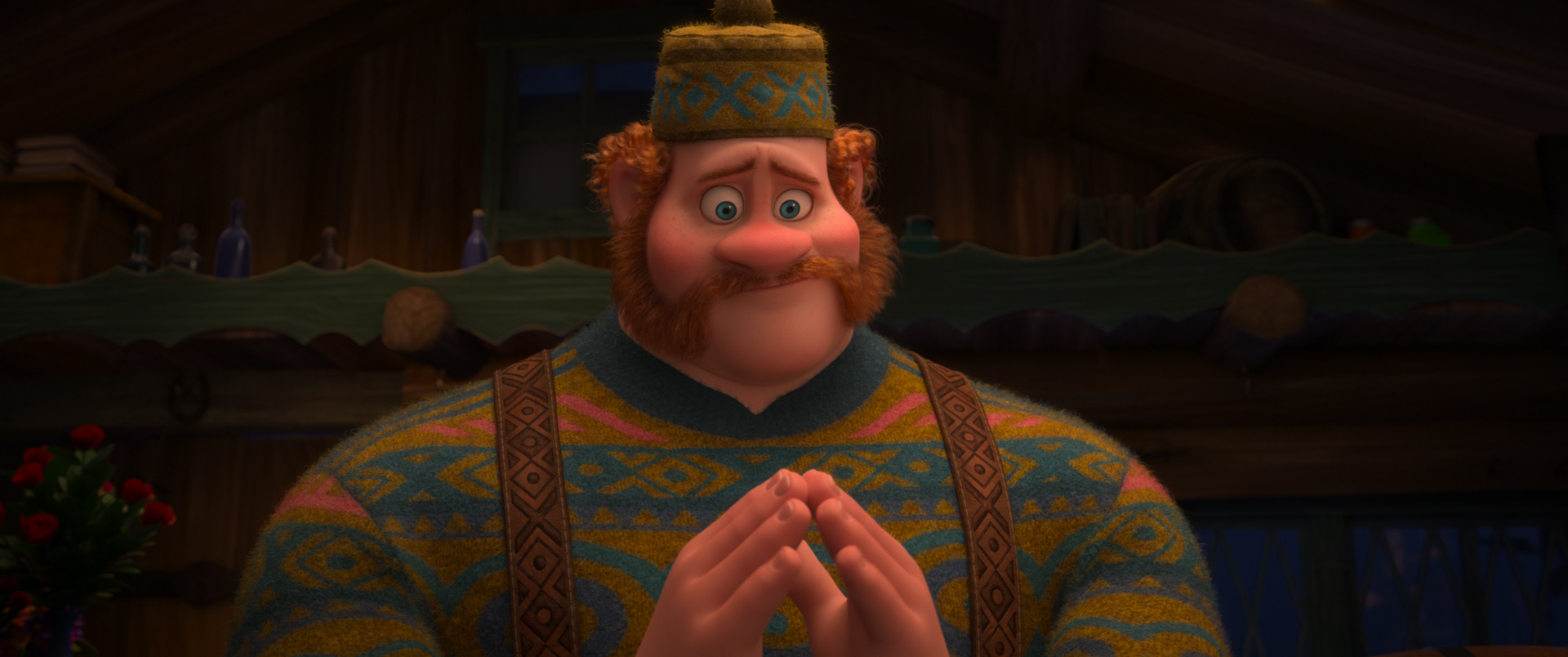
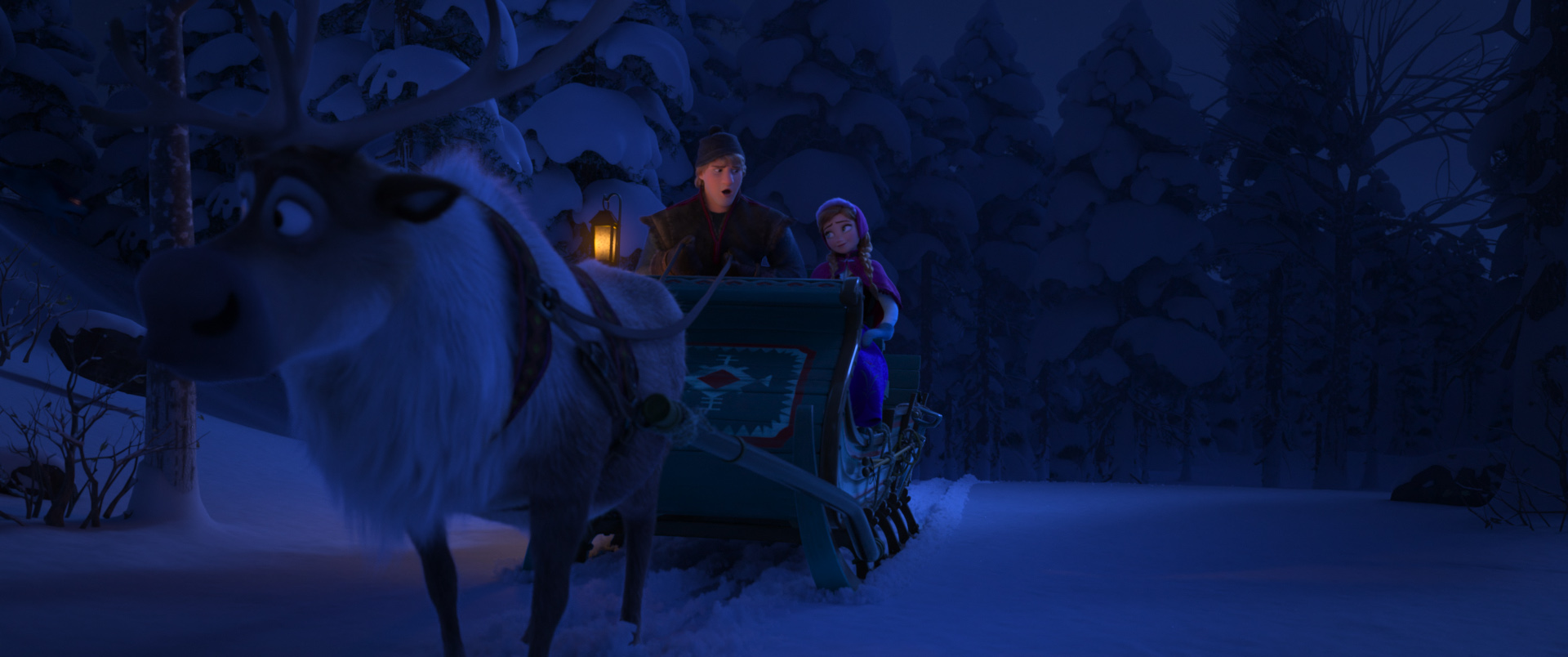
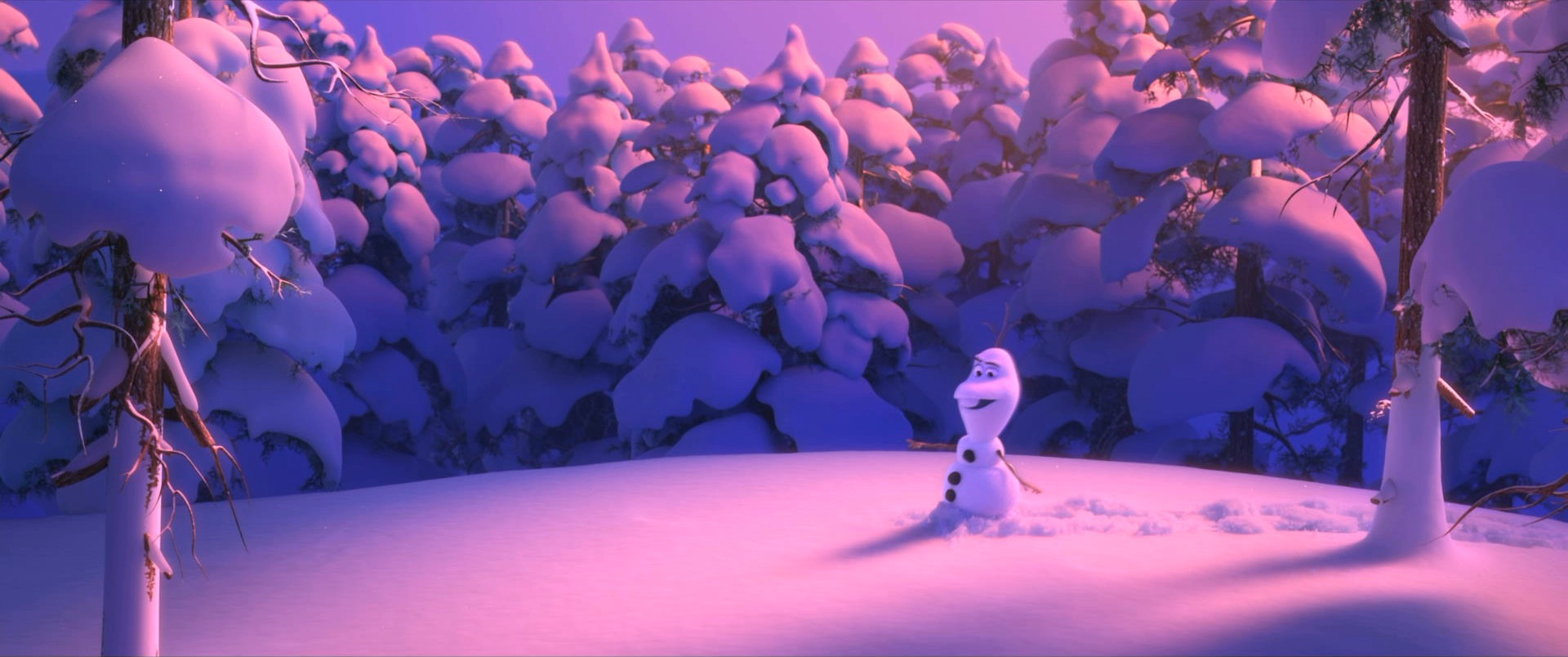
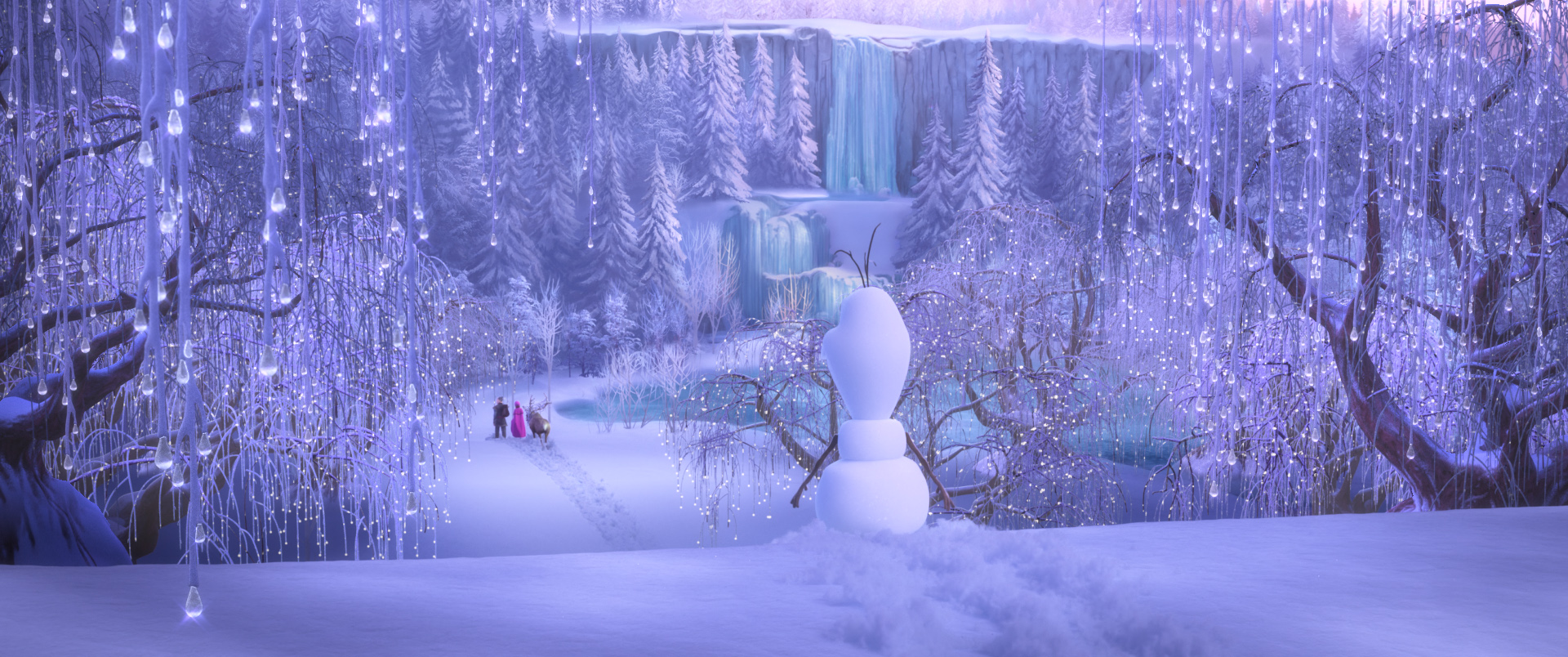
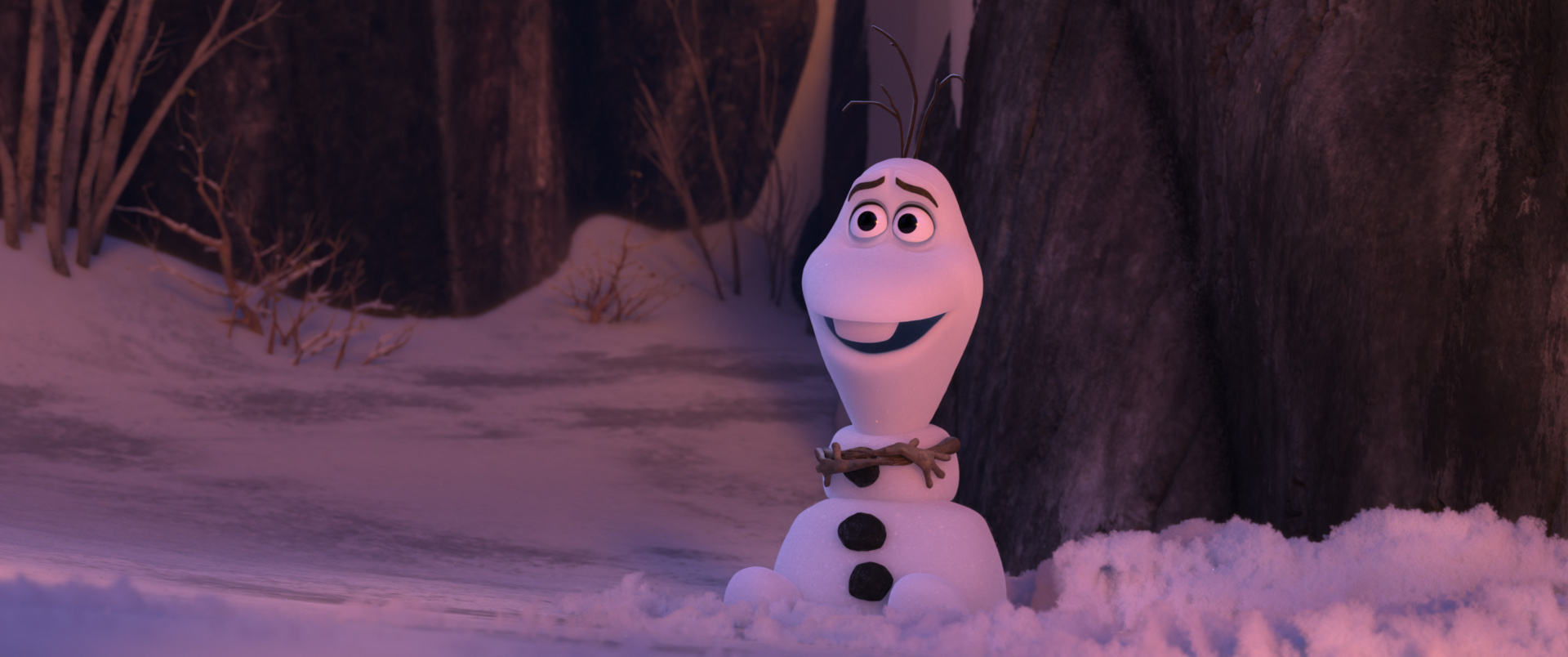
All images in this post are courtesy of and the property of Walt Disney Animation Studios.
References
Nicholas Burkard, Hans Keim, Brian Leach, Sean Palmer, Ernest J. Petti, and Michelle Robinson. 2016. From Armadillo to Zebra: Creating the Diverse Characters and World of Zootopia. In ACM SIGGRAPH 2016 Production Sessions. Article 24.
Brent Burley. 2012. Physically Based Shading at Disney. In ACM SIGGRAPH 2012 Course Notes: Practical Physically-Based Shading in Film and Game Production.
Brent Burley. 2015. Extending the Disney BRDF to a BSDF with Integrated Subsurface Scattering. In ACM SIGGRAPH 2015 Course Notes: Physically Based Shading in Theory and Practice.
Brent Burley, David Adler, Matt Jen-Yuan Chiang, Ralf Habel, Patrick Kelly, Peter Kutz, Yining Karl Li, and Daniel Teece. 2017. Recent Advancements in Disney’s Hyperion Renderer. In ACM SIGGRAPH 2017 Course Notes: Path Tracing in Production Part 1. 26-34.
Brent Burley, David Adler, Matt Jen-Yuan Chiang, Hank Driskill, Ralf Habel, Patrick Kelly, Peter Kutz, Yining Karl Li, and Daniel Teece. 2018. The Design and Evolution of Disney’s Hyperion Renderer. ACM Transactions on Graphics 37, 3 (Jul. 2018), Article 33.
Matt Jen-Yuan Chiang, Benedikt Bitterli, Chuck Tappan, and Brent Burley. 2016. A Practical and Controllable Hair and Fur Model for Production Path Tracing. Computer Graphics Forum (Proc. of Eurographics) 35, 2 (May 2016), 275-283.
Matt Jen-Yuan Chiang, Peter Kutz, and Brent Burley. 2016. Practical and Controllable Subsurface Scattering for Production Path Tracing. In ACM SIGGRAPH 2016 Talks. Article 49.
Ramón Montoya-Vozmediano. 2010. Point-Based Hair Global Illumination. In ACM SIGGRAPH Asia 2010 Sketches. Article 17.
Iman Sadeghi, Heather Pritchett, Henrik Wann Jensen, and Rasmus Tamstorf. 2010. An Artist Friendly Hair Shading System. ACM Transactions on Graphics (Proc. of SIGGRAPH) 29, 4 (Jul. 2010), Article 56.
Lewis Siegel. 2014. Frozen on Ice: Rendering Frost and Ice on Frozen. In ACM SIGGRAPH 2014 Talks. Article 8.