Once Upon a Studio
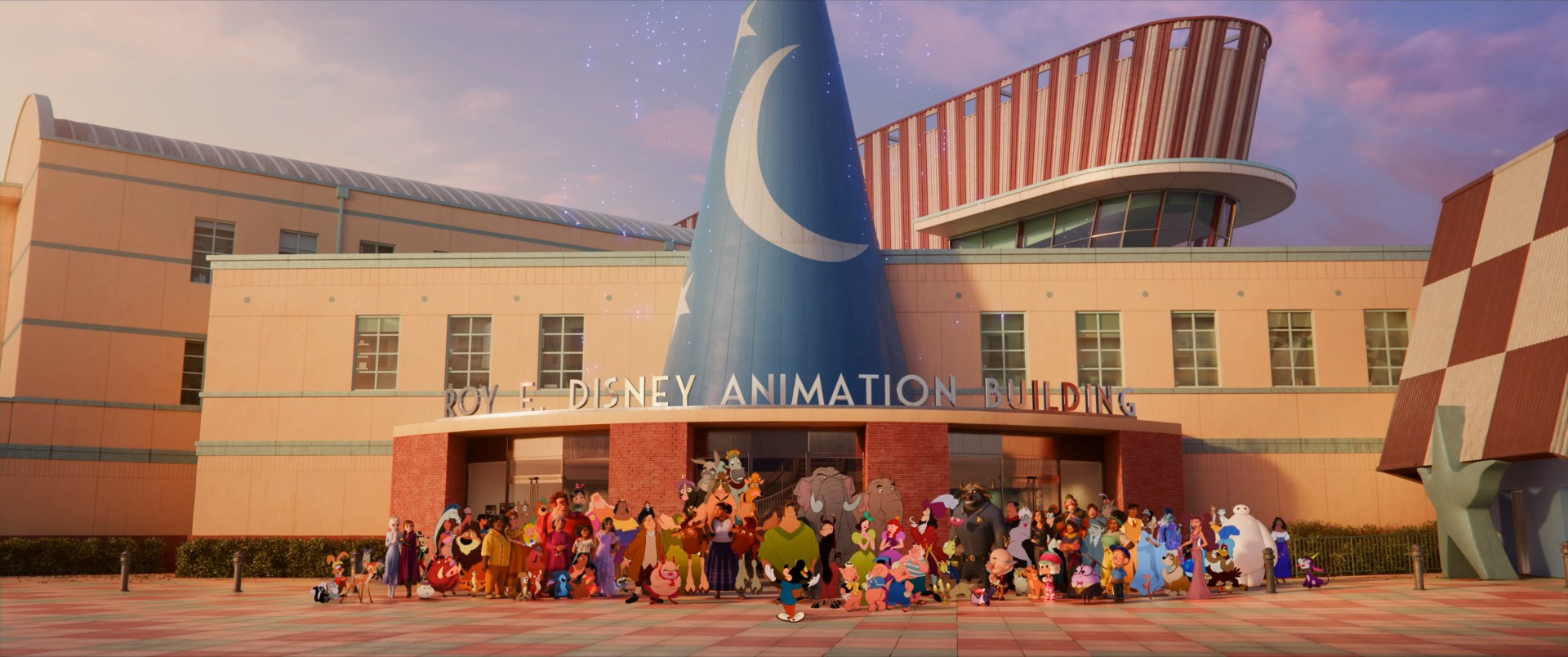
Once Upon a Studio is Disney Animation’s newest short, which accompanied Wish’s theatrical release last fall. Together, Wish and Once Upon a Studio celebrate 100 years of Disney Animation; while Wish tells a new story inspired by themes from across the past century of Disney animated films, Once Upon a Studio brings together 543 characters from past Disney Animation features and shorts into a single short, set in the Roy E. Disney Animation Building in Burbank that serves as the studio’s modern headquarters and production facility. I only played a small role on making Once Upon a Studio, providing the usual technical assistance and support for the artists that used Disney’s Hyperion Renderer to make the short. Even only being a small part of this short was still enormously exciting though! This post is a small collection of my thoughts on some of the more interesting rendering challenges that we encountered while making Once Upon a Studio, and also I’ll include some thoughts on what the short and 100 years of Disney Animation means to me.
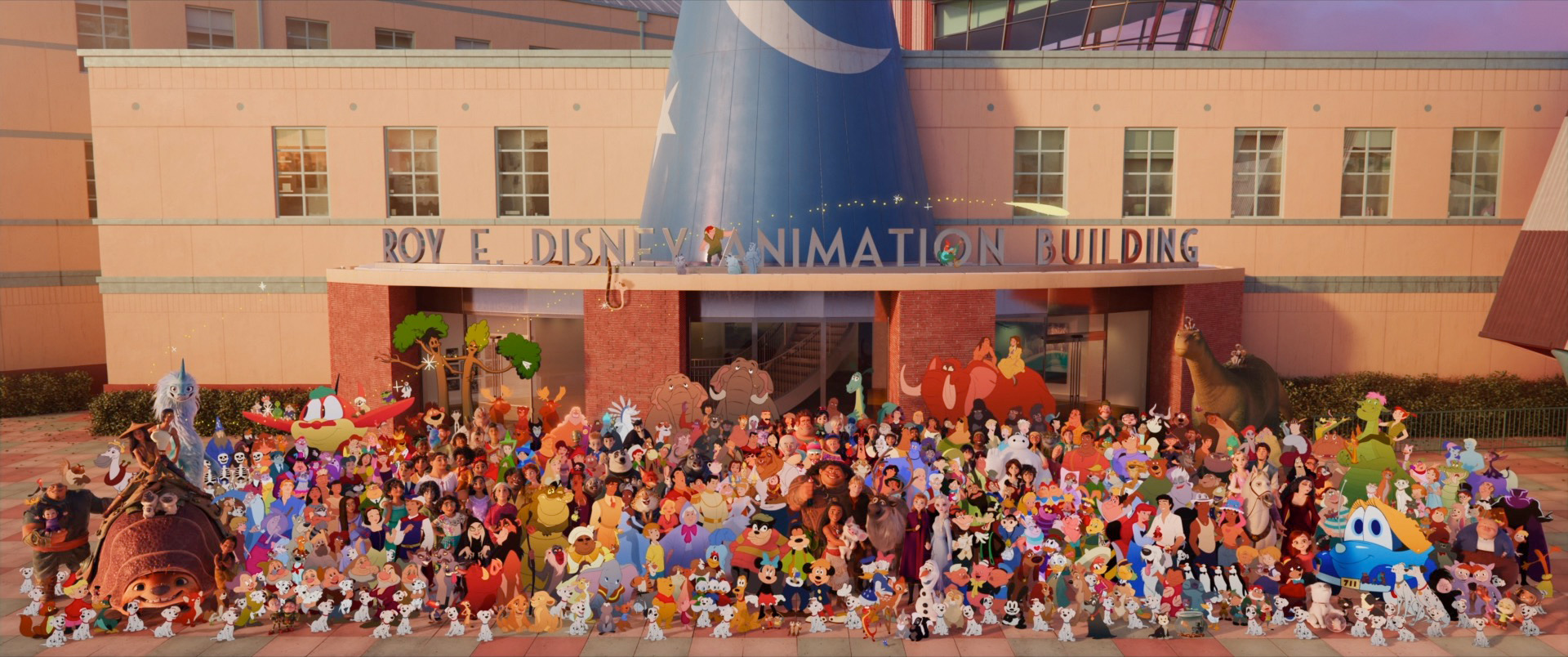
Once Upon a Studio features an ambitious blend of live action plates, traditional hand-drawn animation, and CG animation in order to depict hundreds of Disney Animation characters from across the studio’s entire history all gathering together. All traditional hand-drawn animation was done the old-school way using paper and pencil for the actual animation and with digital ink and paint, while all CG animation and backgrounds were rendered entirely using Disney’s Hyperion Renderer. The real challenge in making this short came in figuring out how to seamlessly integrate all of these components in a believable fashion; despite having completely different visual styles and completely different animation techniques, everything had to sit together and interact in the same world.
Before even getting into the characters, one interesting challenge was in depicting the Disney Animation building. The short is set in a somewhat-fictionalized version of our building; some of the interior locations seen in the short are real locations in the building, others are completely made up areas that look like real parts of the building but don’t actually exist, and there are even some shots that transition from a real location to a fictional one in a single continuous camera move. Most of the real locations in the building are photographic plates, while all fictional locations are completely CG and rendered using Hyperion. For the shots where the camera transitions from real to fictional location, this means we had to be able to create renders using Hyperion that were photorealistic enough to be completely visually indistinguishable from the photographic plates. In some cases this meant Hyperion renders had to be realistic enough to be composited into part of the photographic plate (for example, when there was a real photographed hallway looking into a fictional room), while in a few other extraordinary cases, we had to be able to swap from a 100% photographic plate to a 100% exact CG replica within a single frame. I think our artists did an incredible job with this; even if you step through the short frame by frame, I don’t think anyone would be able to tell where these seams are without already knowing beforehand.
From a rendering engineer perspective, the big question that having to match photographic plates raised was simply: can we actually do it? While matching photographic plates is very common in VFX workflows, it is something that Disney Animation hasn’t had to do in decades. Hyperion is a renderer designed for and custom-tailored to Disney Animation’s very specific needs [Burley et al. 2018], and since matching photographic plates isn’t something we usually have to do, we never explicitly considered that use case in the renderer’s design. Core parts of the renderer, such as the shading system, are designed with physically based rendering principles as the foundation [Burley 2012], but our target look has always been animation, so outside of some experiments early in the Hyperion project’s history, we’d never spent much time evaluating the shading system’s ability to achieve exact matches to true photographs. Fortunately, we found that Hyperion’s physically based foundations and shading flexibility were more than enough to achieve seamless matches with photographic plates; in fact, our artists reported that this wasn’t even particularly difficult, which was very cool to see.
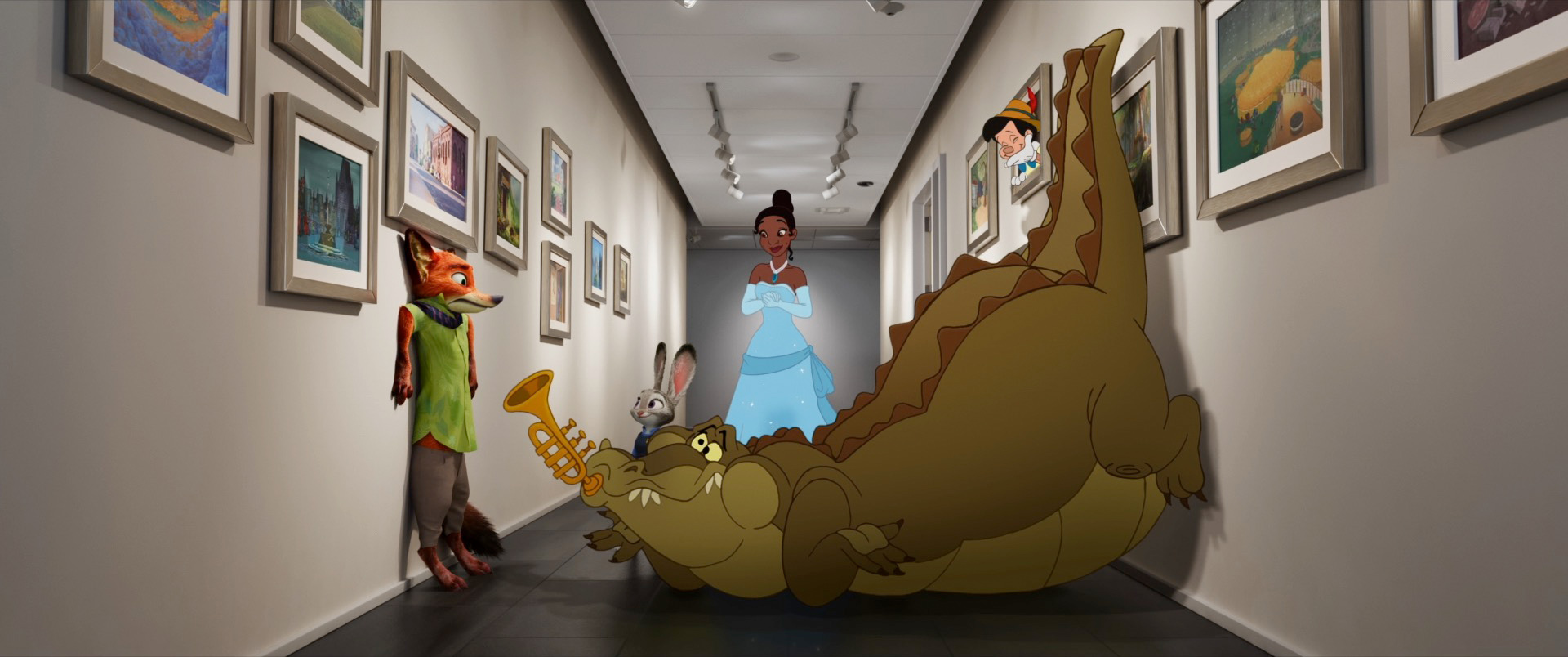
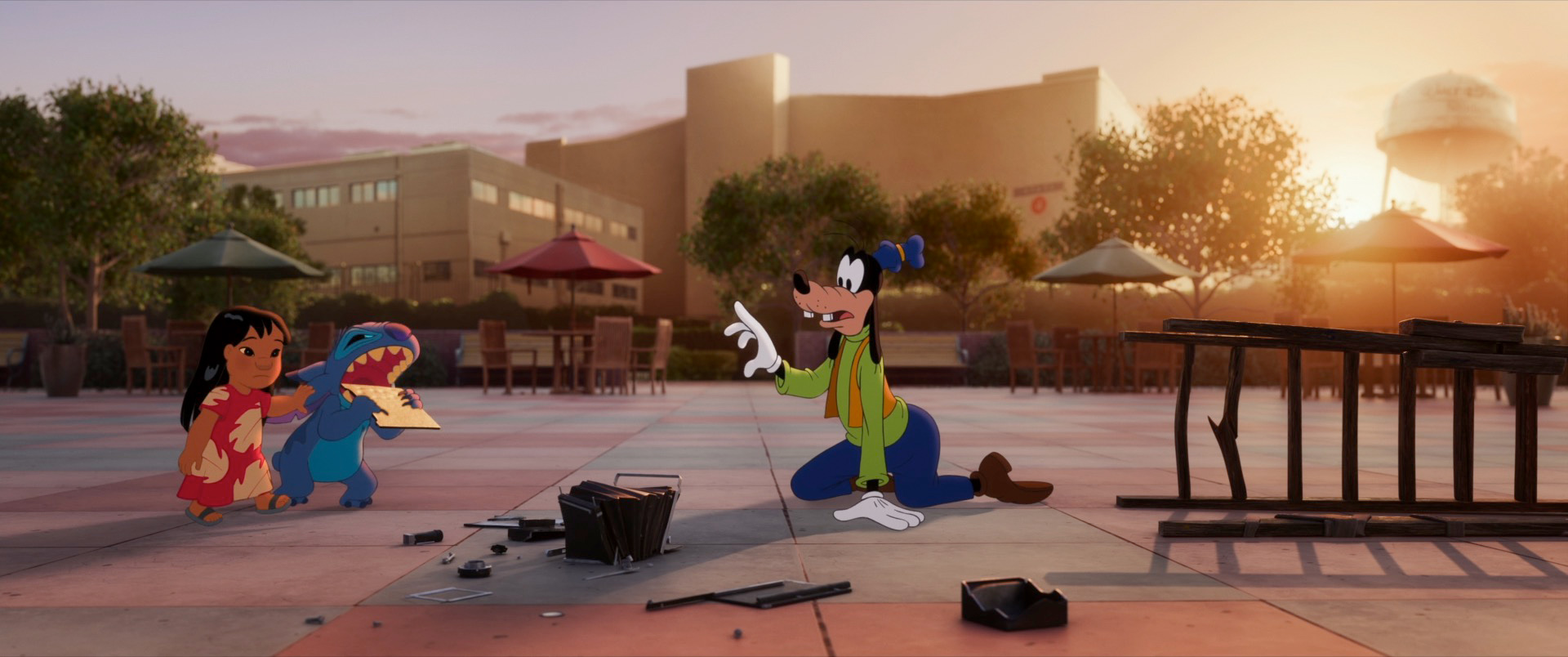
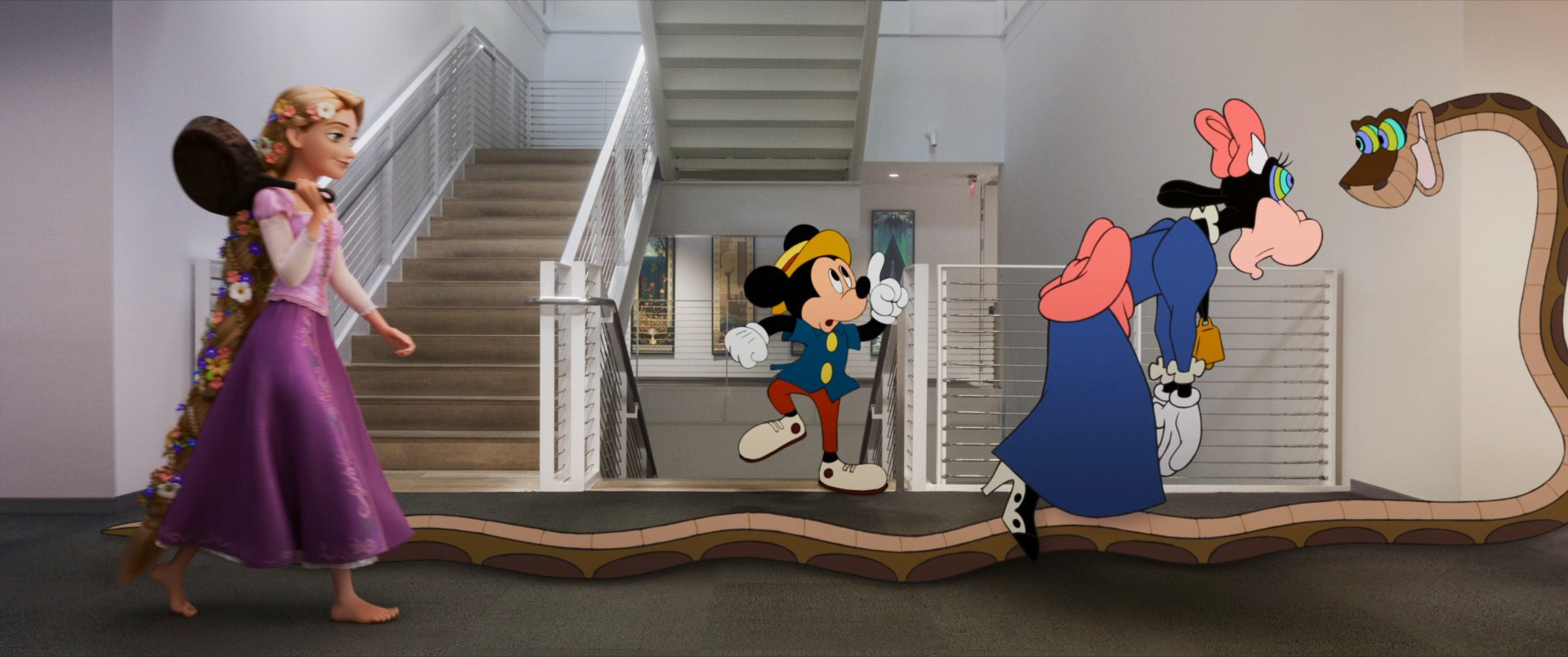
The single largest technical challenge on Once Upon a Studio wasn’t matching plates though; the single largest challenge by far was having traditional hand-drawn characters interact with CG characters in a visually cohesive manner while being 100% truthful to their respective native mediums. All of the traditional hand-drawn characters in the short were created by an incredible team of in-house traditional animators exclusively using pencil and paper (this team even included several legendary ex-Disney traditional animators who came back just for the occasion, including heroes of mine such as James Baxter and Tony Bancroft). For shots where hand-drawn and CG characters interact, depending on what was happening in the shot, either the hand-drawn character would be animated first and then the CG animation done afterwards to match, or the CG animation would be completed first and the frames would then be printed out on paper for hand-drawn animation to draw on top of before being scanned back in. In a few shots, both the hand-drawn and CG animation were done by a single animator who was proficient in both mediums; Disney Animation has several animators who are masters in both disciplines, which absolutely amazes and boggles my mind.
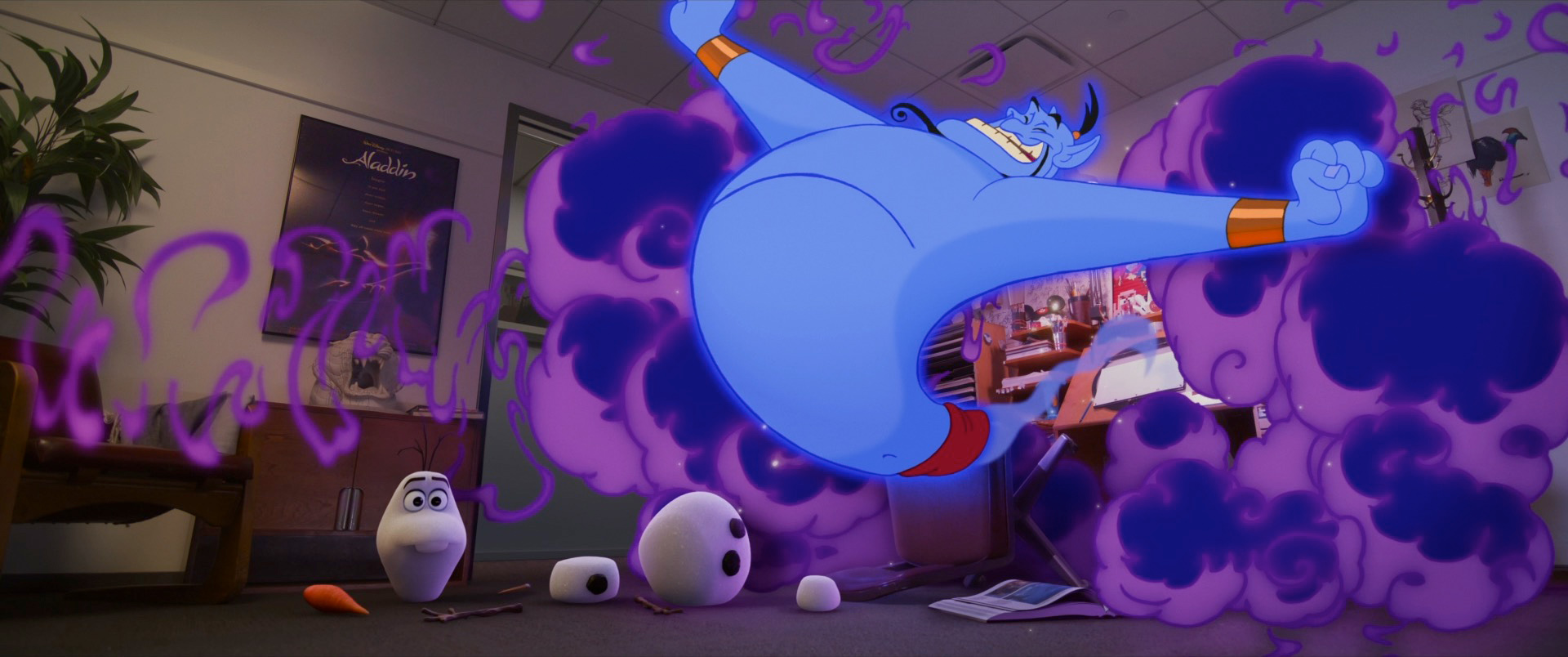
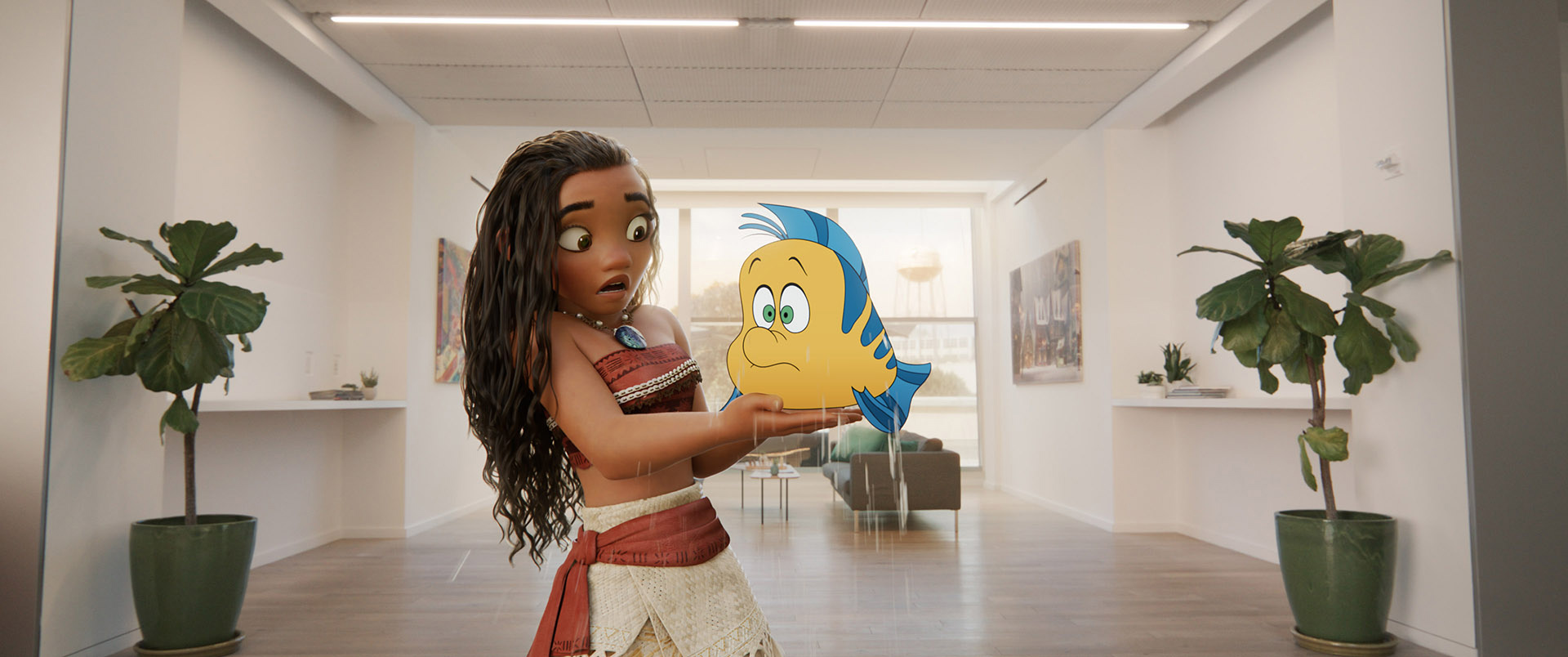
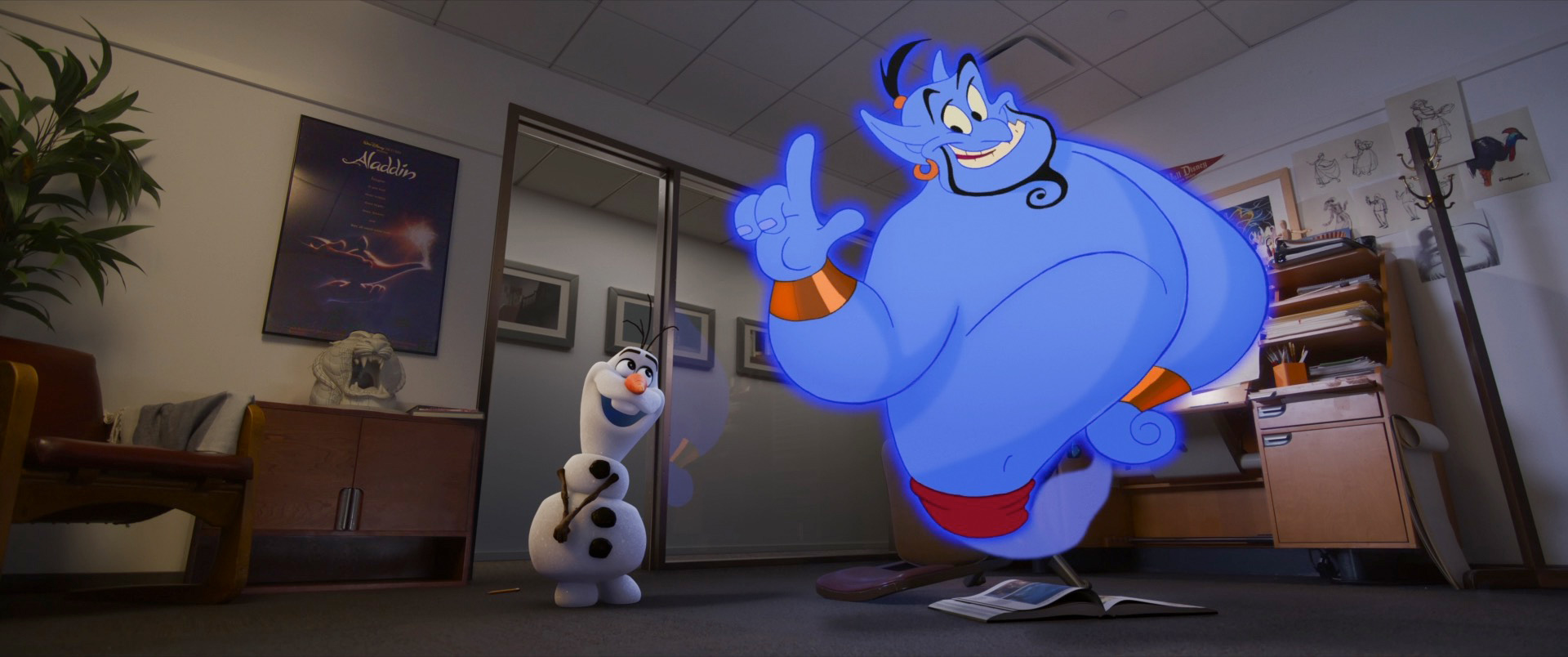
Any time a hand-drawn character has to interact with CG elements, the solution we took was to bring the hand-drawn character into the 3D world by projecting the hand-drawn animation with final ink and paint onto cards in 3D space. This way, the hand-drawn and CG characters and environments could be rendered out by Hyperion together in a single pass. More importantly, this meant that hand-drawn characters could participate in global illumination, casting proper indirect illumination and shadows on CG elements and showing up in reflections and refractions correctly and so on. Of course a ton of further adjustments had to be made in compositing, but having a correct basis coming out of the renderer provided an important foundation for making all of this work. One part of the short that I think demonstrates this combination particularly well is when Genie bursts out of an animation desk that Olaf is working at; the desk and chair are a combination of photographic plate and CG elements, Olaf is obviously completely CG, and Genie is hand-drawn. When Genie bursts out of the desk, he shows up properly in reflections in the office’s window, which is a CG replacement for the photographic plate. Genie’s blue glow properly illuminates Olaf, and you can even see Genie’s blue glow diffusing through Olaf’s snowy body via path traced subsurface scattering.
Another major challenge was porting all of Disney Animation’s CG characters forward to work in the latest version of our pipeline and render using the latest version of Hyperion. Depending on how old the character was, the level of effort required ranged anywhere from “works perfectly with a click of a single button” to “rebuild the character completely from scratch”. As with any other modern CG studio, Disney Animation’s pipeline is constantly evolving with each successive show, with the modern pipeline tracing its earliest version back to the production of Tangled. Characters from shows before Tangled had to be completely rebuilt from scratch, using the originals as references, while for characters from after Tangled, things varied based on how far back the character was from and whether or not the character had already been ported forward before. While the current pipeline traces its origins to Tangled, essentially every part of the pipeline has since undergone a complete Ship of Theseus styled transformation. From Tangled to the modern day, the studio’s production renderer switched from RenderMan to Hyperion, the underlying data formats across the entire studio moved from proprietary formats to exclusively USD, we moved from Maya to Presto as our core animation DCC and from an internal tool to Houdini’s Solaris system as our lighting DCC, and on top of those big changes there are an uncountable number of other changes.
On the rendering front, pretty much the only thing that is the same since Tangled is that we use Ptex [Burley and Lacewell 2008] and SeExpr [Disney Animation 2011] as the foundation of our shading system; literally everything else has changed, with the largest breaking points being the move from legacy shaders to physically based shading and the Disney BSDF between Tangled and Wreck-it Ralph, and the move to Hyperion between Frozen and Big Hero 6. Fortunately, because every show since Wreck-it Ralph has made use of the Disney BSDF, at least as far as rendering and lookdev is concerned, porting forward Disney BSDF based characters is relatively easy. The Disney BSDF has continuously evolved over many shows, so sometimes characters need to be tuned up a bit to use the latest Disney BSDF features, but usually this is pretty straightforward. The trickiest things to tune up are porting characters from using older normalized diffusion based subsurface scattering [Burley 2015] to our modern path-traced subsurface scattering [Chiang et al. 2016b], and porting eyes from using our older eye shader to our modern manifold next-event estimation based eye shader [Chiang and Burley 2018]. Even more fortuitously, older RenderMan based characters from Frozen and Wreck-it Ralph had already been ported to Hyperion for Frozen 2 and Ralph Breaks the Internet, which in the past was made a lot easier by the fact that the Disney BSDF spans both renderers. Shows before Zootopia also used an older ad-hoc hair shader instead of the modern industry-standard Chiang hair model [Chiang et al. 2016a], but fortunately most Disney BSDF based shows before Zootopia already had their main characters ported forward, while the remaining characters mostly were from shows before Tangled and needed to be rebuilt from scratch anyway. For the case of Asha from Wish, we actually had to backport new renderer features from Wish’s pipeline into Once Upon a Studio’s pipeline, which used a slightly earlier version of the renderer from the end of Moana 2’s production.
Getting to be around for and occasionally help out with Once Upon a Studio was an incredibly cool experience; as a deep animation nerd, being at Disney Animation for the studio’s 100th anniversary is a once-in-a-lifetime sort of thing, and Once Upon a Studio is the ultimate animation nerd’s project. In general I think this project speaks to why I love being at Disney Animation in particular; Disney Animation uniquely combines a rich 100 year old legacy of animation tradition built by the greatest to ever do it with a 100 year old charter to constantly look forwards and push animation technology into the future; this combination was the philosophy that Walt Disney founded the studio with and that the studio still operates under today. One way this combination of simultaneously valuing tradition and looking to the future manifests itself in concrete reality is that Disney Animation is one of the very few places on Earth where you can find some of the greatest traditional hand-drawn animators to ever live, and legendary visdev artists, and people with math and physics and computer science PhDs, and people who are experts in building and operating supercomputers, and everyone in between, all under the same roof working on the same projects. You rarely find beautiful hand-drawn storyboards and character sketches pinned up on boards and partial differential equations and code architecture diagrams scrawled on whiteboards in offices right next to each other (or sometimes even in the same room), and yet, that’s just every day life at Disney Animation. Once Upon a Studio celebrates 100 years of Disney Animation, but more than that it’s really a celebration of everything that comes together to make Disney Animation possible.
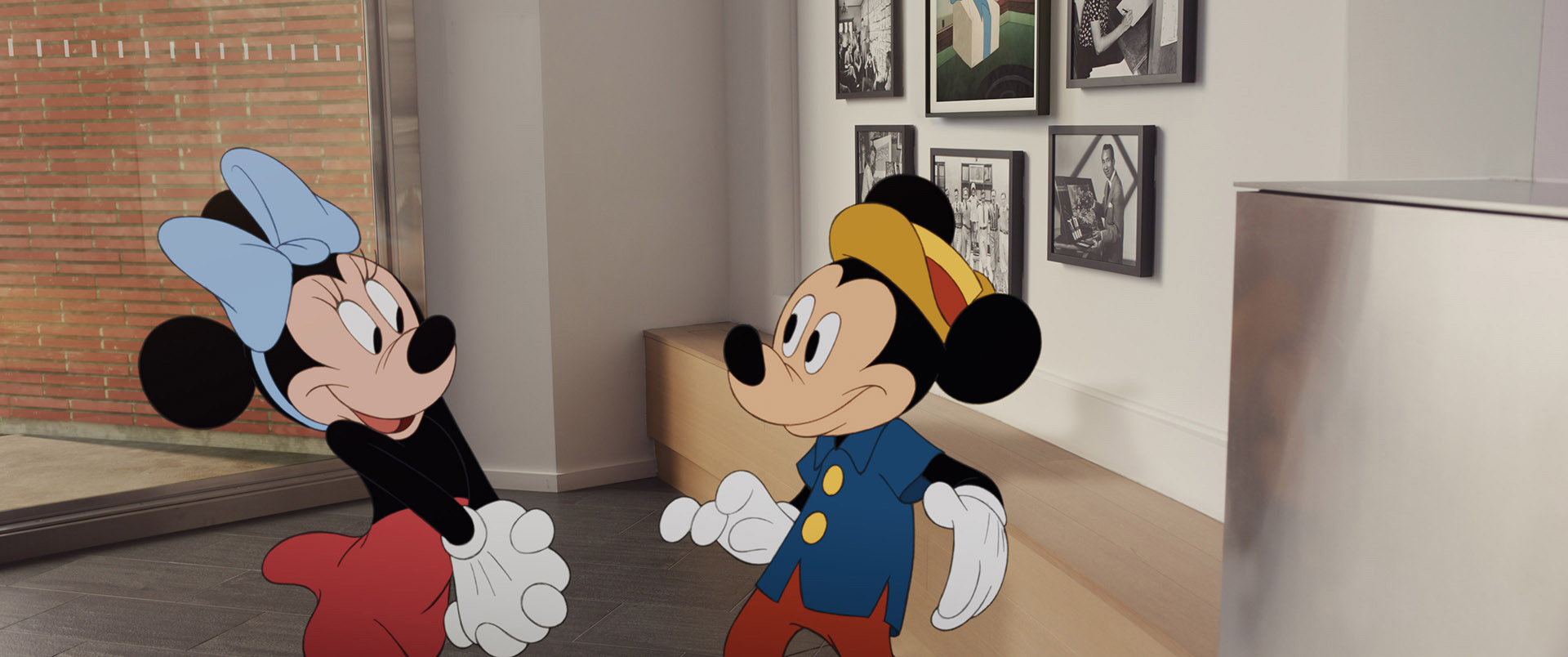
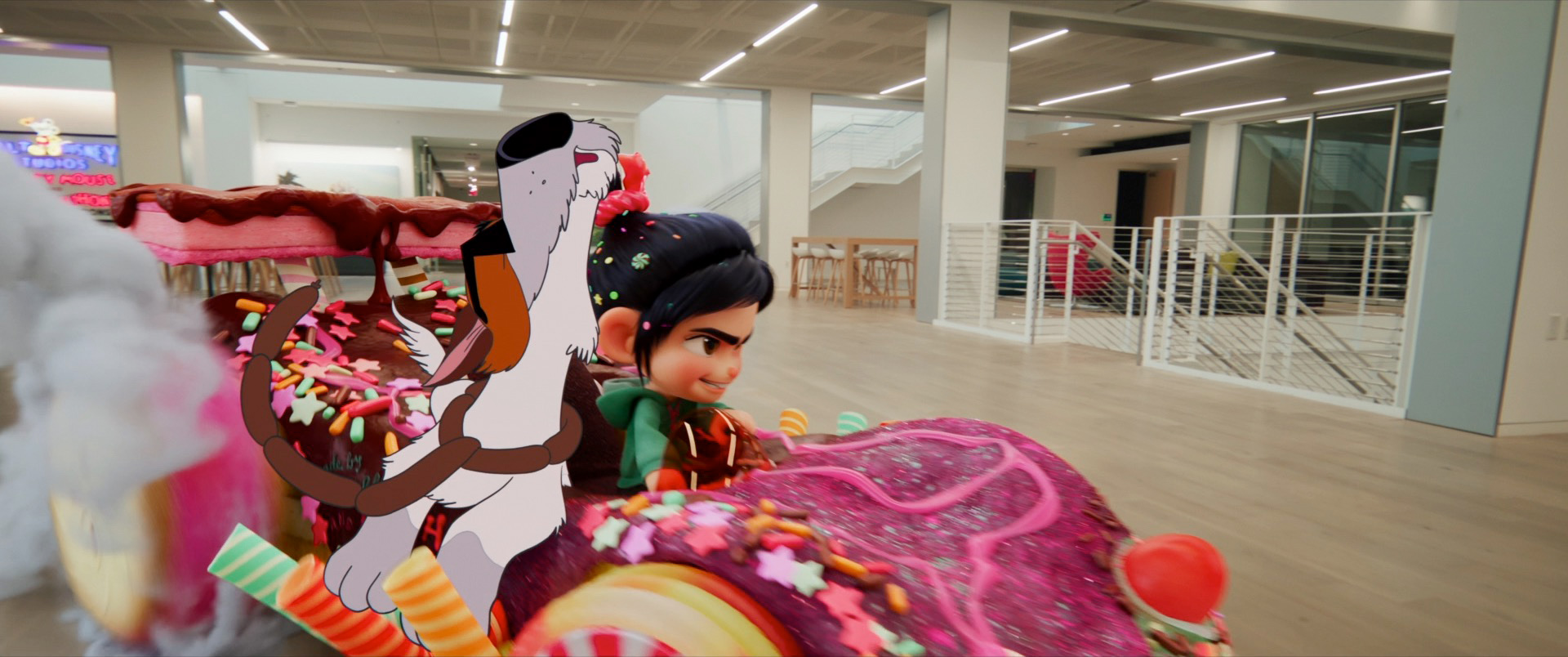
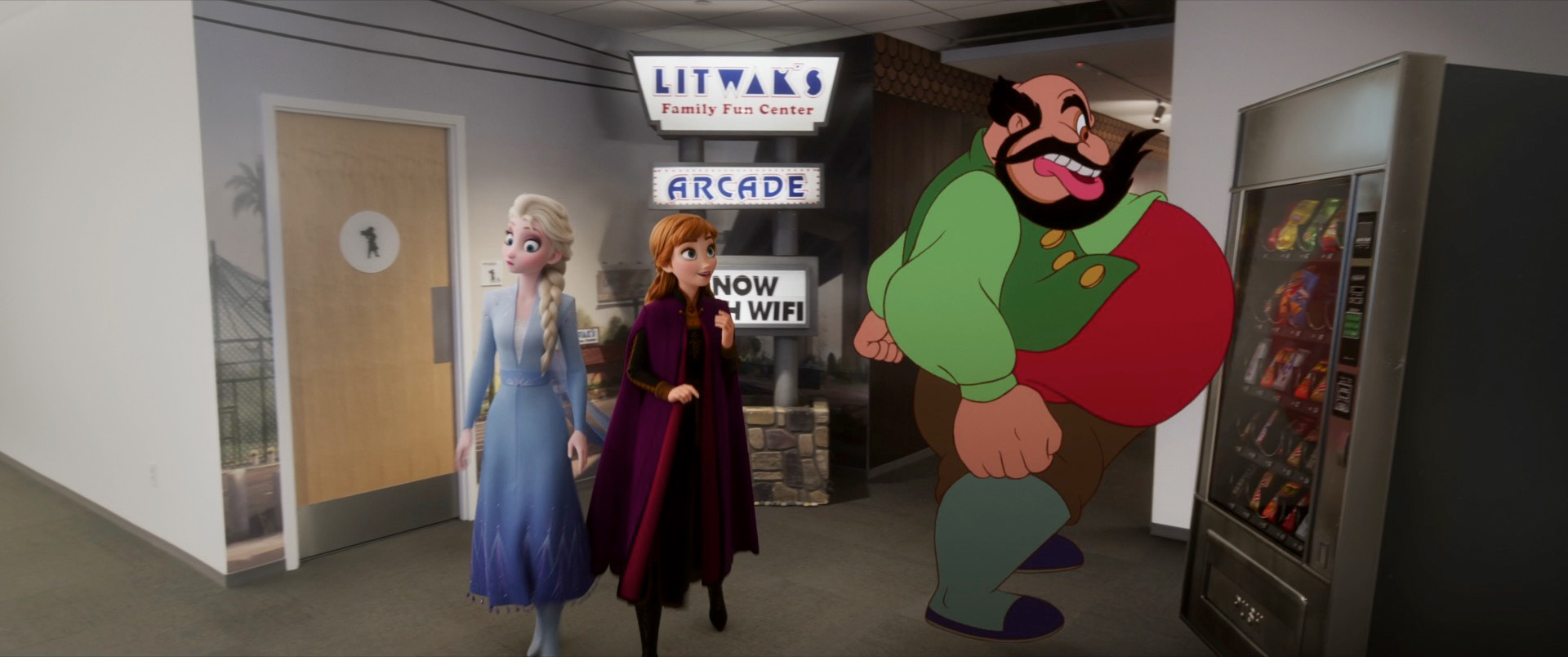
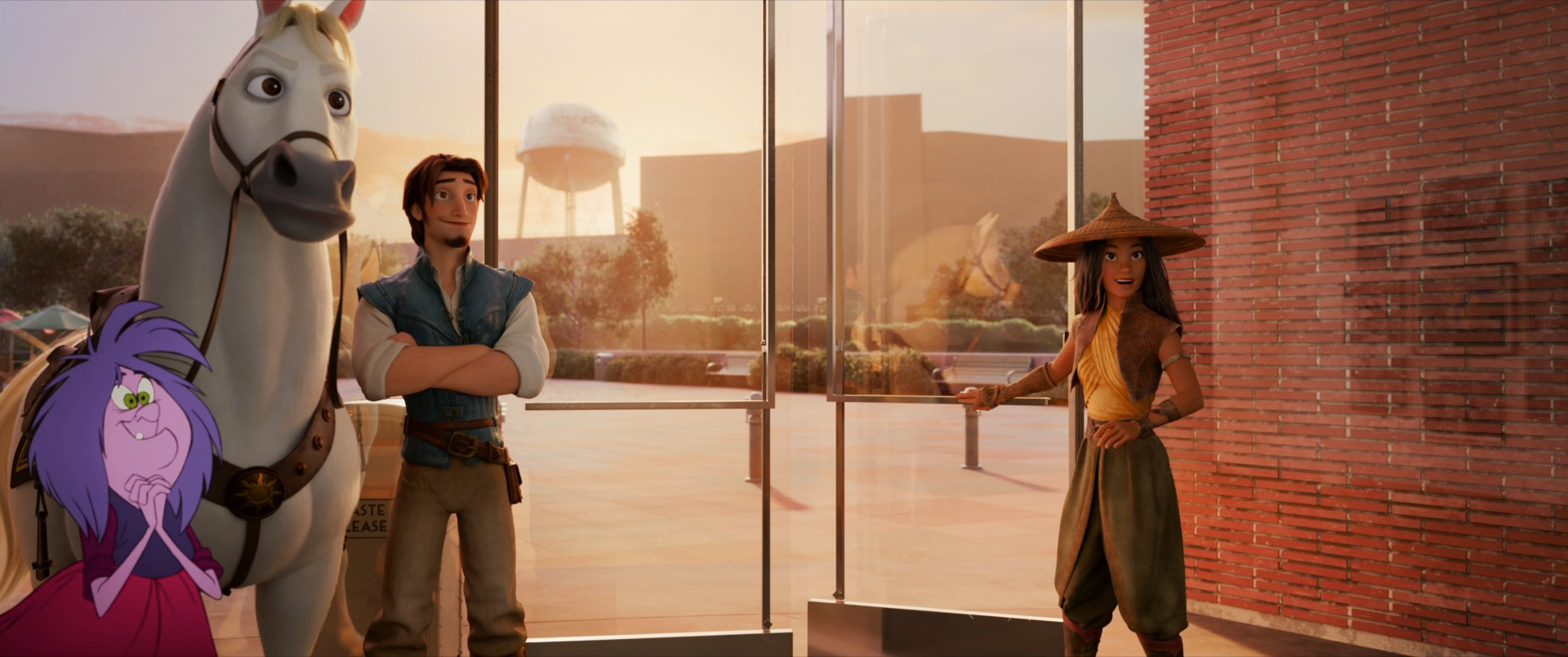
Once Upon a Studio is available on the Wish Blu-ray, on Disney+, and for free on Disney Animation’s Youtube channel. Here are some of my favorite frames from the short, present in no particular order. Go watch the short on the biggest screen you can! Also, if you want to learn more about how the short was made, the studio released a longer production brief on the topic with a lot of interesting details I haven’t covered here.
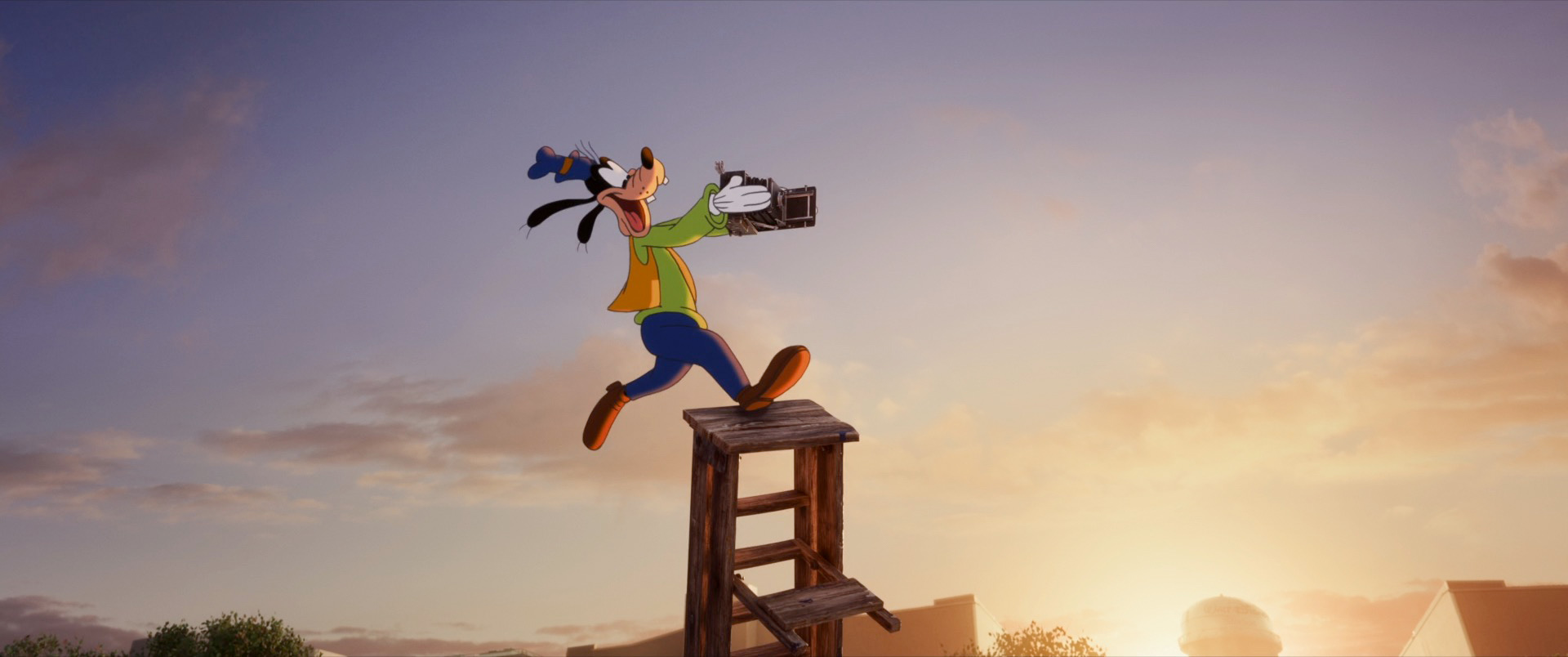
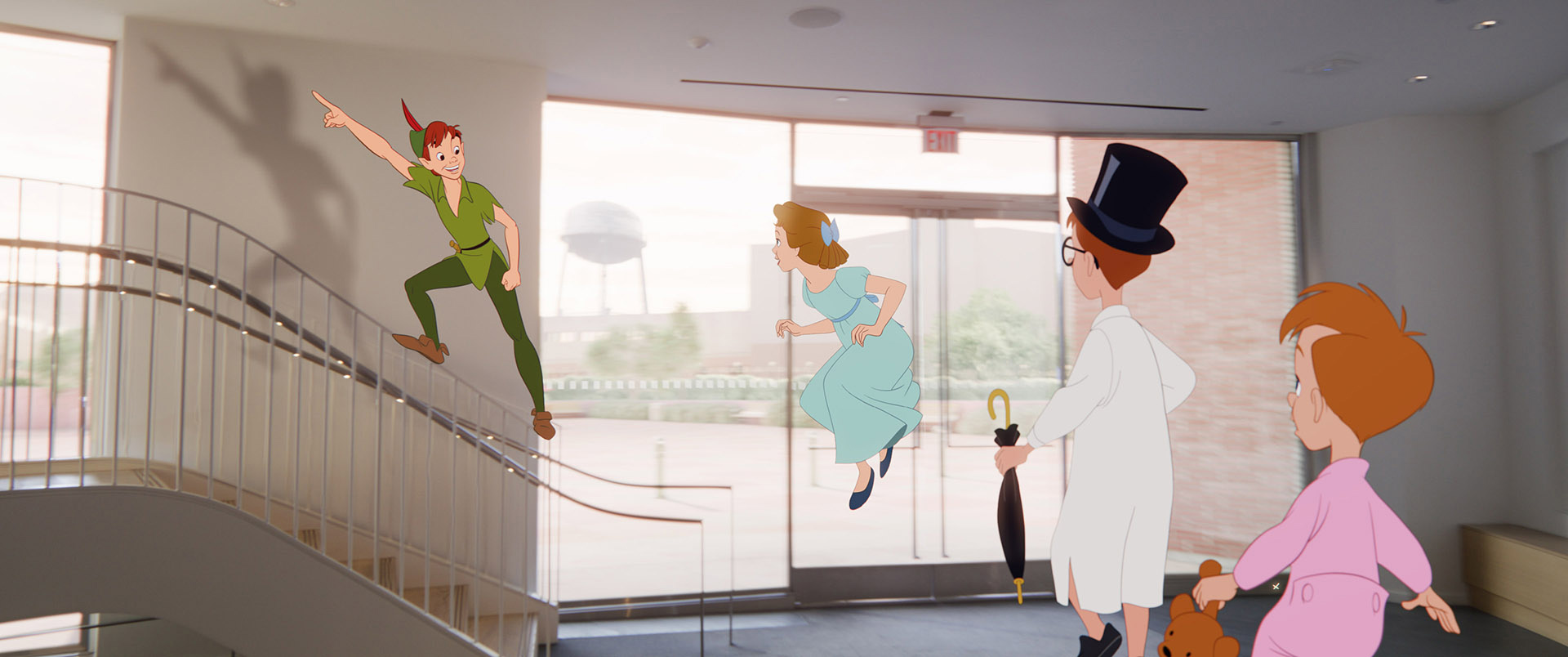
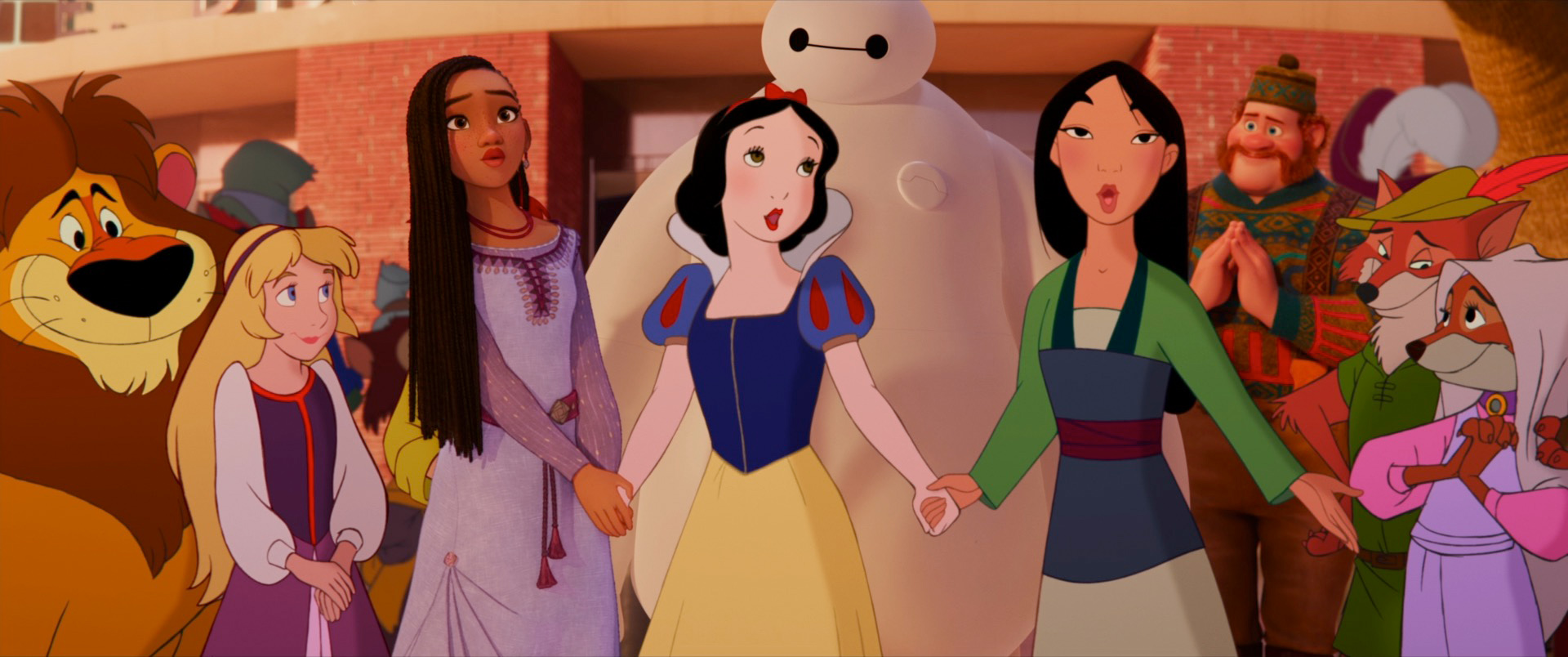
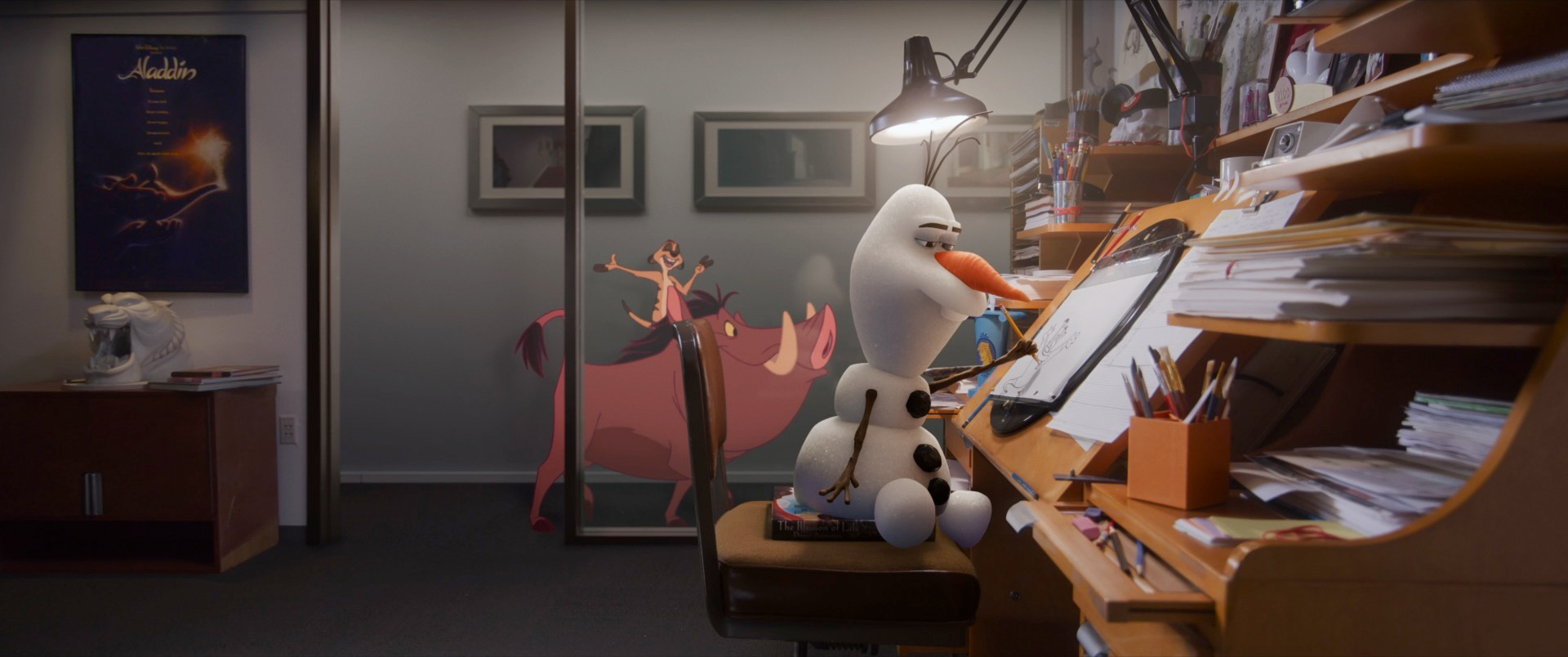
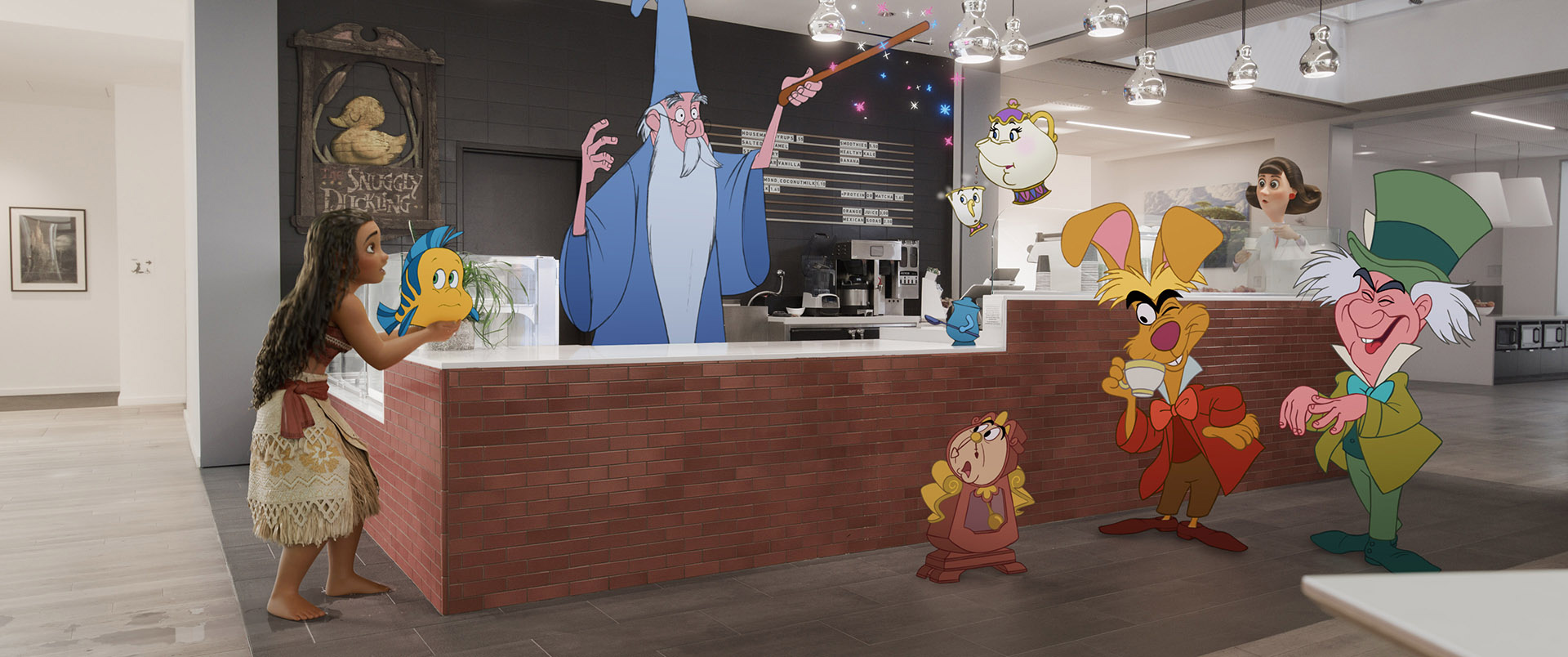
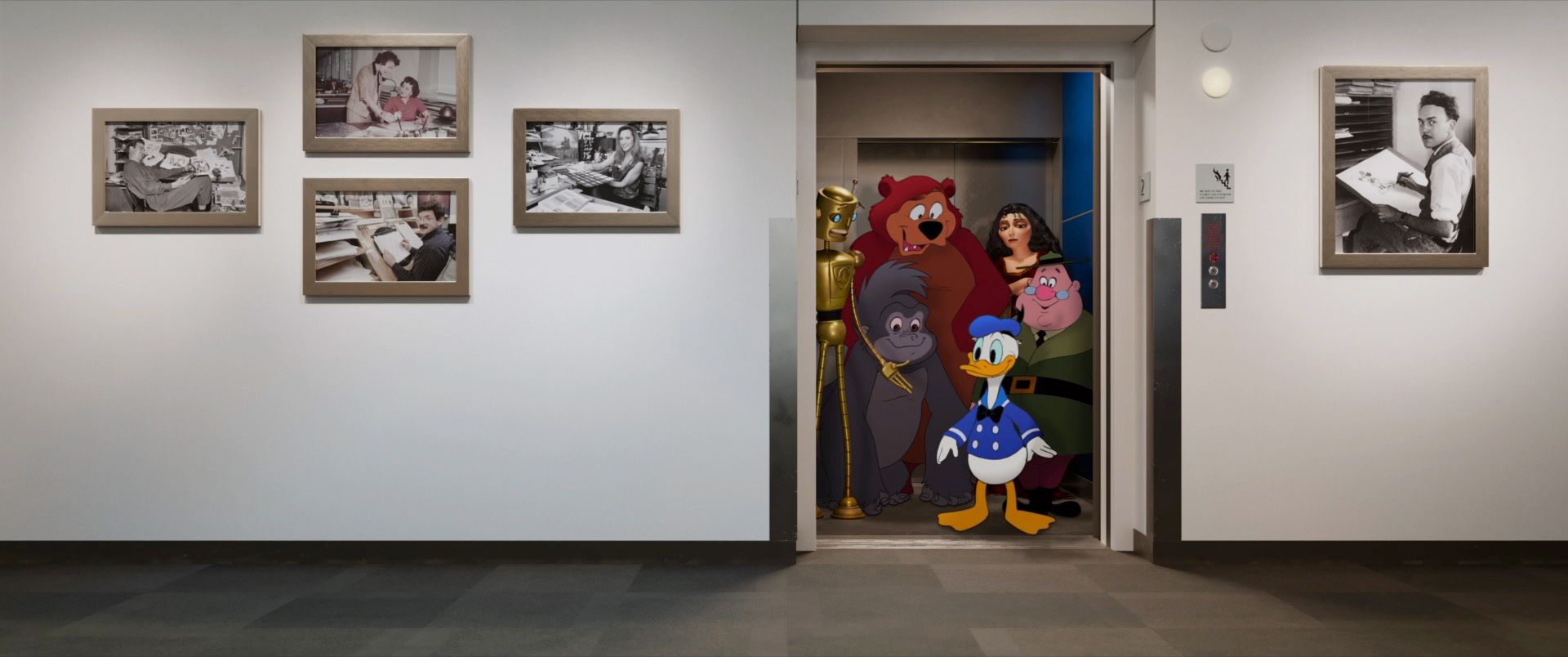
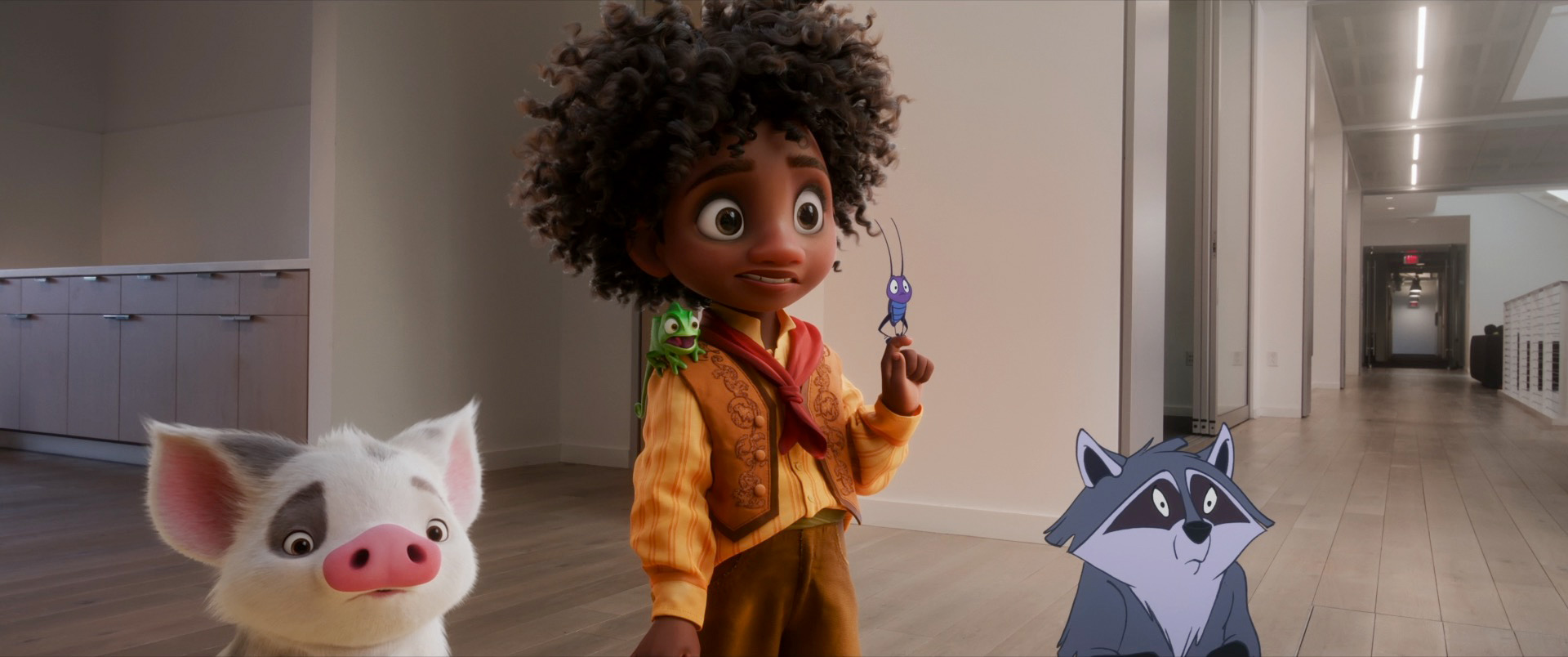
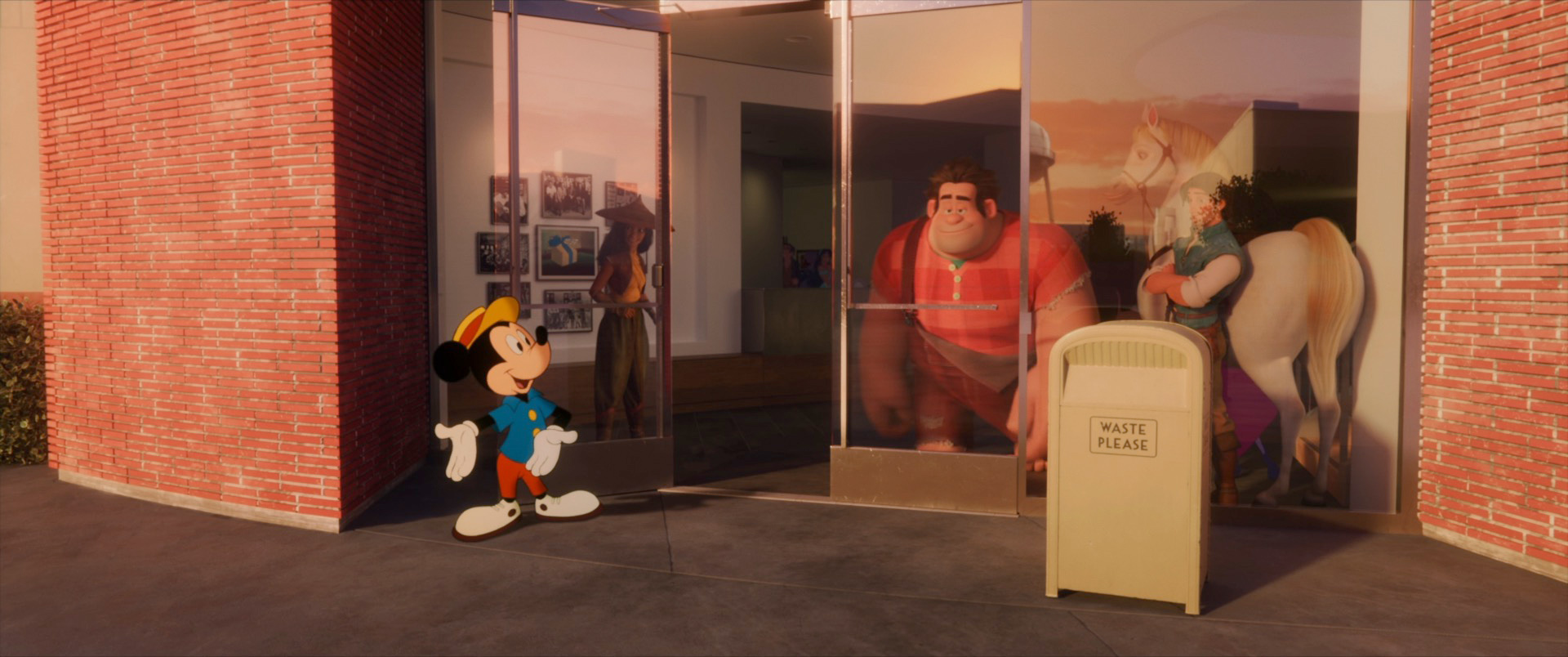
All images in this post are courtesy of and the property of Walt Disney Animation Studios.
References
Brent Burley and Dylan Lacewell. 2008. Ptex: Per-face Texture Mapping for Production Rendering. Computer Graphics Forum (Proc. of Eurographics Symposium on Rendering) 27, 4 (Jun. 2008), 1155-1164.
Brent Burley. 2012. Physically Based Shading at Disney. In ACM SIGGRAPH 2012 Course Notes: Practical Physically-Based Shading in Film and Game Production.
Brent Burley. 2015. Extending the Disney BRDF to a BSDF with Integrated Subsurface Scattering. In ACM SIGGRAPH 2015 Course Notes: Physically Based Shading in Theory and Practice.
Brent Burley, David Adler, Matt Jen-Yuan Chiang, Hank Driskill, Ralf Habel, Patrick Kelly, Peter Kutz, Yining Karl Li, and Daniel Teece. 2018. The Design and Evolution of Disney’s Hyperion Renderer. ACM Transactions on Graphics 37, 3 (Jul. 2018), Article 33.
Matt Jen-Yuan Chiang, Benedikt Bitterli, Chuck Tappan, and Brent Burley. 2016. A Practical and Controllable Hair and Fur Model for Production Path Tracing. Computer Graphics Forum (Proc. of Eurographics) 35, 2 (May 2016), 275-283.
Matt Jen-Yuan Chiang, Peter Kutz, and Brent Burley. 2016. Practical and Controllable Subsurface Scattering for Production Path Tracing. In ACM SIGGRAPH 2016 Talks. Article 49.
Matt Jen-Yuan Chiang and Brent Burley. 2018. Plausible Iris Caustics and Limbal Arc Rendering. In ACM SIGGRAPH 2018 Talks. Article 15.
Walt Disney Animation Studios. 2011. SeExpr.